
Professional Resume: Tips and Writing Guide
Show employers your professional side

Resume Templates Designed for Professionals
Build a resume for experienced roles, management positions, and career growth with examples that highlight your achievements.
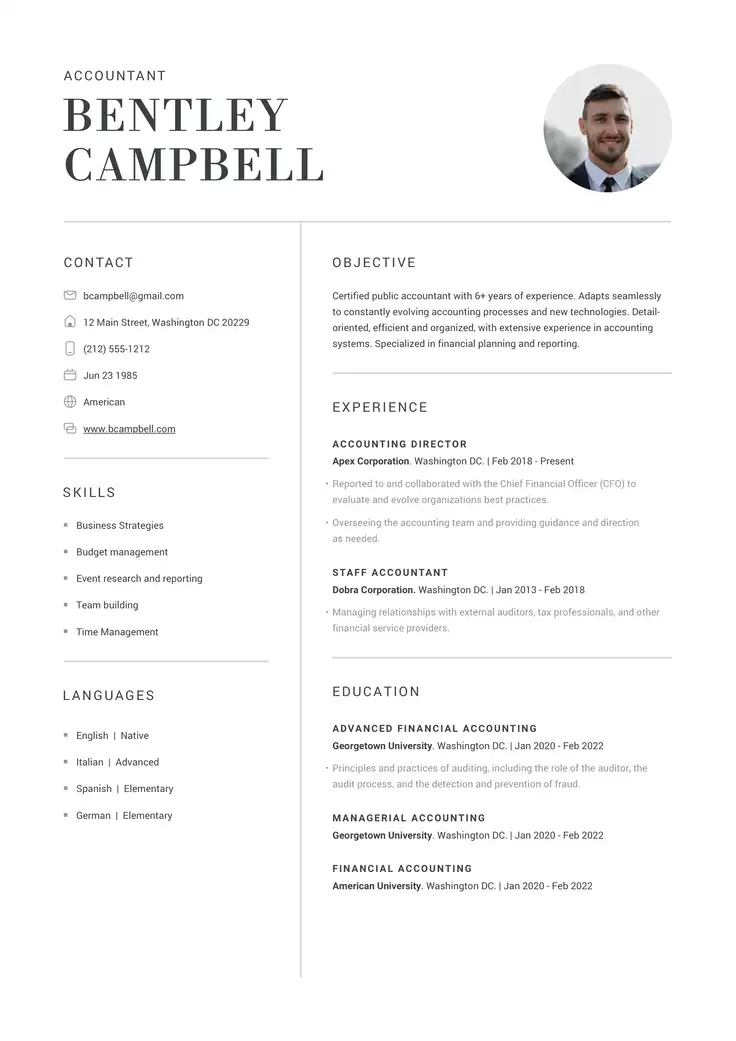
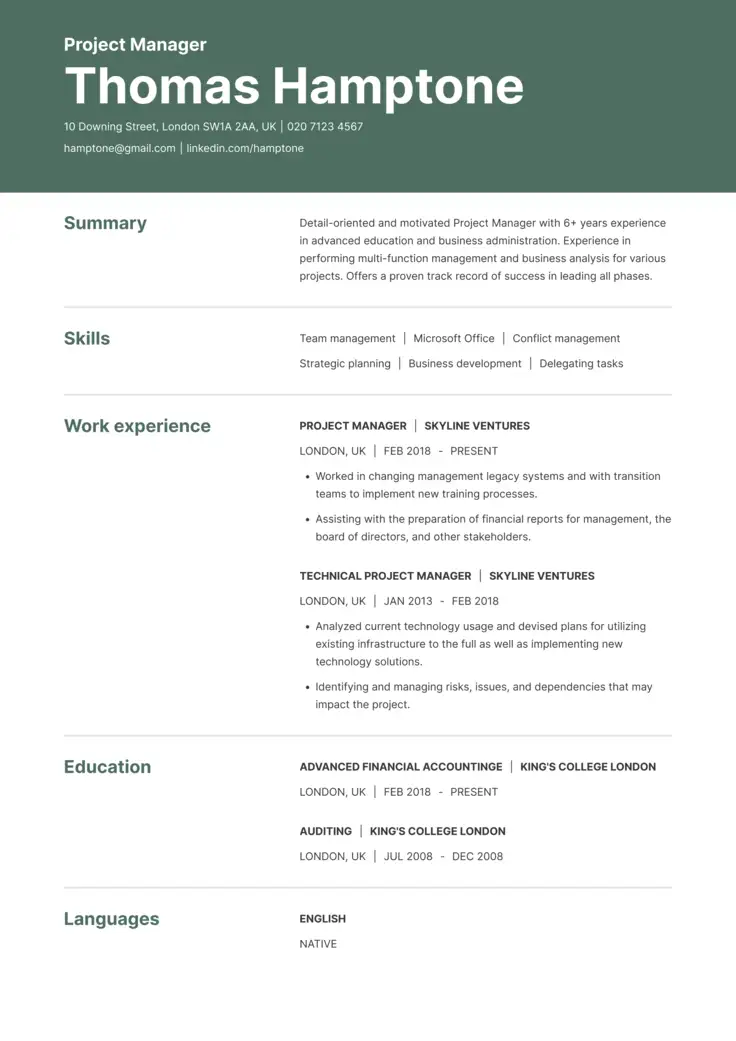
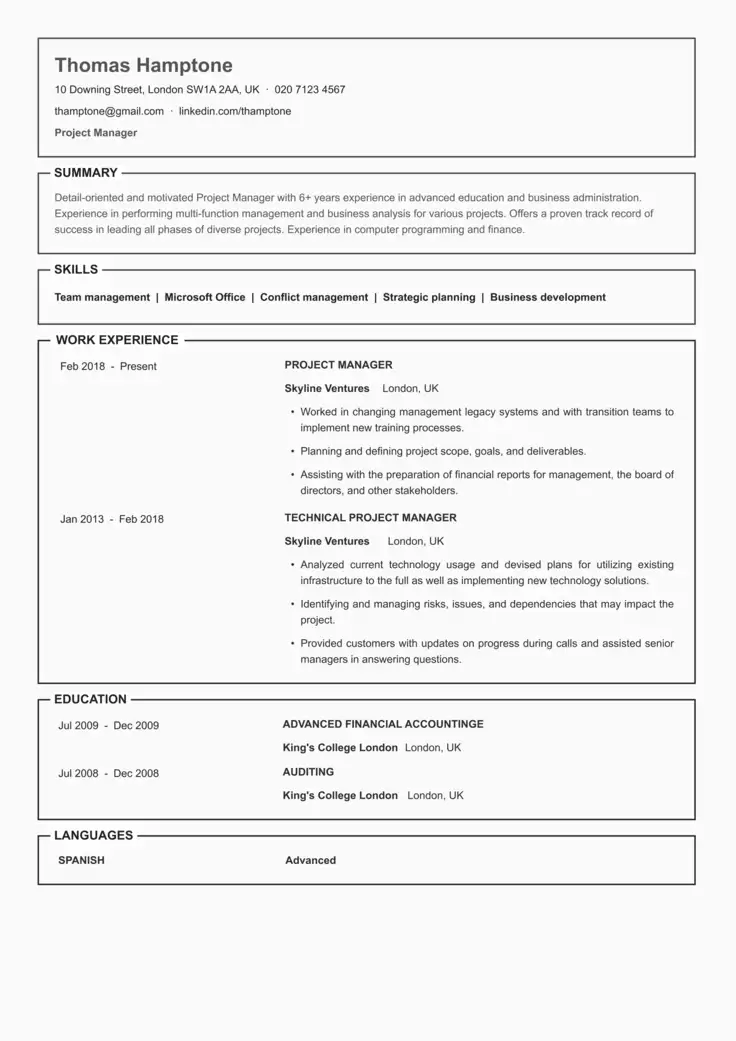
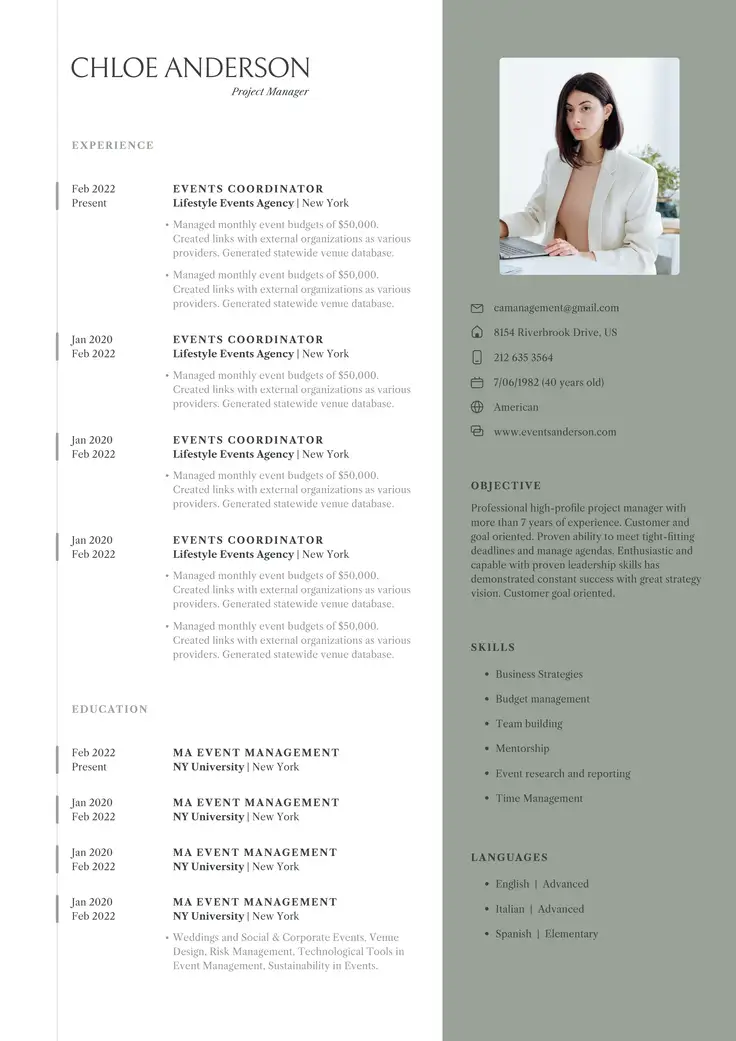
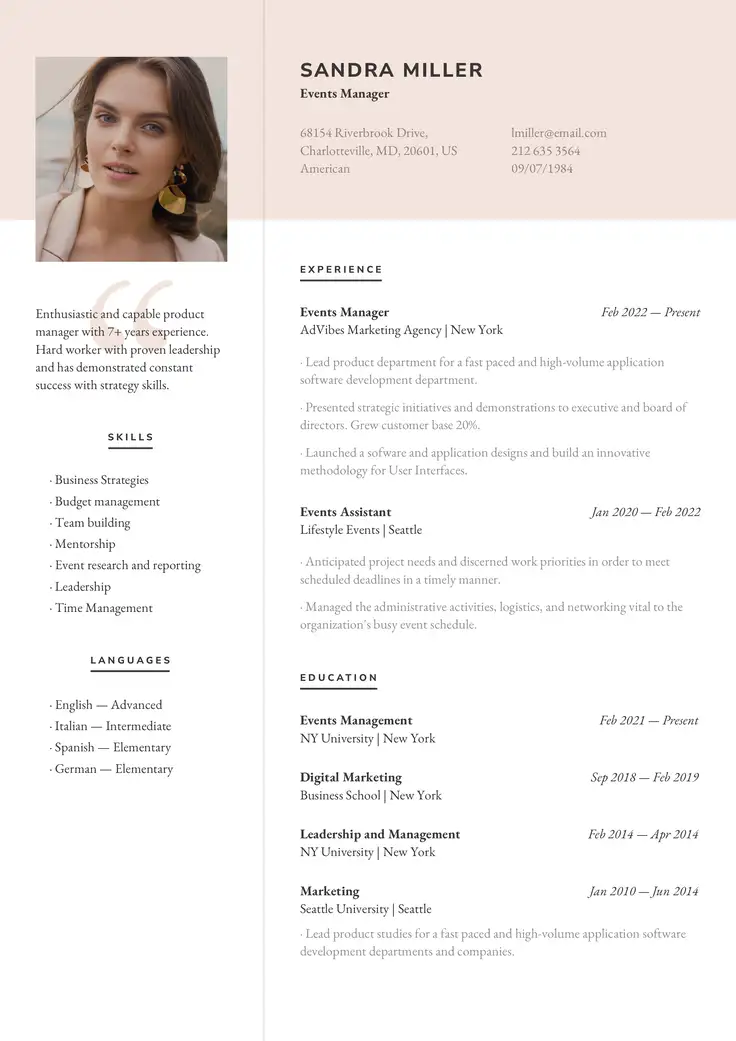
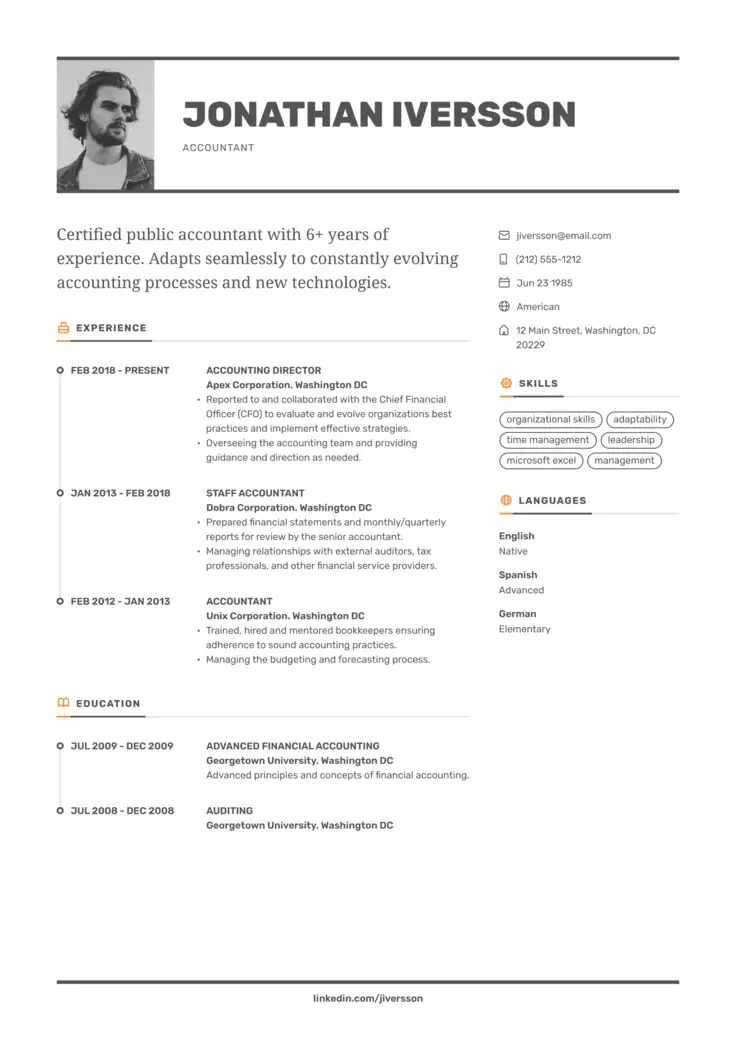
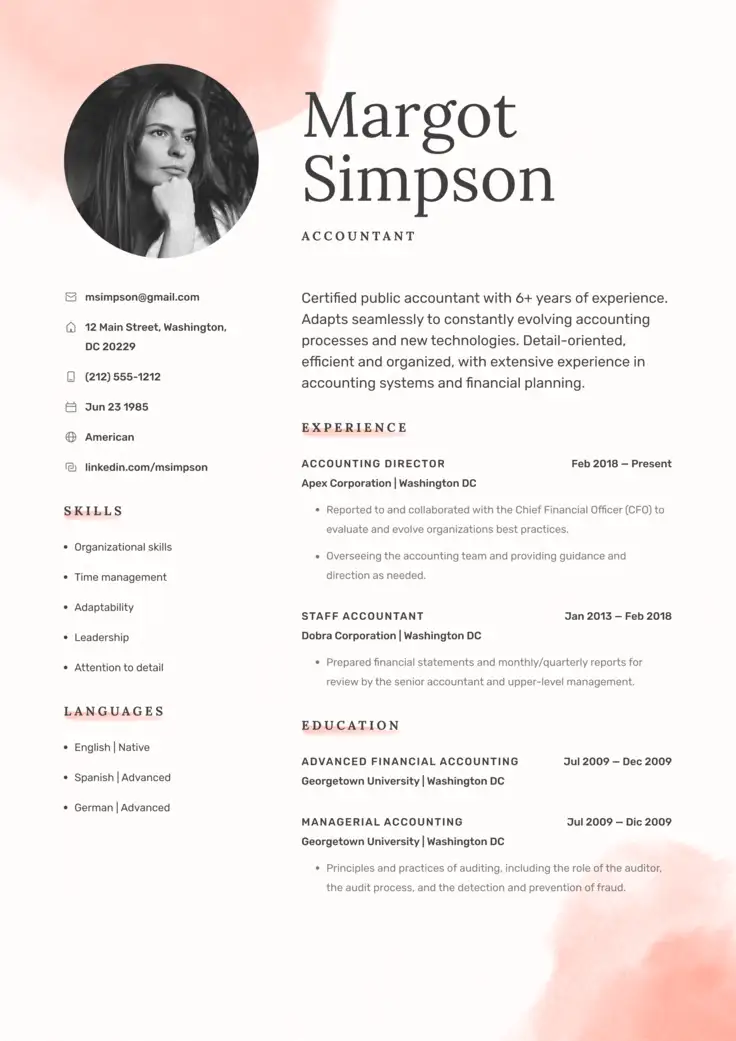
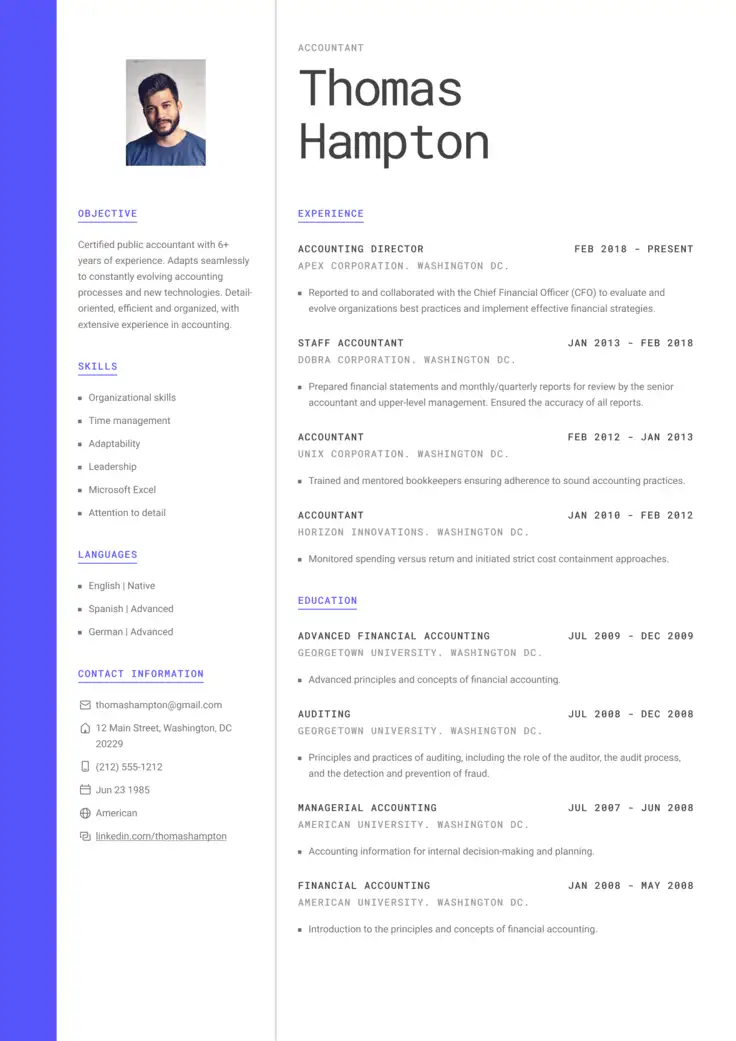
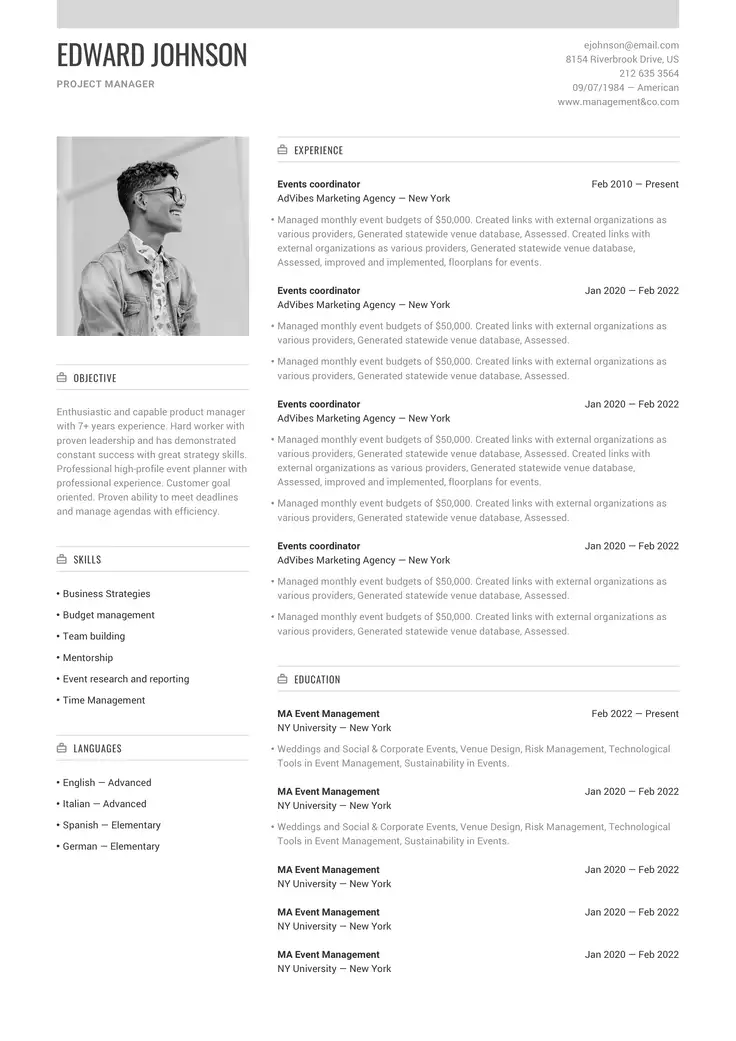
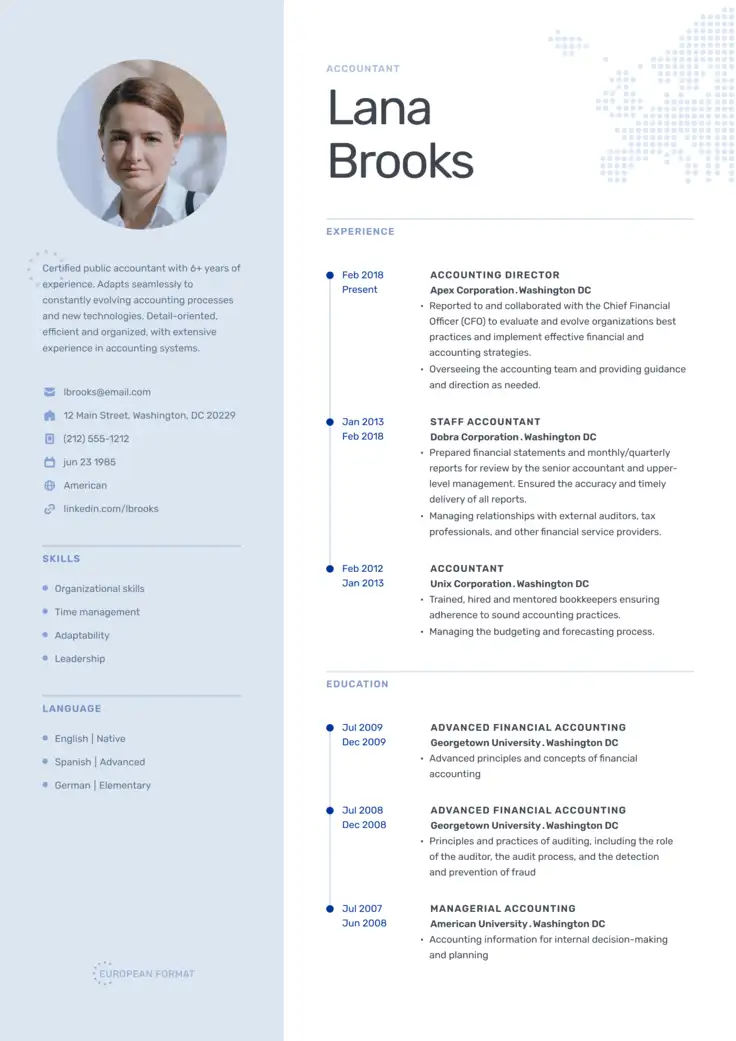
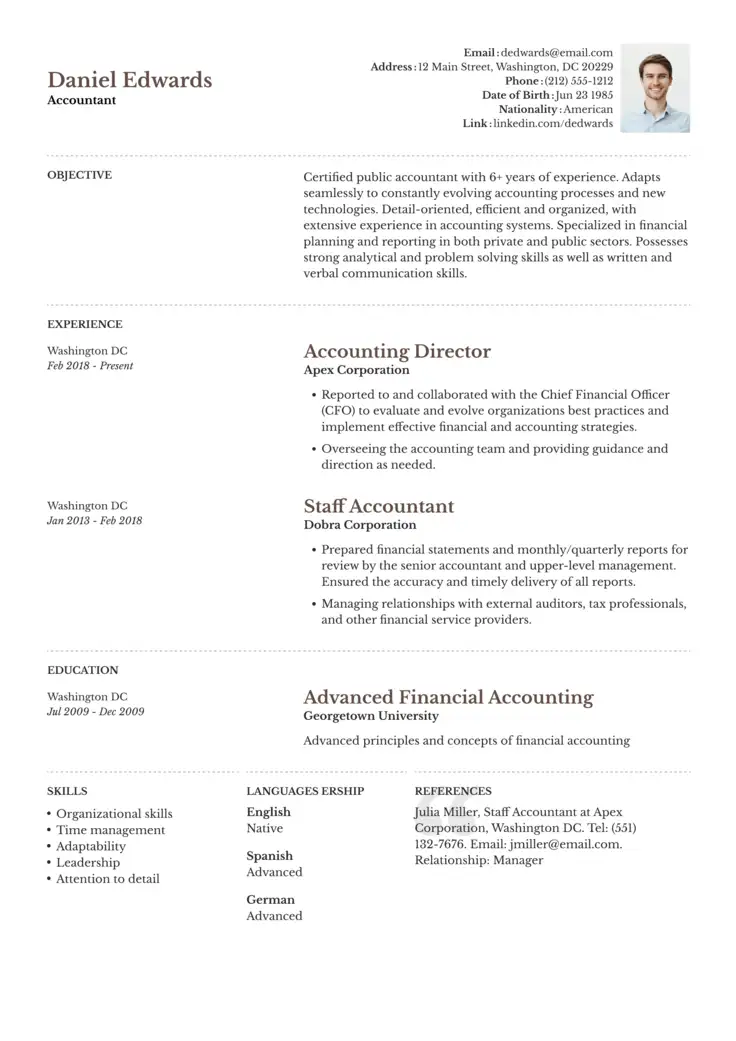
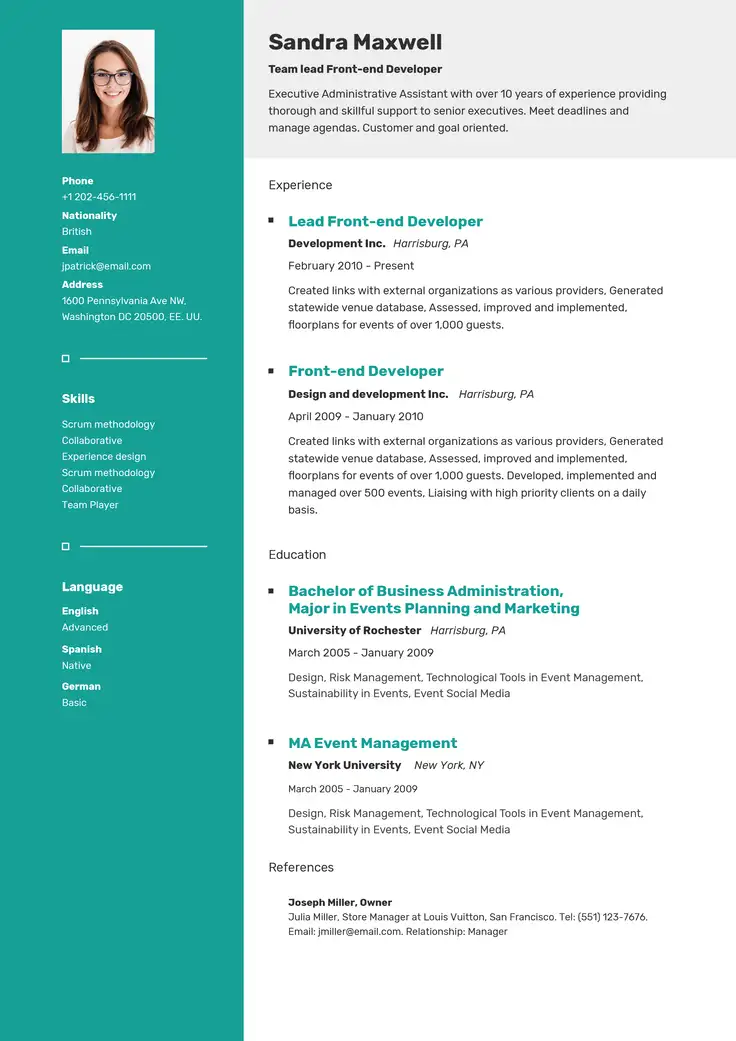
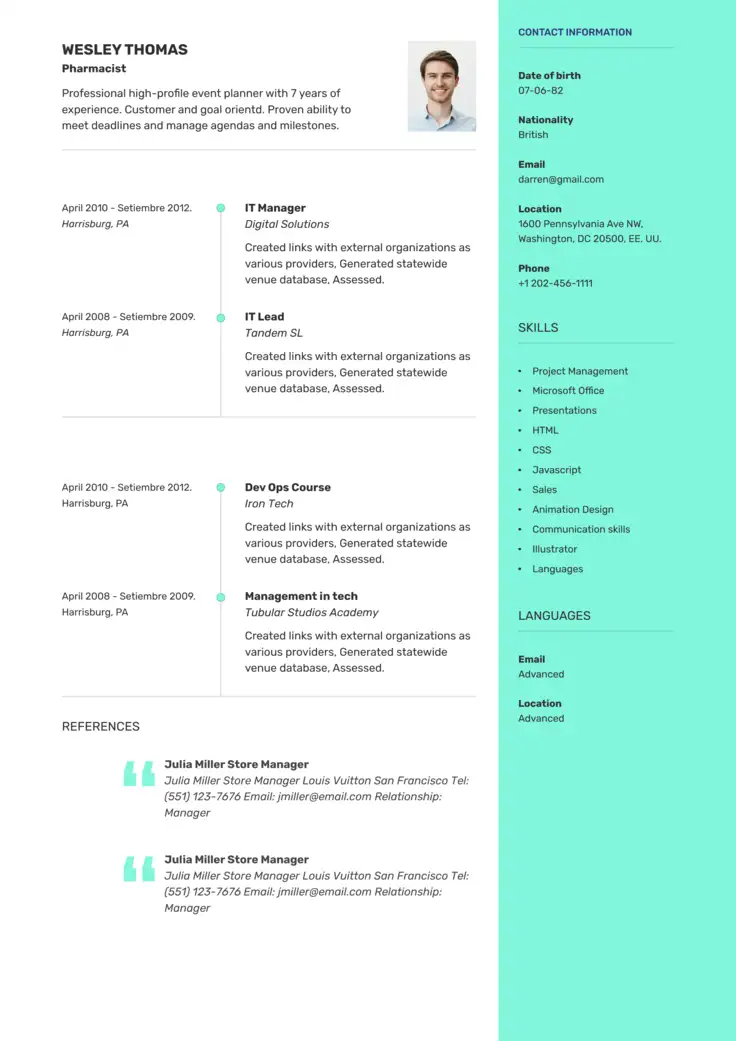
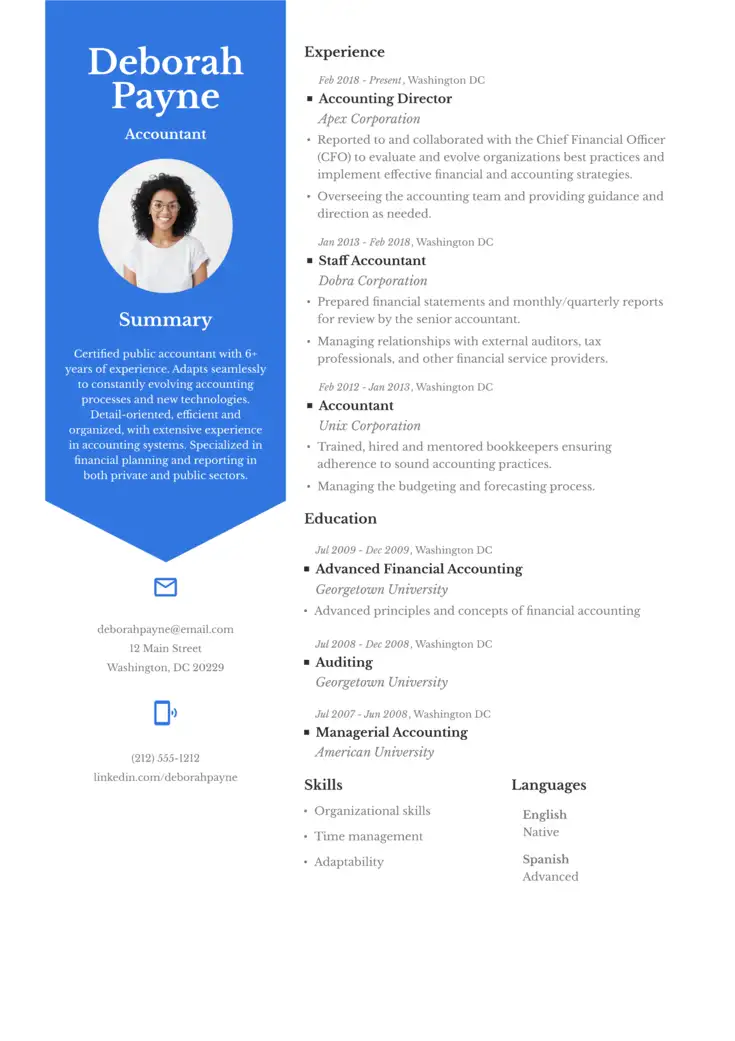
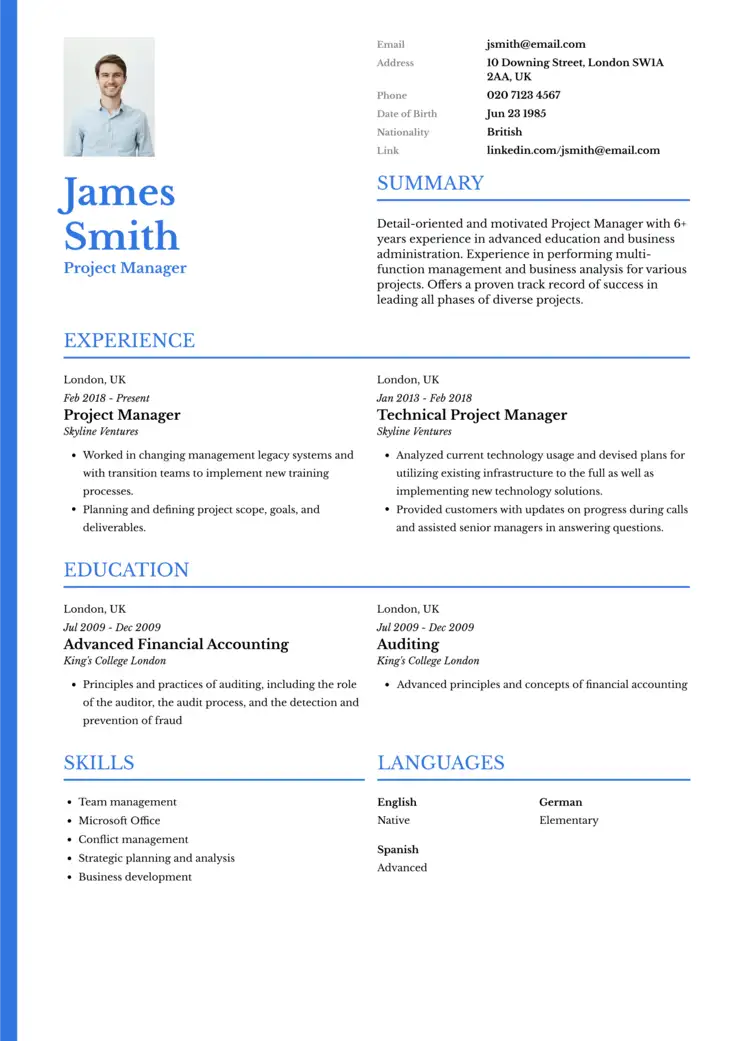
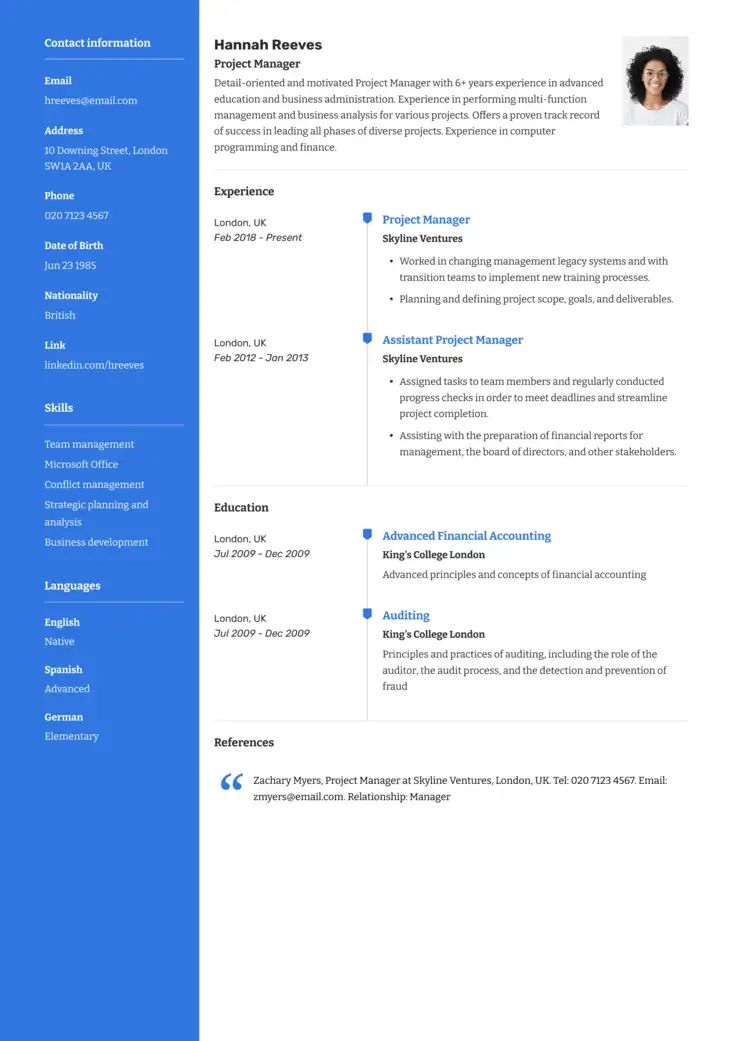
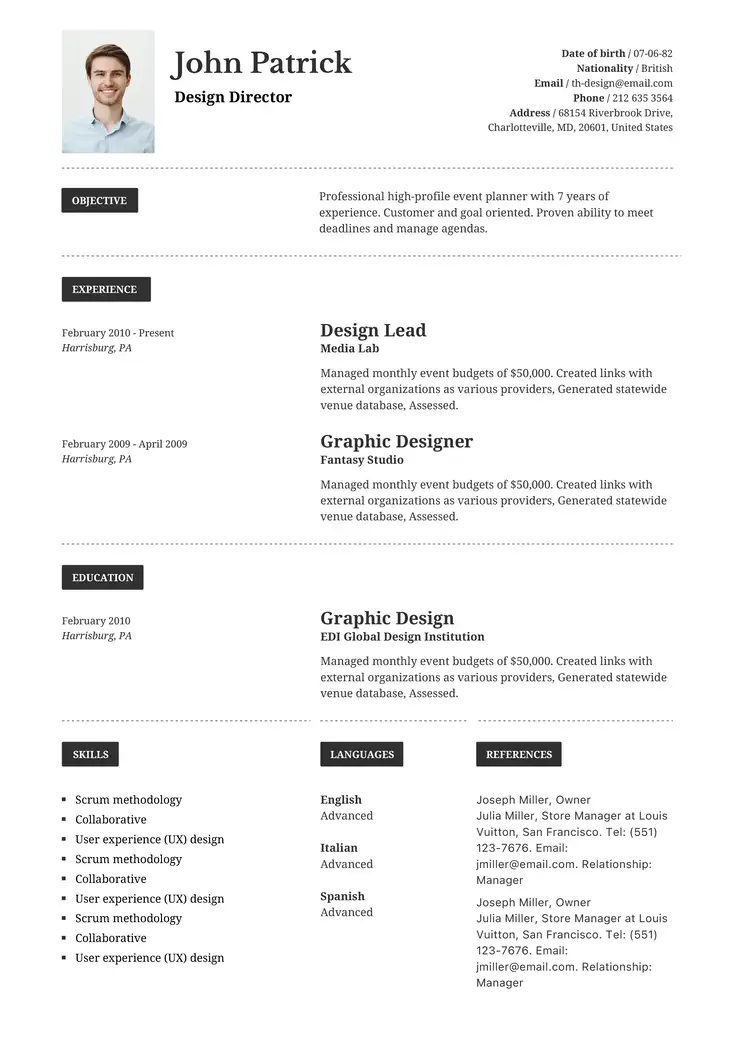
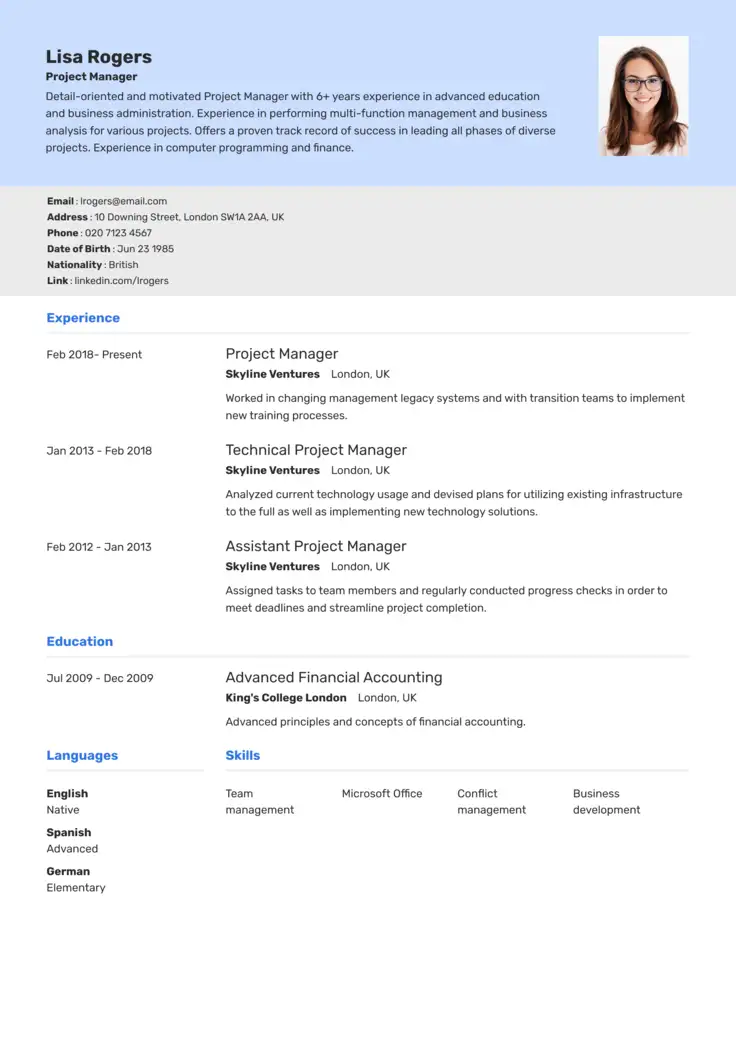
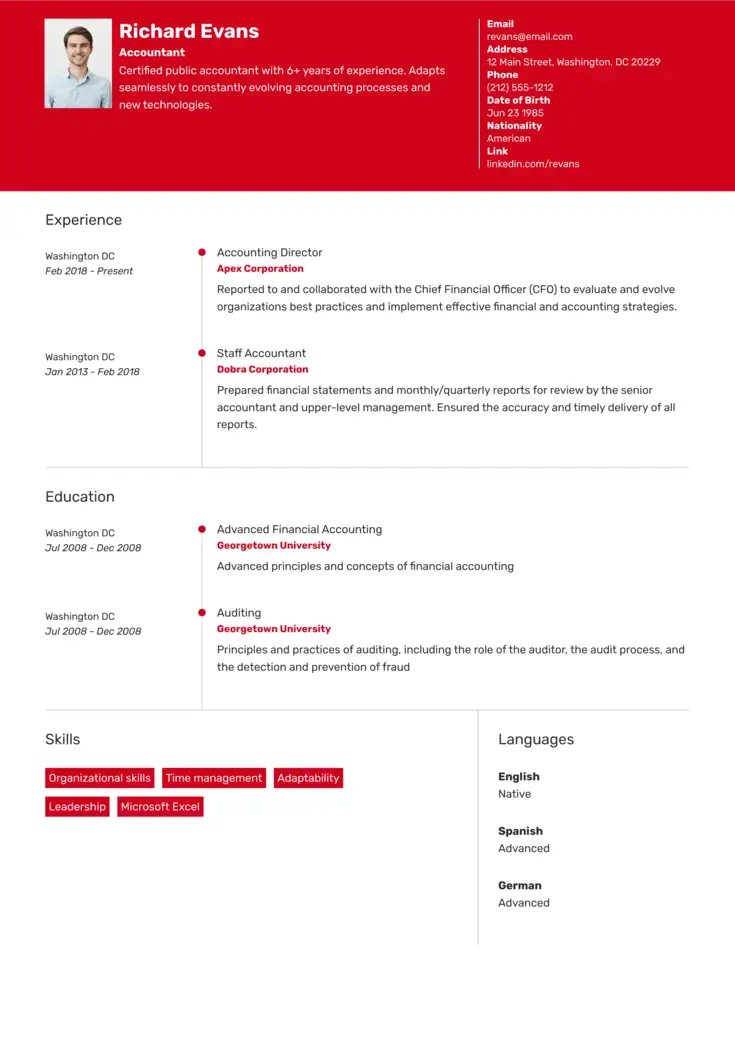
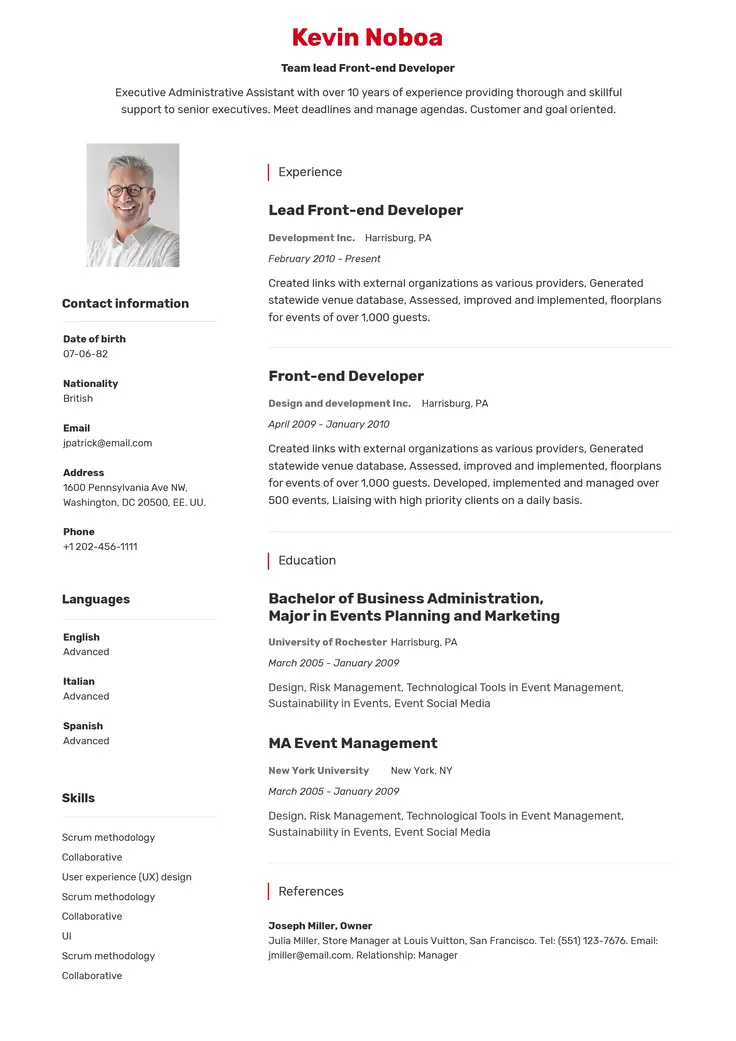
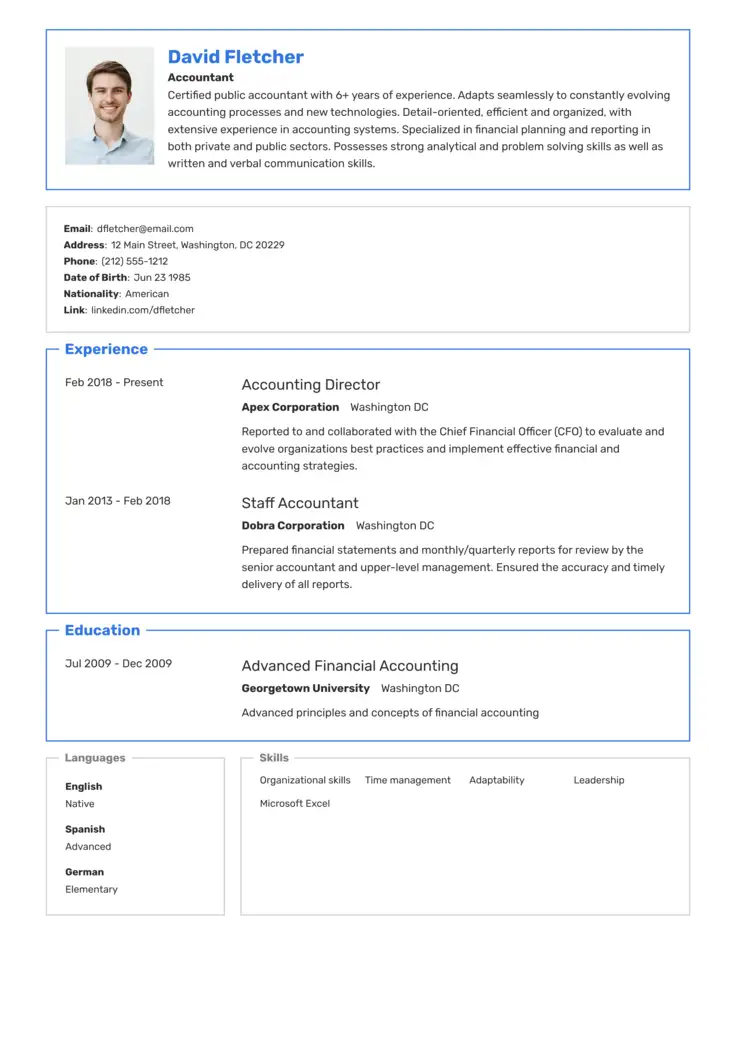
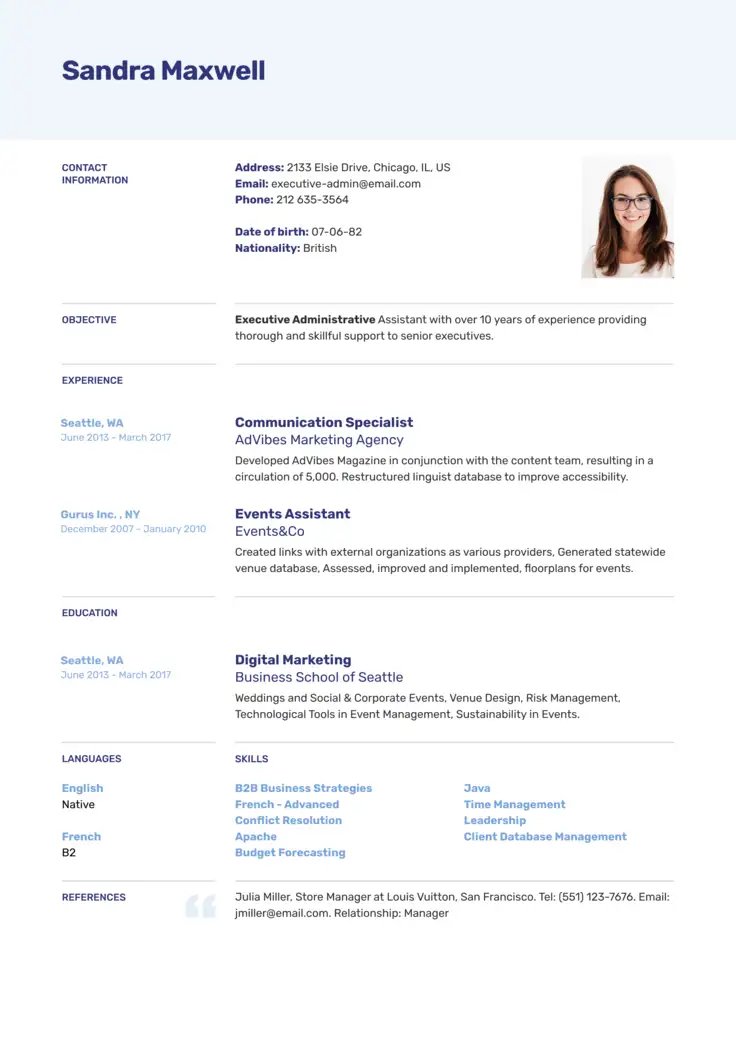
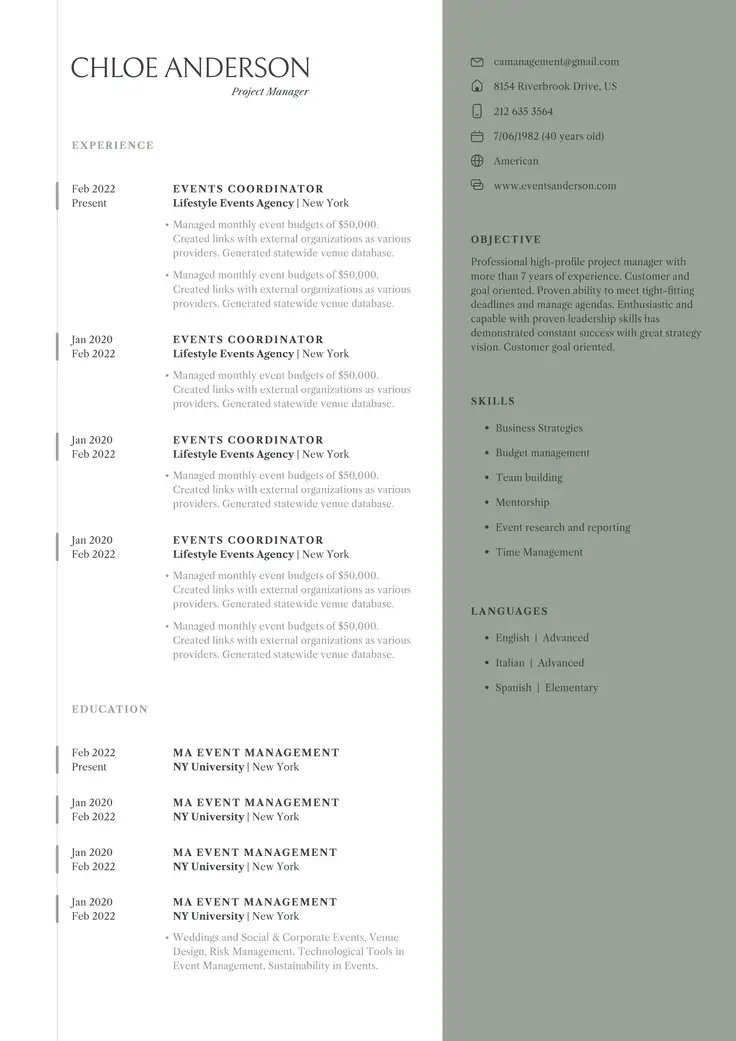
A professional resume is essential for any candidate seeking to change their current role, move up the career ladder, or look for a new company.
Nowadays, practically all professionals know how to make a standard resume, but that won’t be what earns you an interview with your preferred company. Currently, it takes much more than just the standard couple of pages summarizing your experience and education to catch a hiring manager’s eye.
Today’s job market is highly competitive, and if your resume doesn’t convince potential employers that you’re worth hiring, or at least inviting for an interview, you’ve got no chance!
Within the cut-throat world of work, businesses look for candidates who stand out and pass what Forbes magazine calls “the 60-second test” with real examples of how they can contribute as a vital team member.
The process of creating a professional resume has become much more detailed. To get ahead, today’s professionals must have an up-to-date, easy-to-read and comprehensive resume!
In this guide to writing a professional resume, you’ll find practical tips and advice as well as useful templates to use to make a great resume, worthy of a callback.
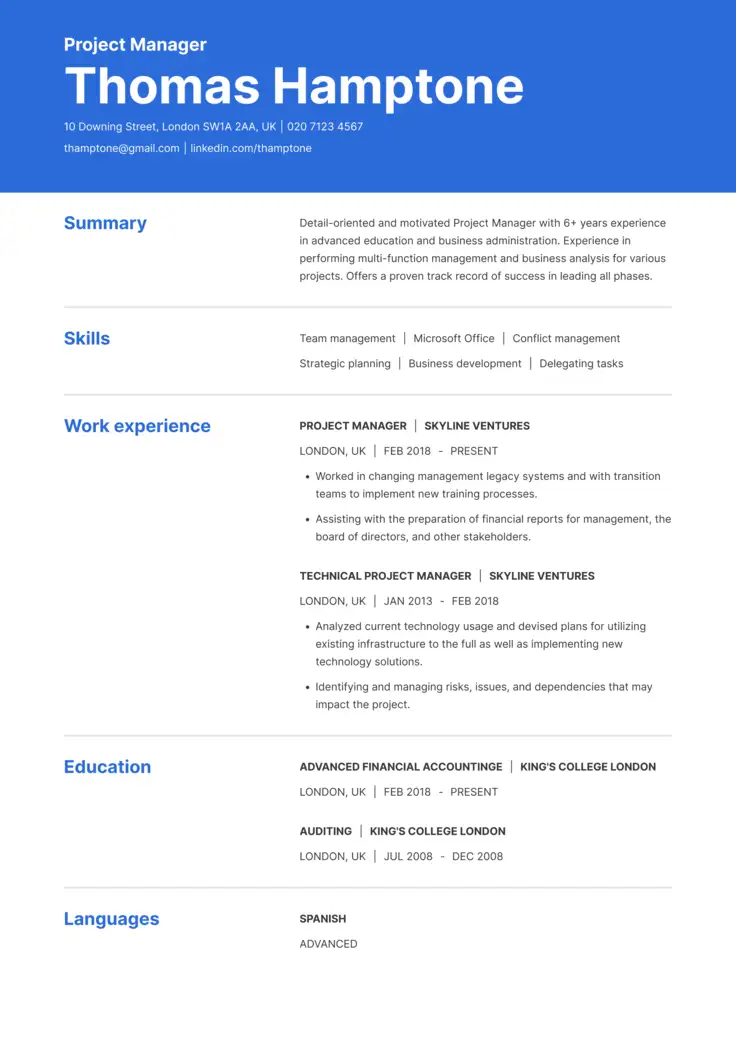
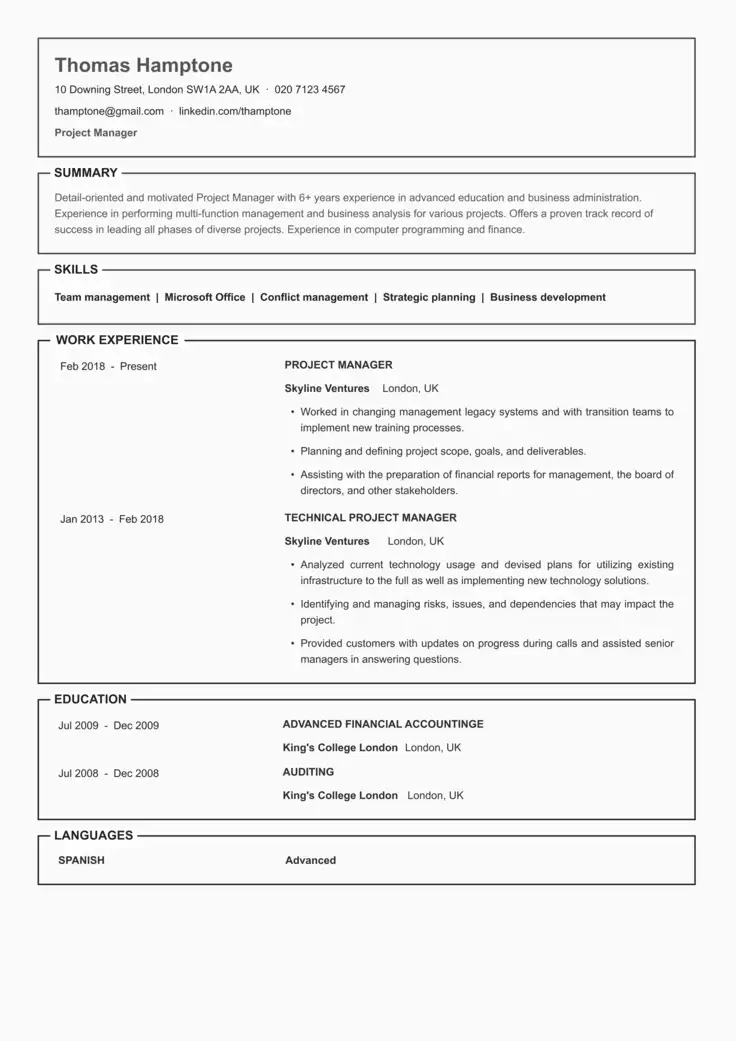
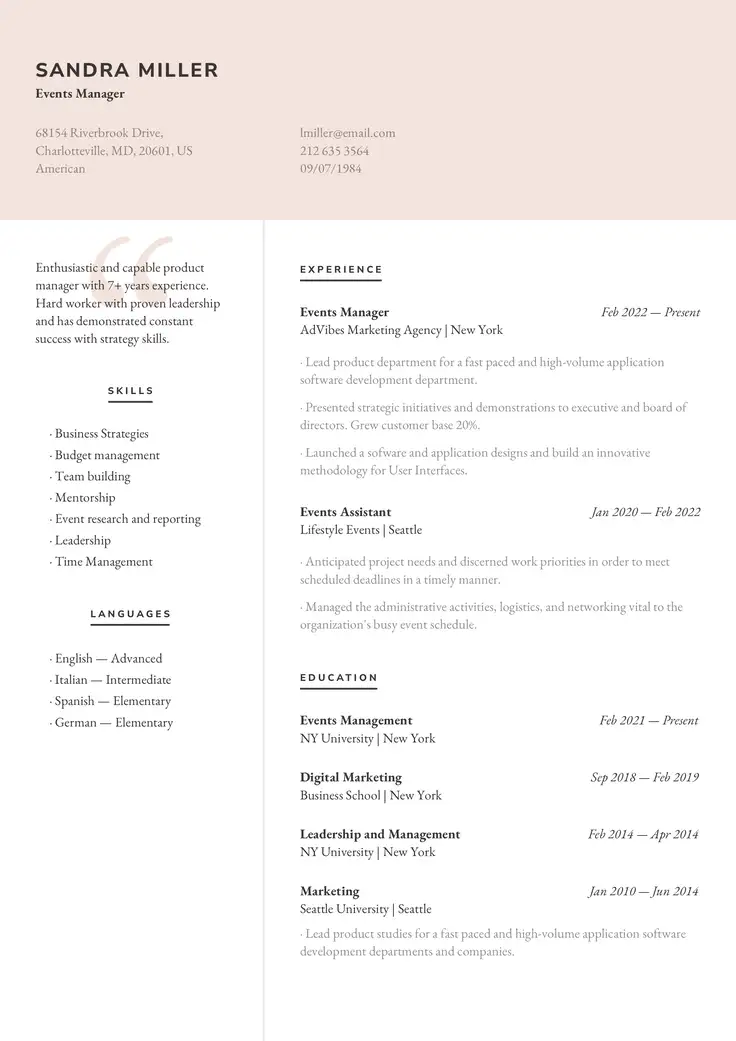
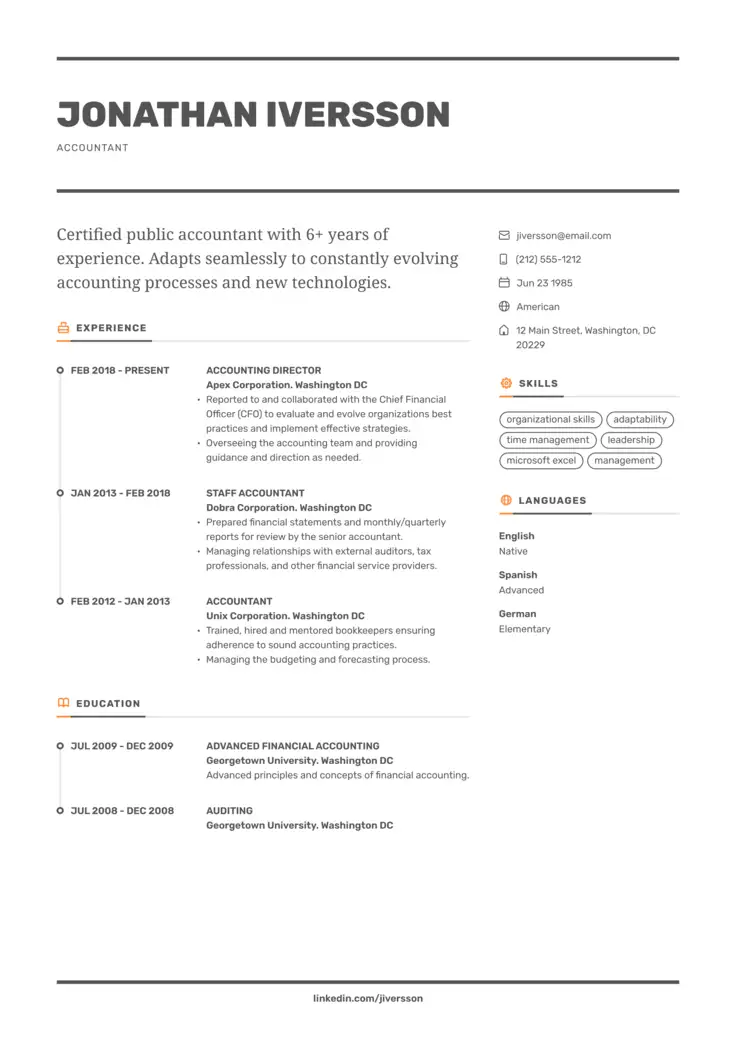
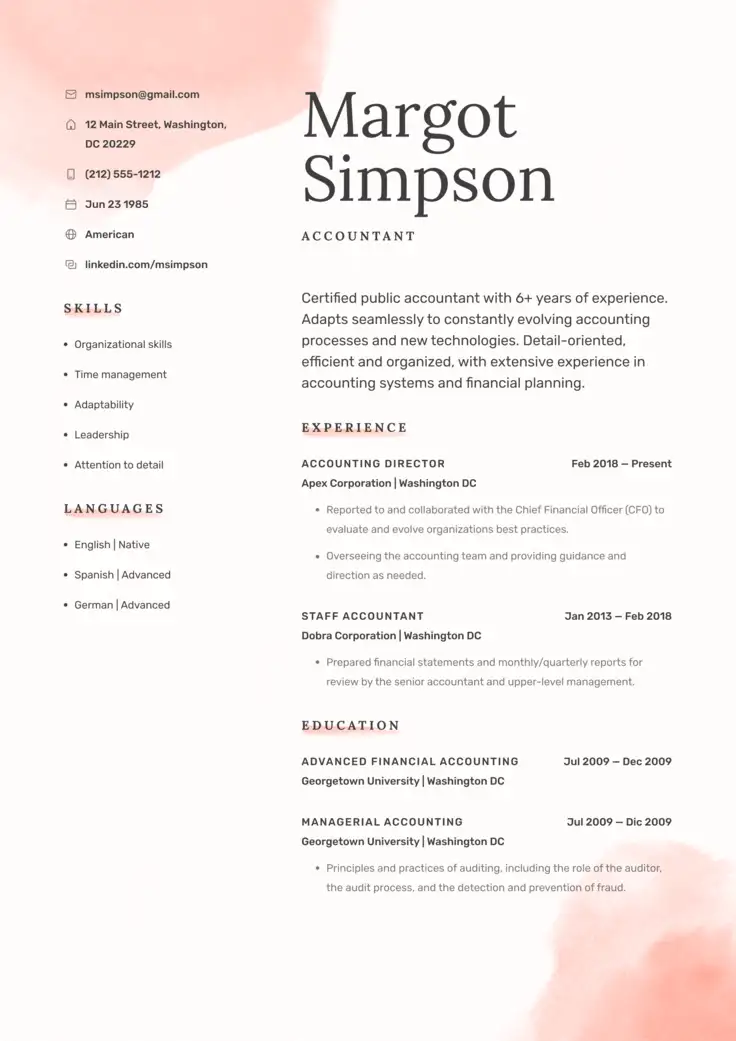
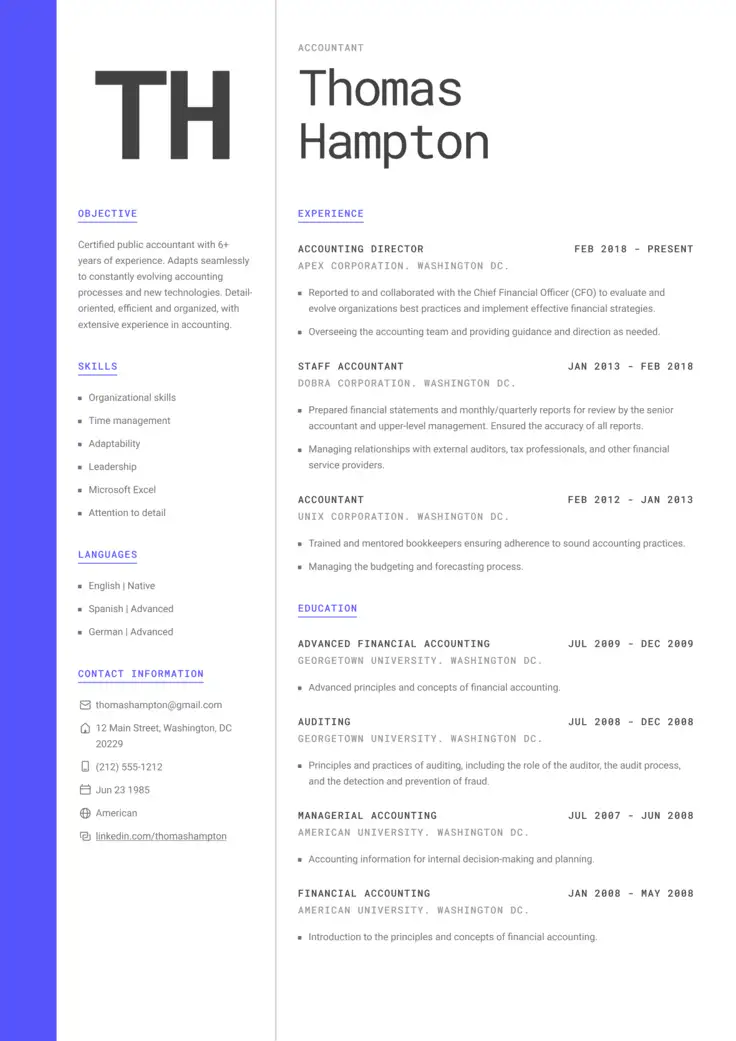
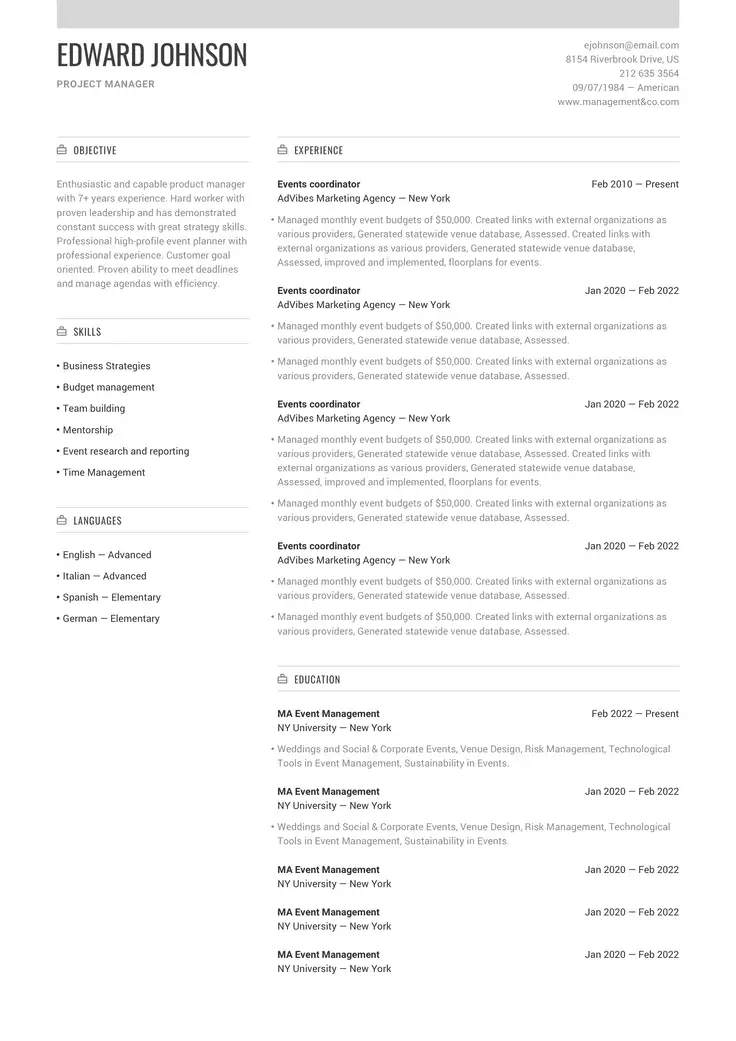
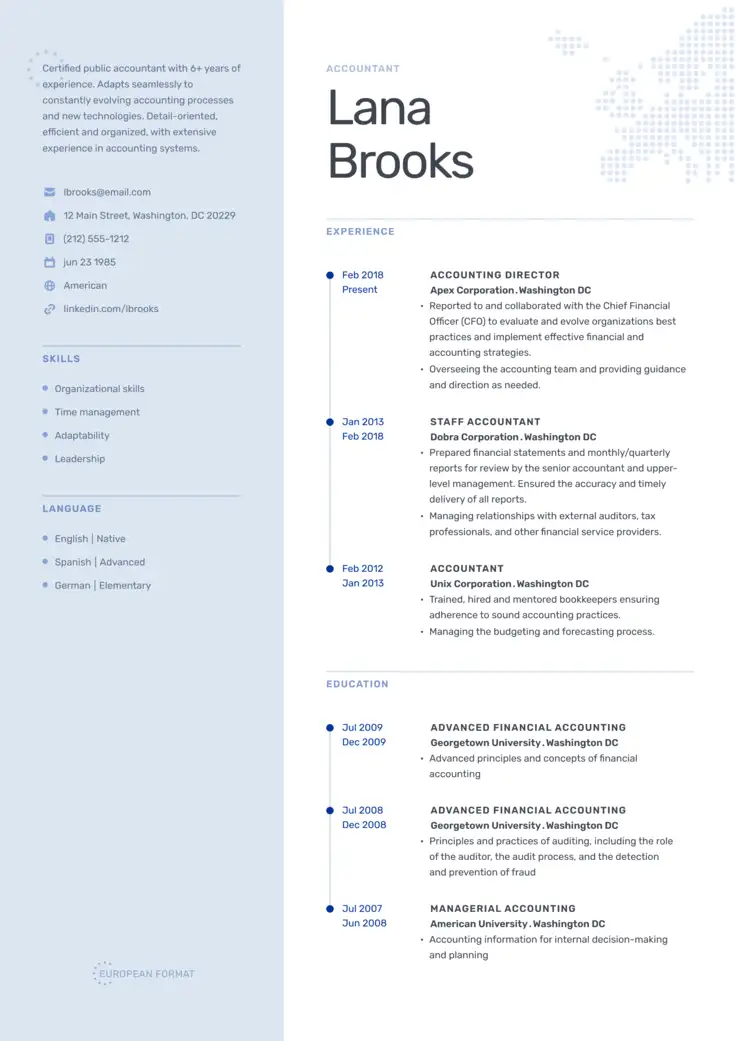
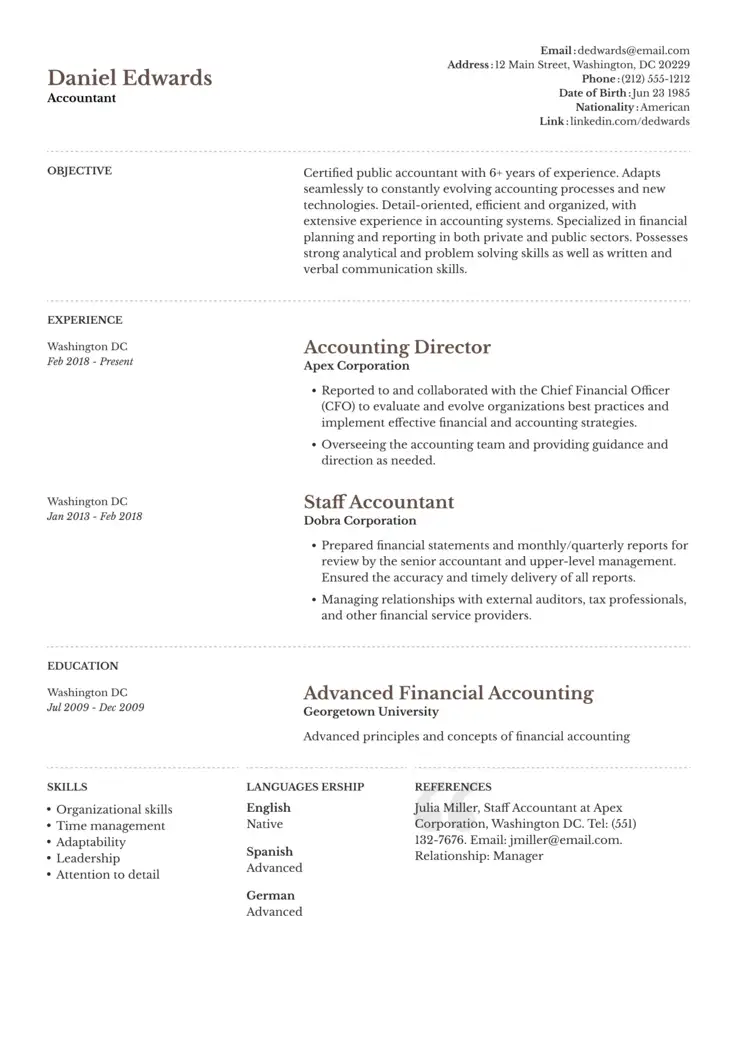
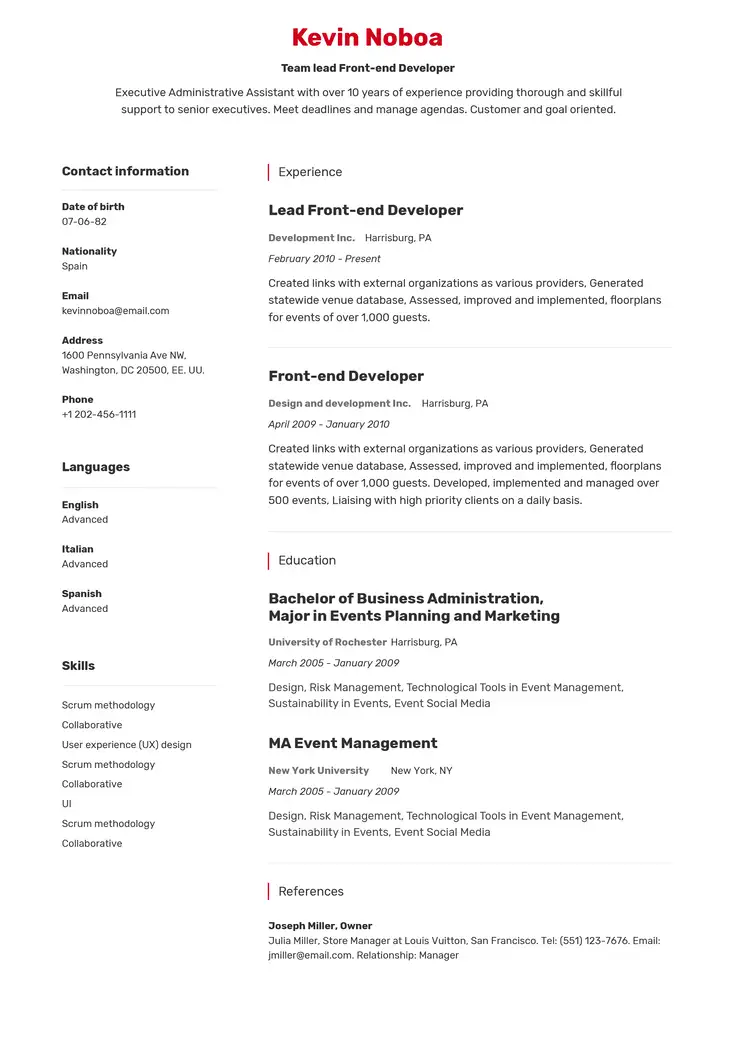
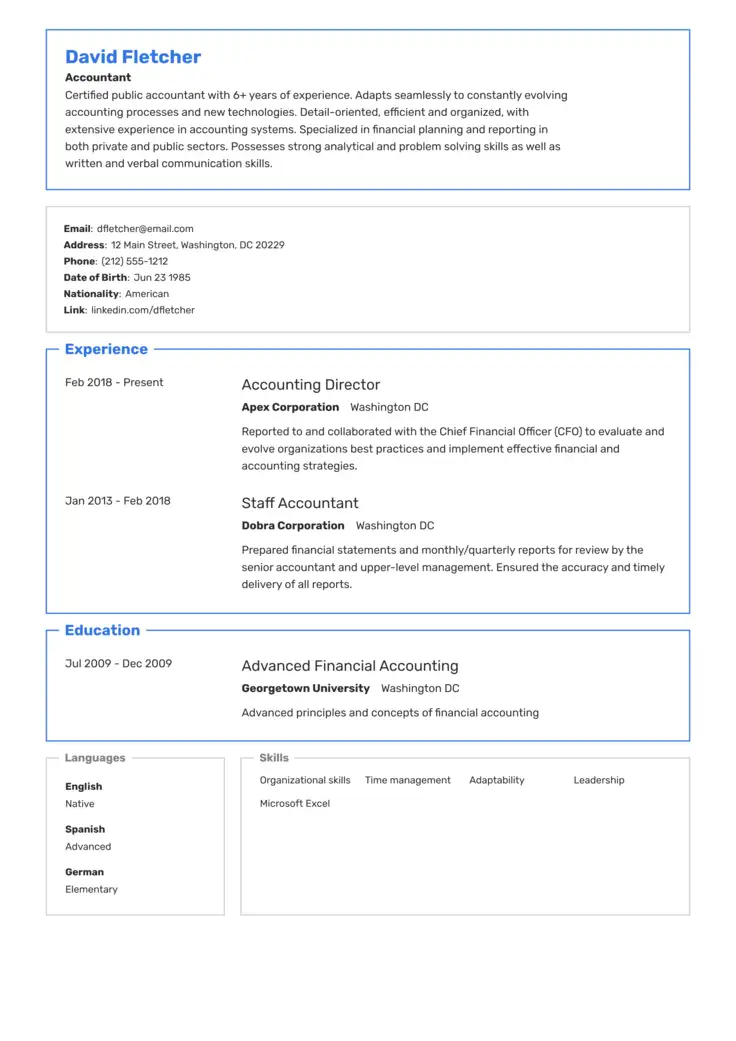
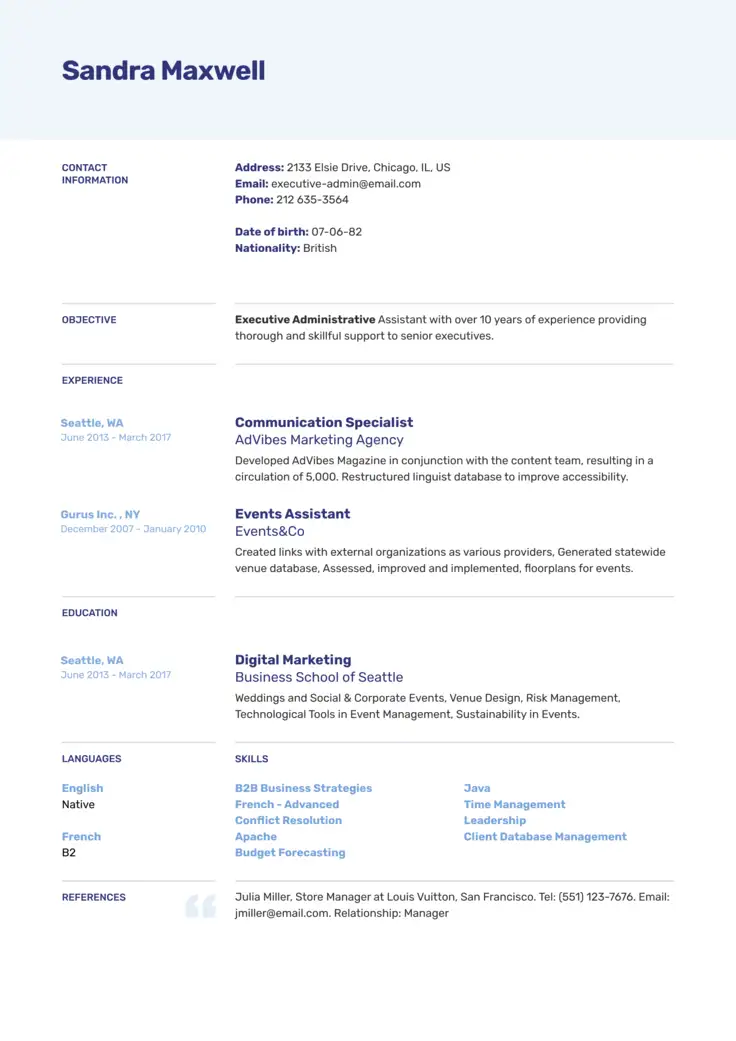
How To Write a Professional Resume
Need to know how to write a professional resume? What information should you include? Take a glance at the following guide to professional resume writing for some tips on how to easily create a polished professional resume:
Previous Preparation
When a jobseeker needs to write an effective professional resume, the first thing they should do is PLAN!
Just like with other writing tasks, the best approach is to outline what will be included in a draft by listing your work history, education, skills, and other areas of interest before filling out the resume template. If you’re not sure about all the sections to include in a resume, you can check out our Resume Writing Guide.
💡Tip
Make sure the best parts of your experience stand out by using AI-powered suggestions that you can create with our resume builder.
If you need a little resume writing inspiration, try answering the following questions to get you started:
- What have I accomplished in my professional or academic career?
- Which of my achievements are relevant to the position I’m seeking?
- Which of my skills have helped me to fulfil my goals?
- What are my most favourable professional attributes?
- Have I taken on any leadership roles in the past?
With these resume-building guidelines, each candidate can analyze their needs and tailor their professional resumes to fit the vacancy they’re interested in.
It is vital to have a clear idea of what the resume should include before getting started to create the best professional resume that catches the attention of hiring managers.
Professional Resume Layout
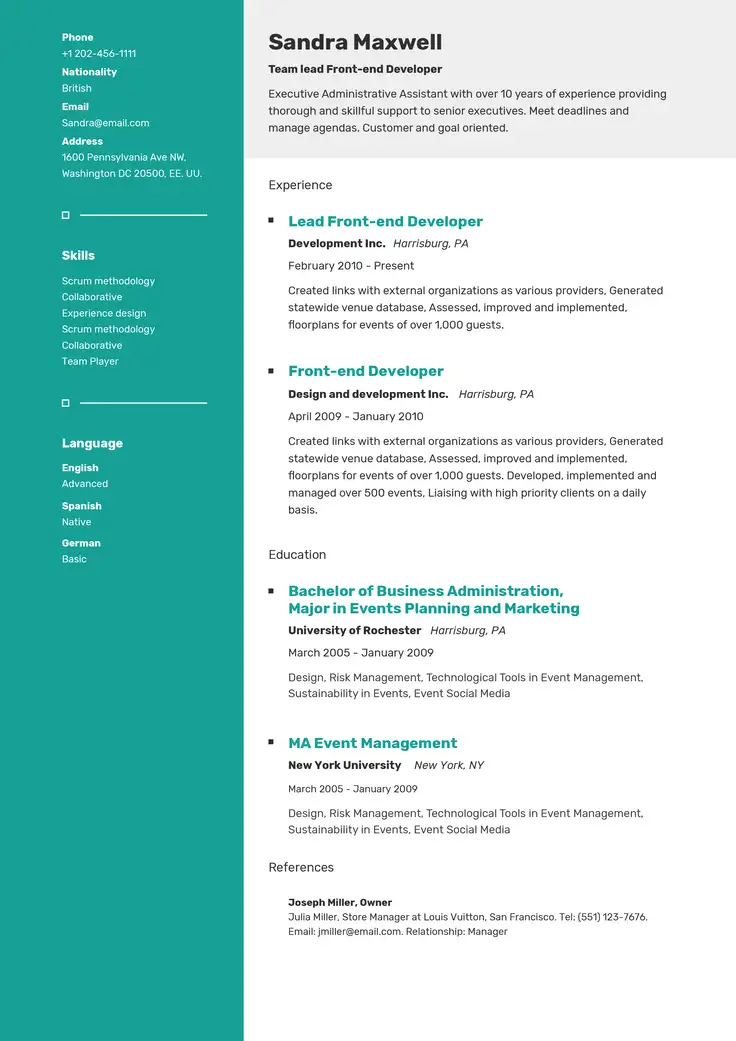
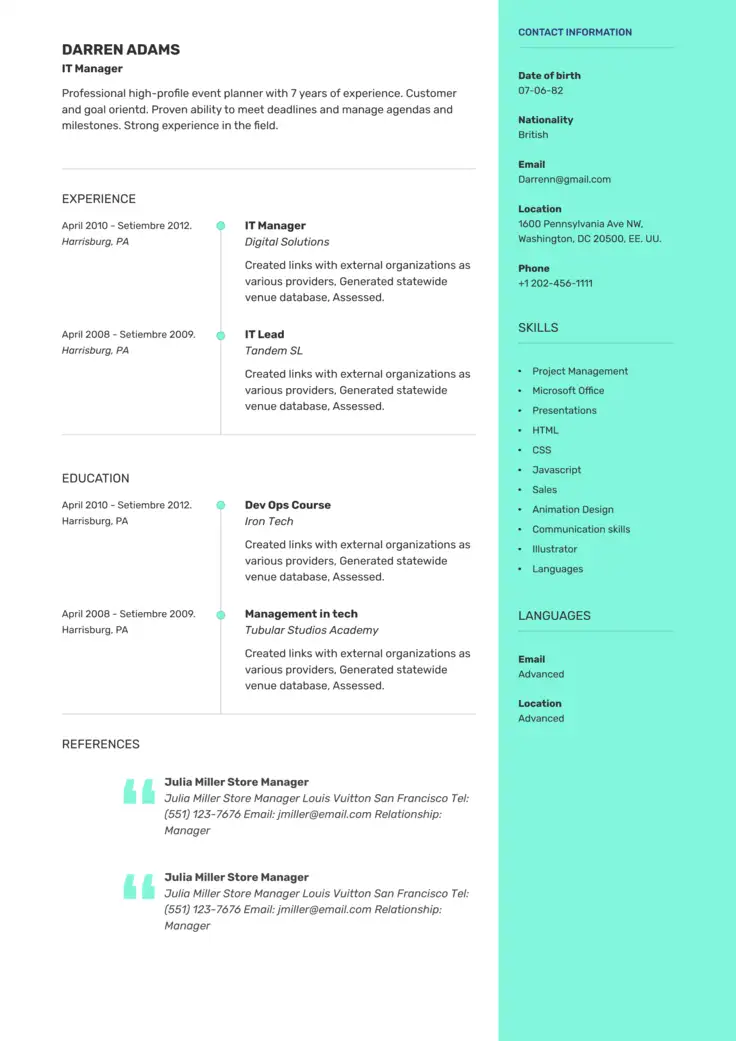
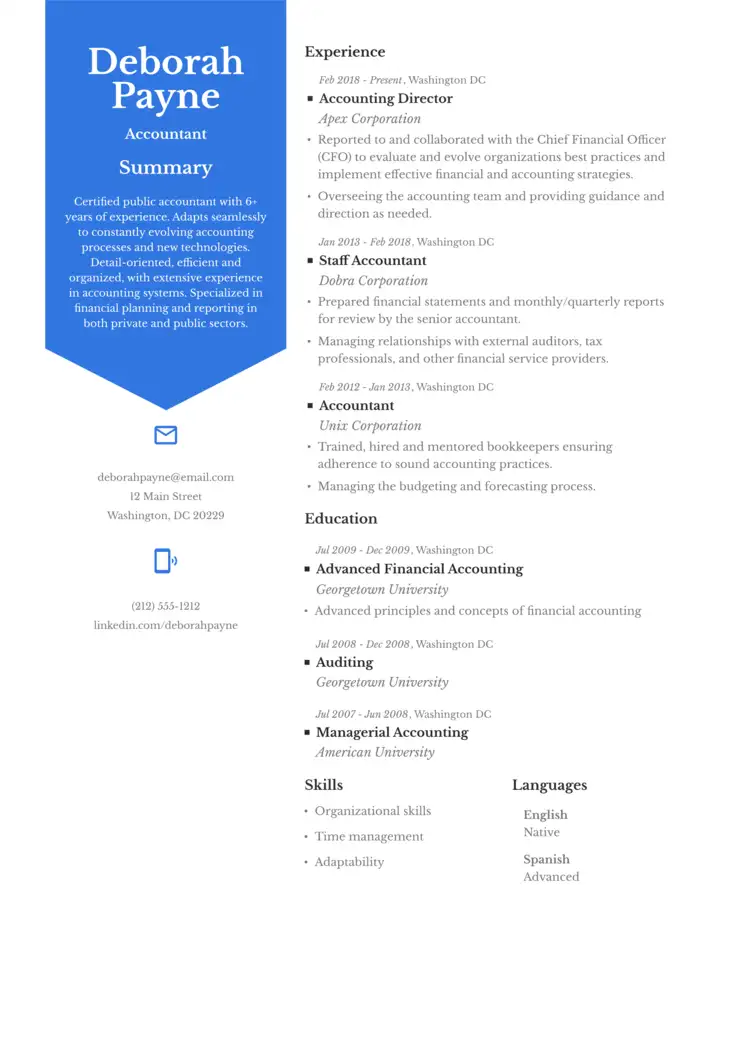
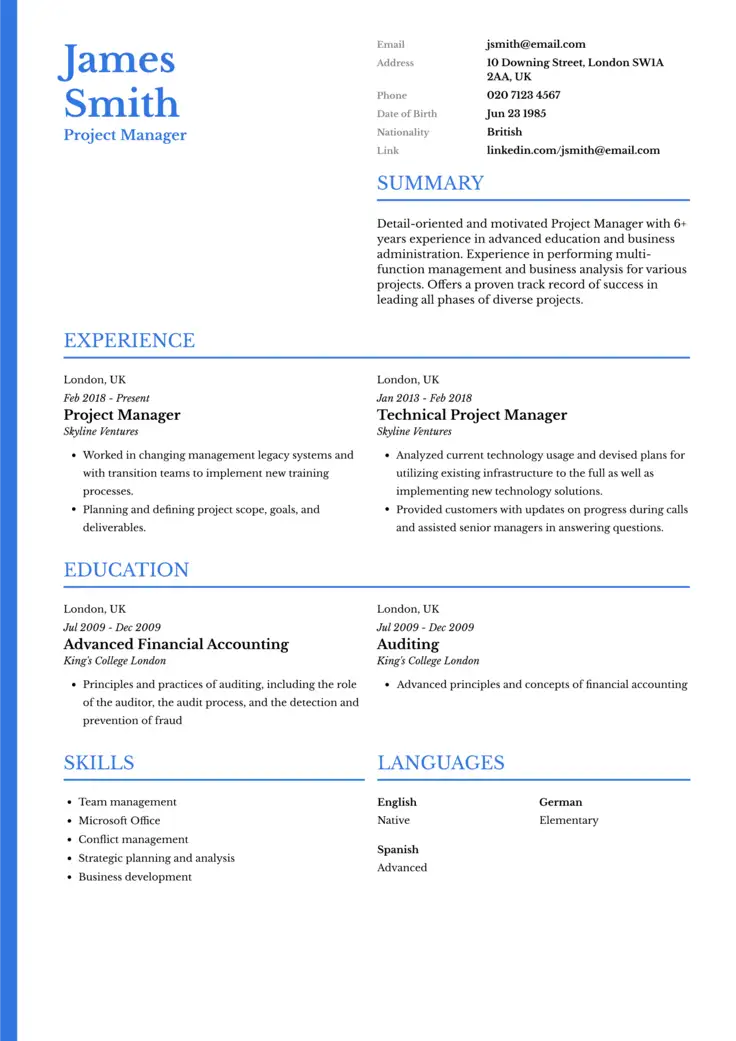
The next step is to choose the resume style that best fits each candidate’s individual profile. This means considering different professional resume layouts and adapting whichever format to the applicant’s needs.
The type of resume you choose is also important and should be customized to your needs. The 3 main resume formats can be categorized into the following:
- Chronological – Standard template, ideal resume for those with lots of relevant work experience.
- Skills-based or Functional: Perfect for job seekers with gaps in their work history.
- Combined: This form is a more modern style apt for candidates with some work experience and lots of potential, or those changing career fields.
The best way to emphasize your executive skills and relevant work experience is to use a professional resume template, which handles the formatting and layout for you. That way, you can focus on making the content as appropriate and engaging as possible to convince the hiring manager to call you for an interview.
If you’re having trouble figuring out how to make a resume, why not try using an online resume builder to guide you through the process? A resume maker can help you by offering tips on the professional resume structure, as well as providing a range of resume examples to choose from.
What sections should you include?
To make a professional resume stand out from the hundreds of candidates applying for any given vacancy, it is vital that the jobseeker include sections that catch the employer’s eye.
Here we offer a guide to the most important resume sections to include in a professional resume, whether you choose to use a resume example as a benchmark, save time by employing a resume builder or learn how to create a professional resume from scratch.
Objective or Summary
The very first section of a professional resume is the objective or summary statement, which gives the hiring manager their first insight into the character and professional profile. According to a Forbes survey of hiring managers, HR recruiters consider this to be the most important part of any resume.
A resume summary statement, however, is more common among professionals, as it provides a brief description of the individual’s career path, including skills, experience, and personal expertise relevant to the desired role.
Work experience
The work experience section is probably the most important part of a professional resume, as candidates often have a rich work history to include and develop in their profile.
When detailing work experience on a professional resume, each candidate should include the job title, company name, location, dates of employment, and a brief description, either as bullet points or in a short paragraph, explaining the achievements and responsibilities undertaken in each position.
Skills
Knowing how to write the skills section on a professional resume can be difficult, but remembering to tailor the vocabulary and to introduce keywords from the person specification or job description directly into the skills list can greatly improve the chances of getting a callback.
It is crucial for job seekers to include in their professional resume skills section those that are relevant to their preferred industry or position.
It is also imperative to list competencies that can be adapted to a variety of different situations, such as being a good team player, an effective communicator or having good time management.
Education
In a professional resume, the education section comes as standard and should always be completed with details of each degree or course completed by the candidate.
This should include not only the name of the diploma but also the institution where it was received, dates of graduation and extra information such as modules studied or projects produced. This will give the potential employer an understanding of the academic background and training of the individual so that they may decide if their profile matches the company’s needs.
References on the Professional Resume
References are used by employers to gain an insight into what kind of worker the candidate is. Recruiters contact the applicant’s previous employers or colleagues to solicit their professional opinion of the applicant’s conduct and character.
Although it was common practice in the past to include references on a professional resume, this is no longer the case unless explicitly specified in the vacancy. Generally, people limit themselves to adding a final sentence indicating the possibility of “references upon request”.
It is now increasingly acceptable to simply await the company’s request for references and then send the contact information for your chosen references.
Build your perfect resume with ease
Craft the perfect resume effortlessly with our builder. Get started today!
Tips For Writing The Perfect Professional Resume
In addition to the main sections you should include, the following are other important aspects to consider for professional resumes to showcase your skills and abilities in the best way possible.
Professional Resume Headers
- The subtitles or headers in a professional resume must be short, easy-to-understand and brief titles used to categorize different sections and enable the reader to focus on a specific area of expertise as required.
- The categories you choose to employ in your resume are of the utmost importance because an employer will quickly skim your resume in just a few seconds to see what catches their eye, so the more relevant and unique, the better.
For example, for a project management role, the employer may be more inclined to review a candidate’s work history and the projects they have overseen in the past than to delve directly into the individual’s education or volunteer experience, as these may be less pertinent.
Professional Resume Keywords
Some executive hiring managers use what is known as ATS (Applicant Tracking System) software, which allows a computerized program to filter through the resumes sent for a specific vacancy and provide a pre-selected list to the human resources department to facilitate the first phase of elimination.
Using keywords in your professional resume can greatly improve your chances of making it through this first phase.
Professional keywords can include verbs, nouns and even adjectives to describe tasks and responsibilities you have taken on in the past, which could be similar to those in the new role, skills that are required or desired for the vacancy or knowledge and expertise in a certain area that is necessary or preferred by the employer.
Resume Extension
The generally accepted norm for the length of a professional resume is up to two A4-sized sheets of white paper. There are, of course, exceptions if and when necessary.
In addition to your winning professional resume, applicants are advised to send additional documentation to provide evidence of their activities and accreditations.
These additional documents can include anything relevant to your chosen position, such as a portfolio of previous work for creative types, a letter of recommendation from a previous employer, diplomas from any courses, extra academic achievements or training certificates.
These days, not only can you send your comprehensive application, complete with cover letter and other items, right through the internet, but you can also often get digital copies of all of the above, including a digital resume or linking to a social media page.
For executive roles, these documents can be as long as necessary, but you should also remember that hiring managers receive hundreds of thousands of applications and, therefore, try to keep things as brief as possible to maintain the potential employer’s interest.
However, you should always avoid making your resume too wordy. Research by TalentWorks shows that resumes longer than 600 words make you 43% less hirable.
Cover Letter for a Professional Resume
A cover letter represents an opportunity for the candidate to introduce themselves to their potential employer through a personalized letter accompanying their resume.
It is advisable to use the cover letter to explain anything on your resume that may need clarification, such as gaps in your work history. You can also take this chance to go more in-depth on a subject or specific experience that you feel is of significance to the role at hand.
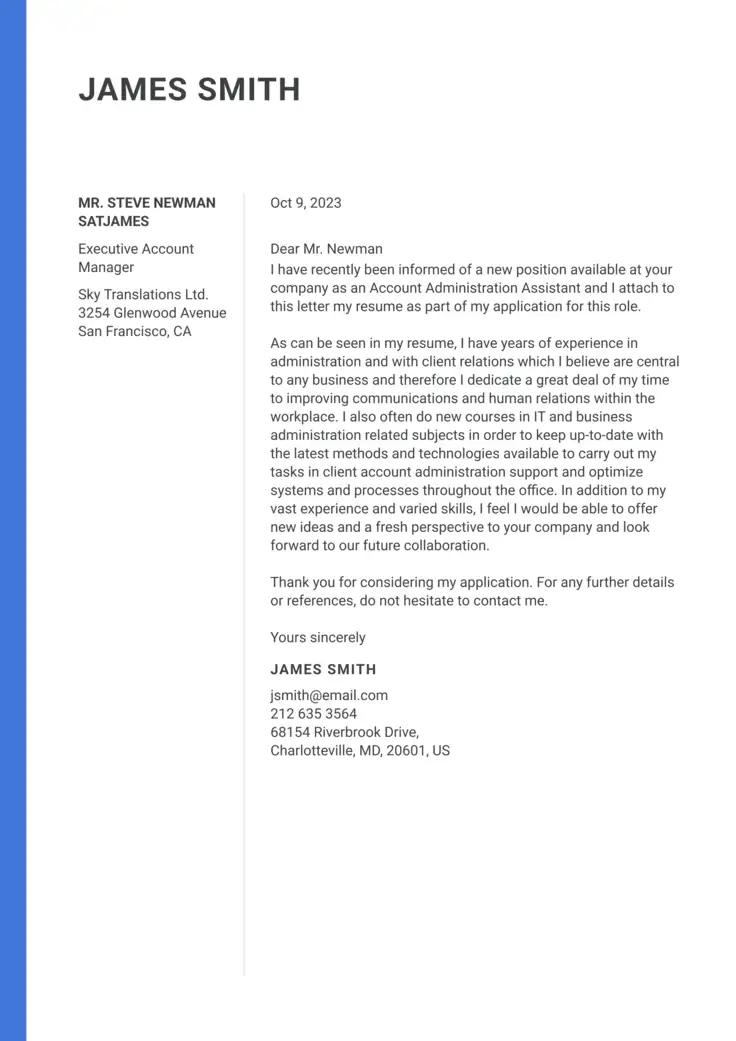
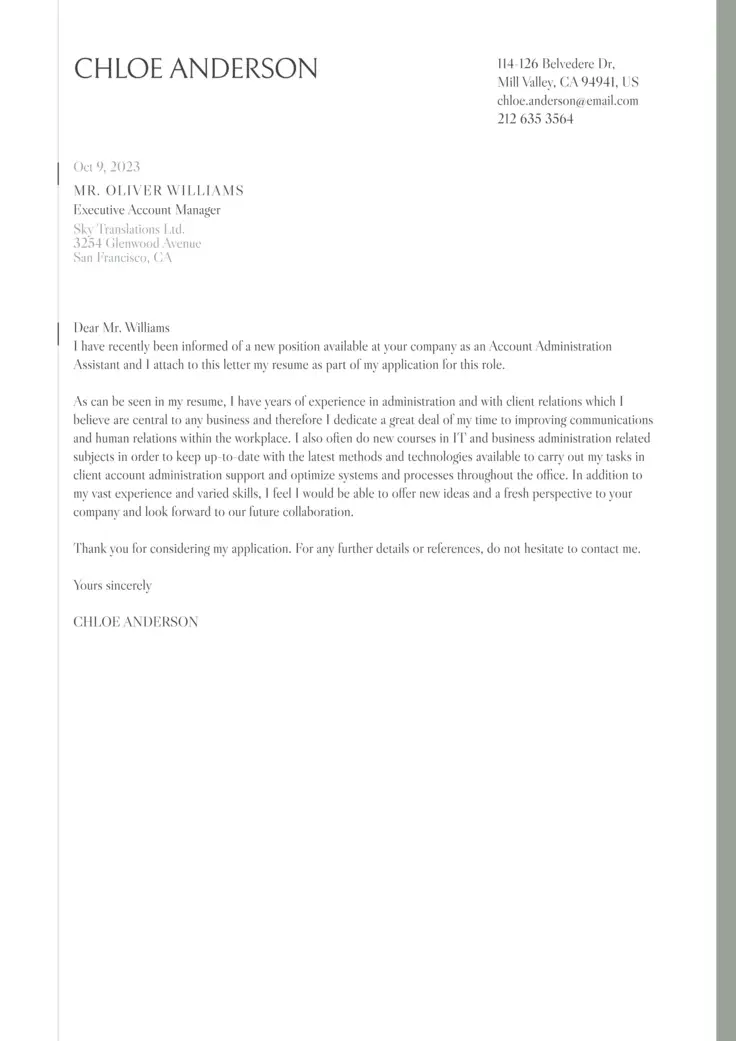
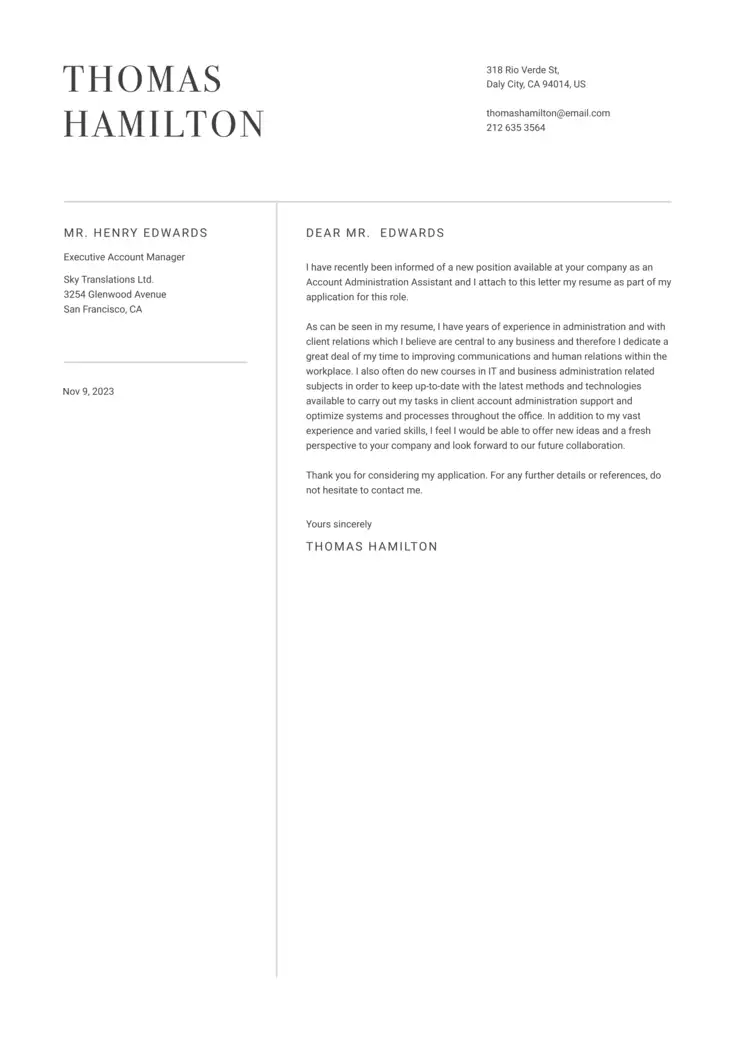
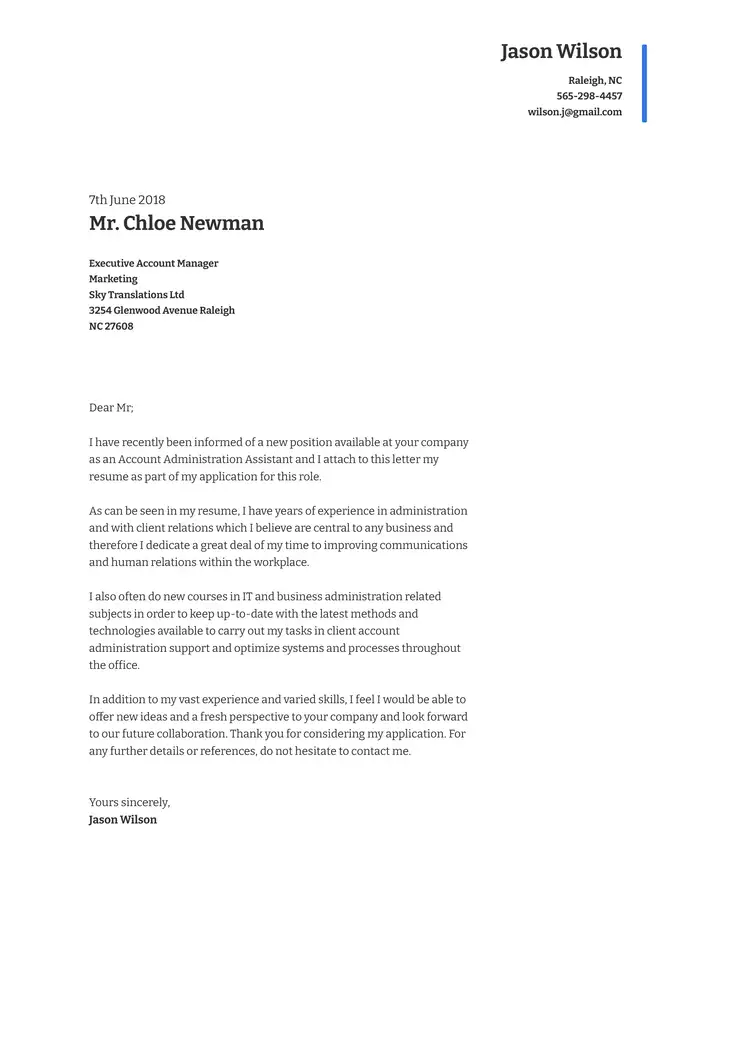
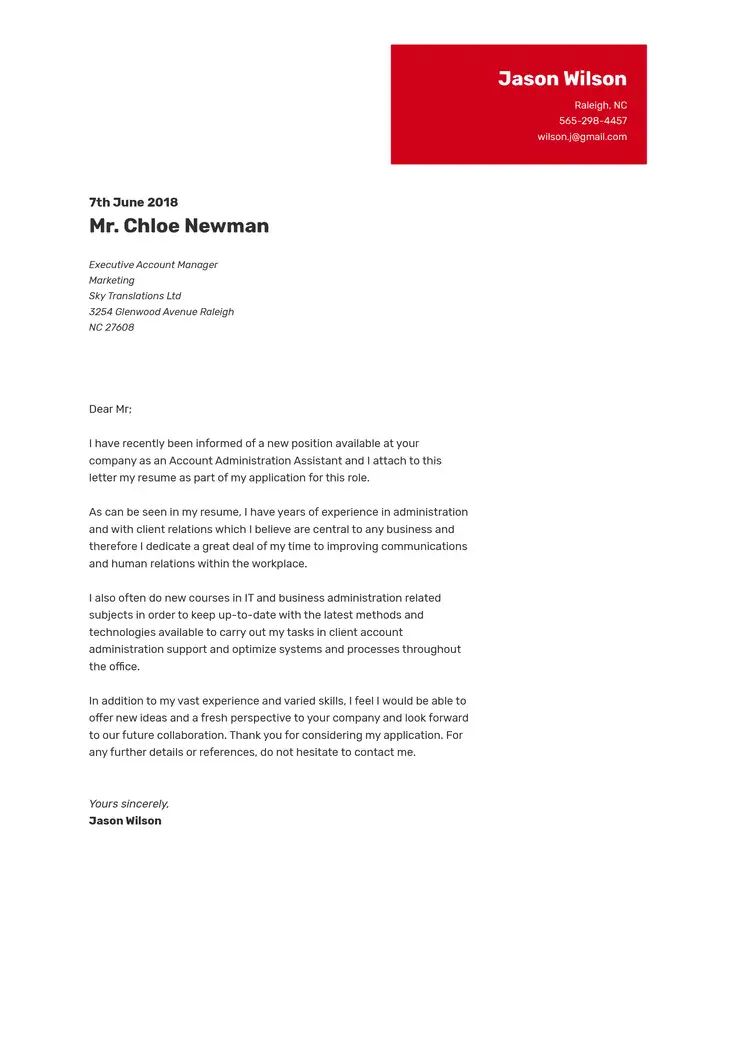
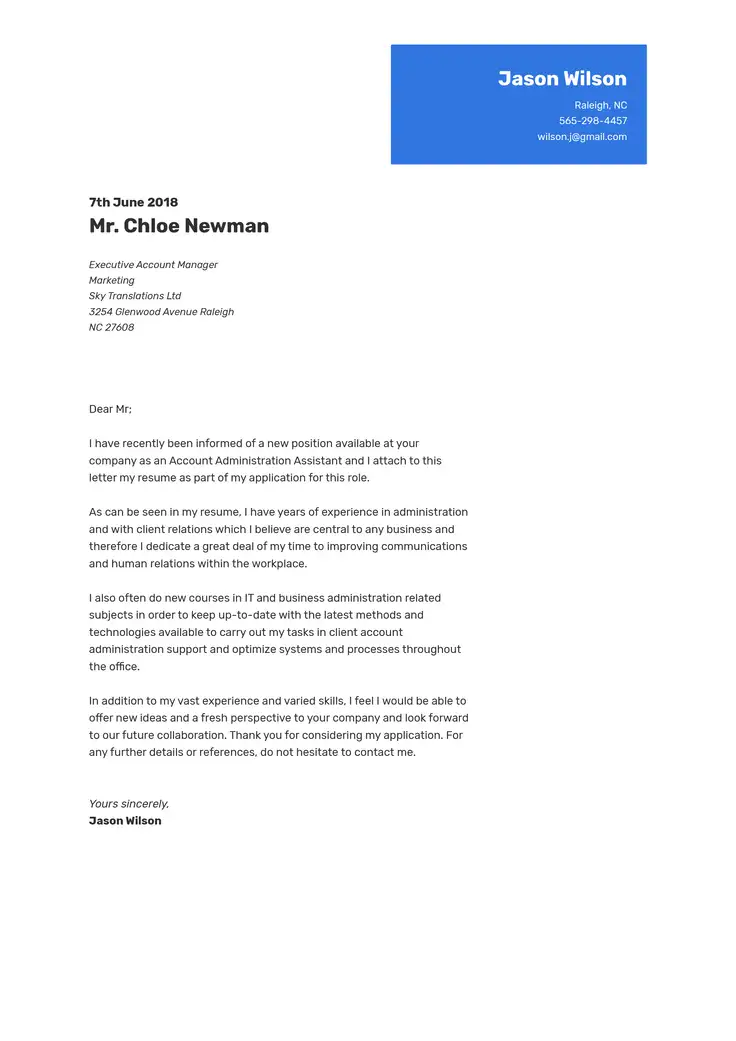
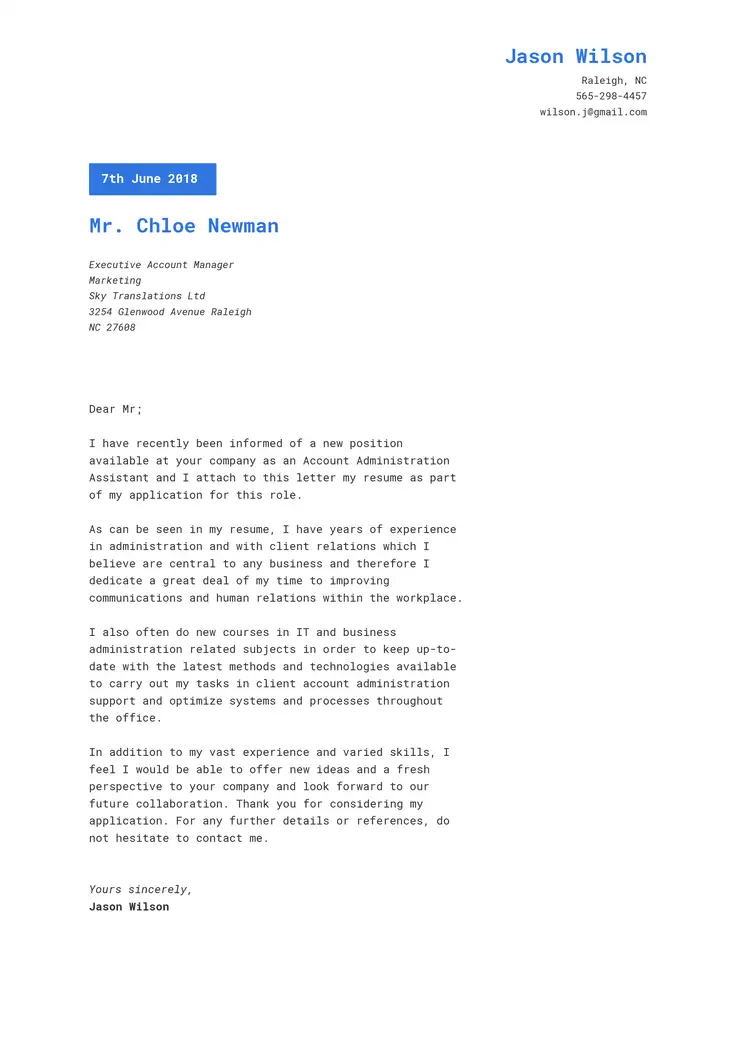
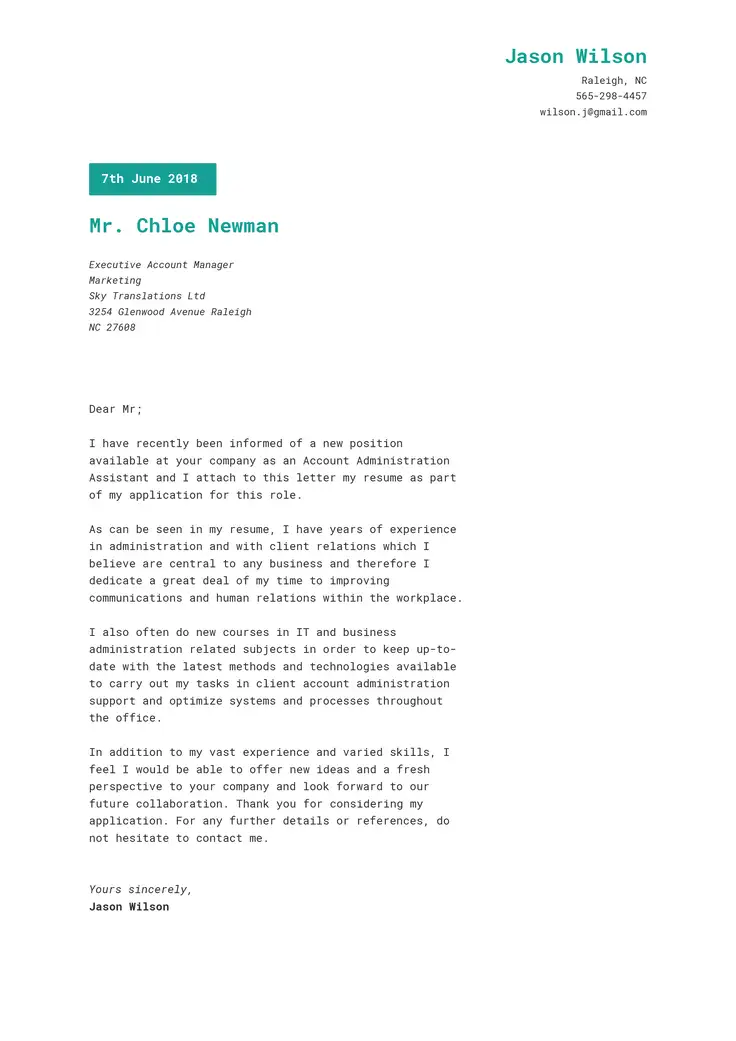
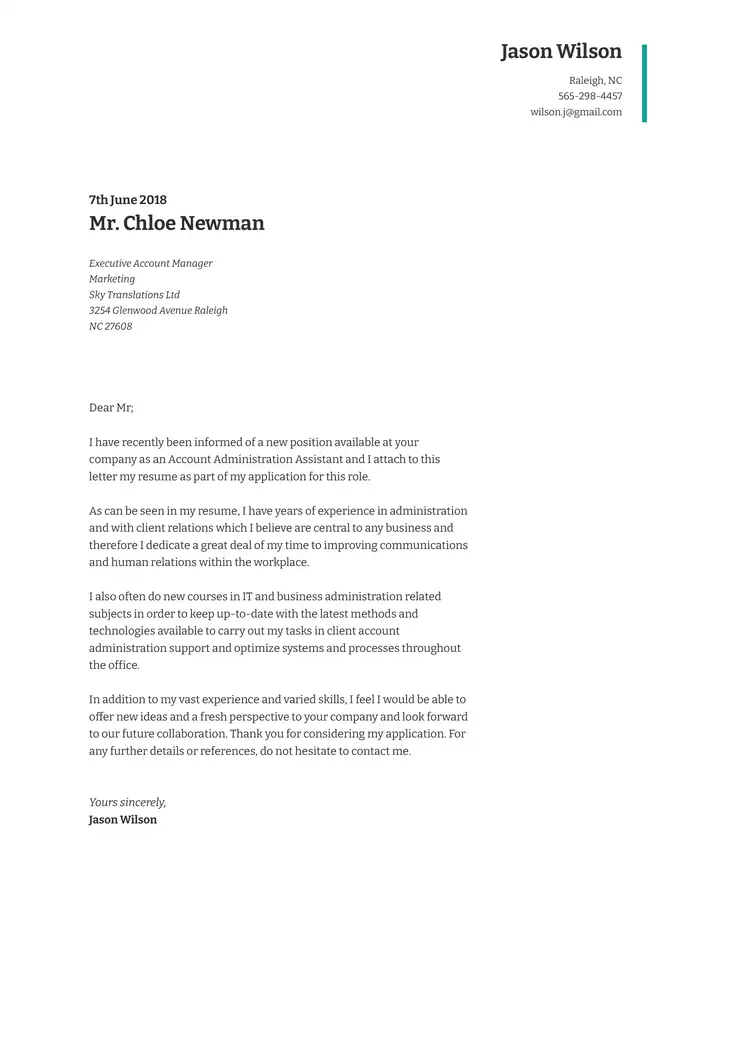
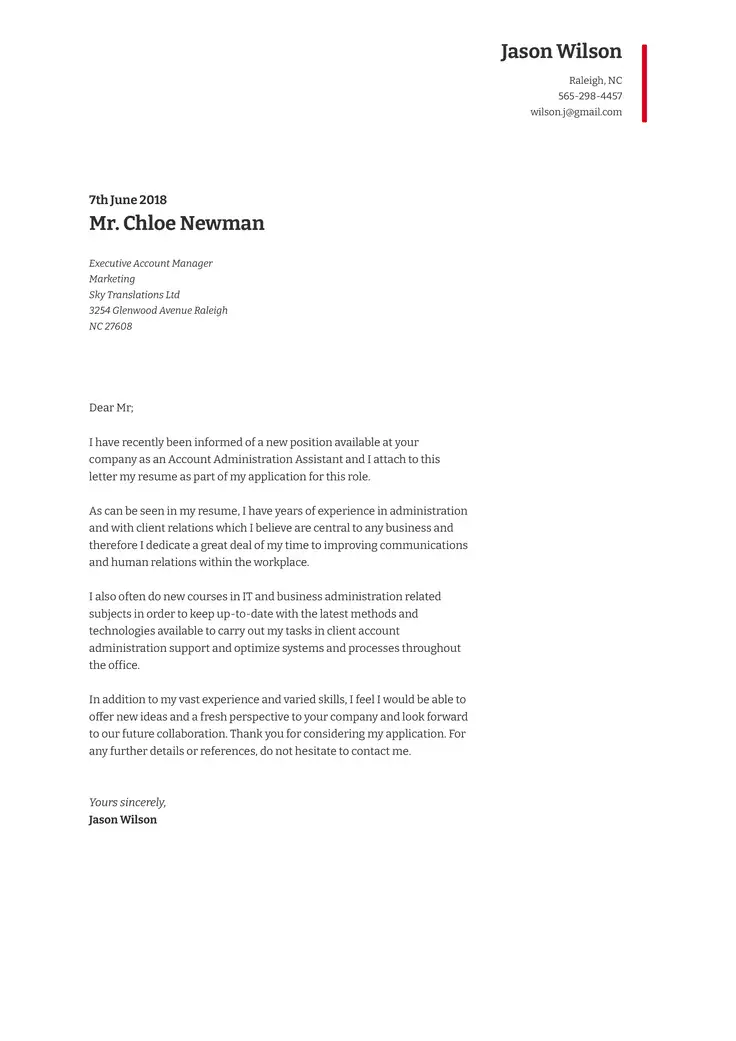
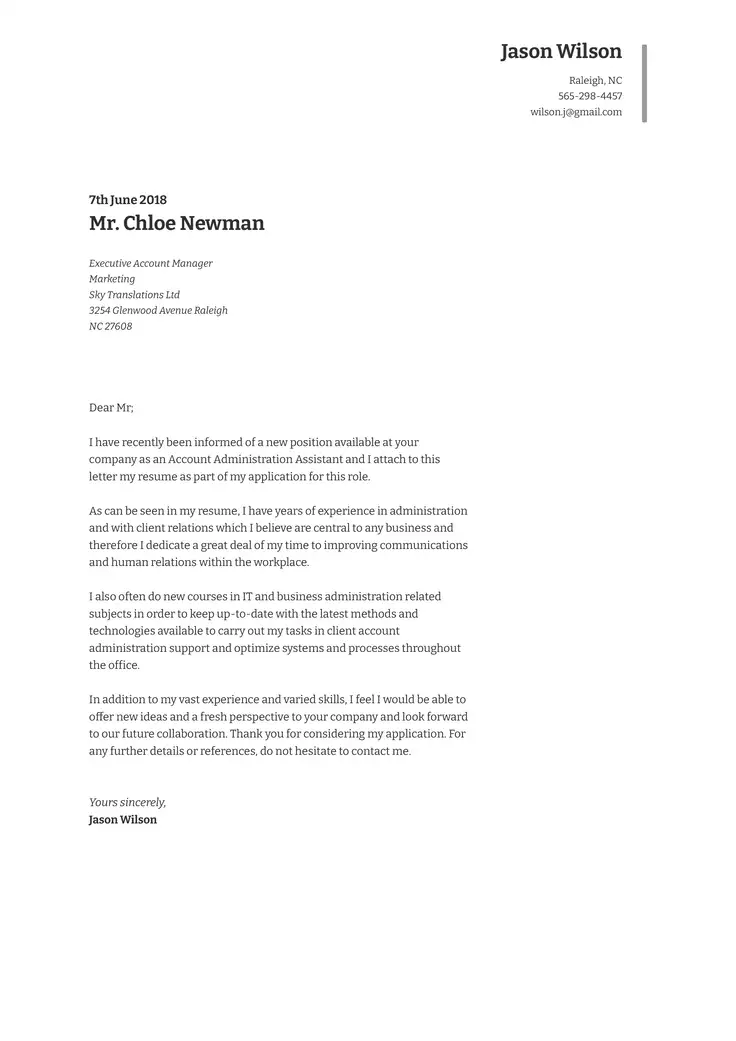
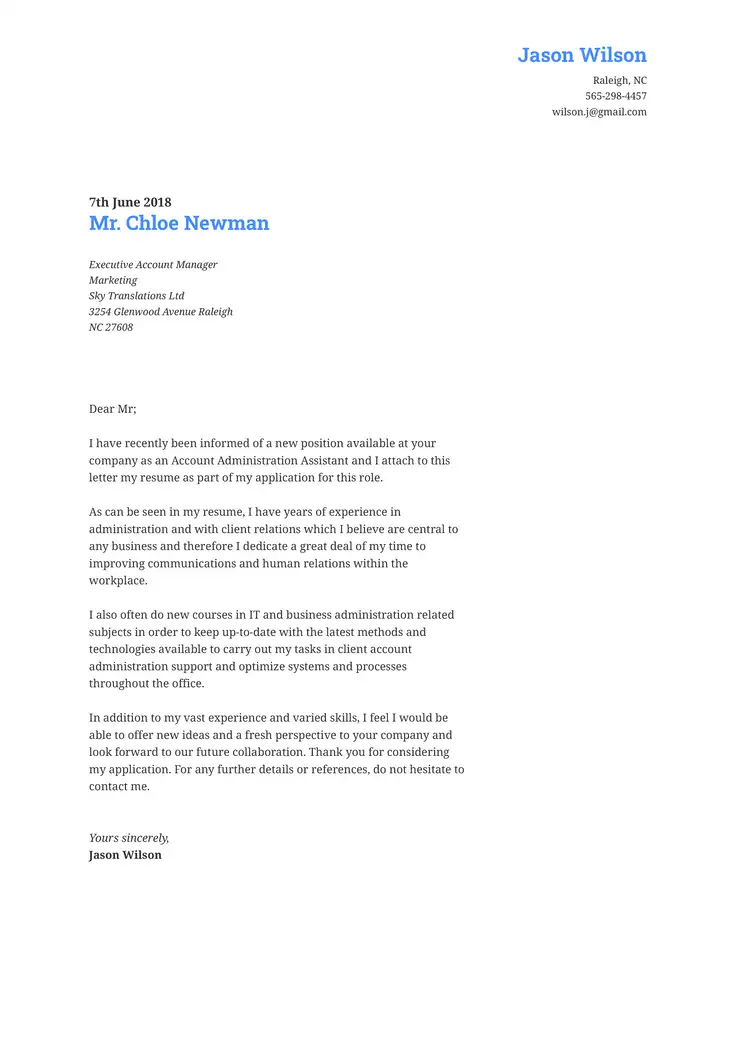
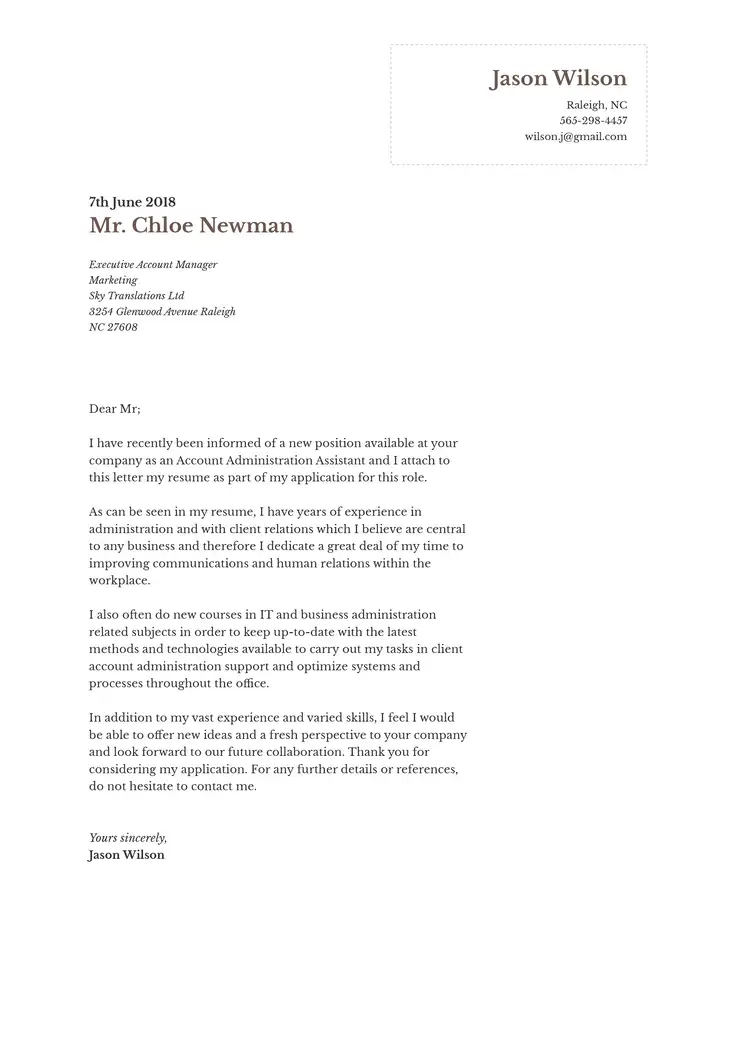
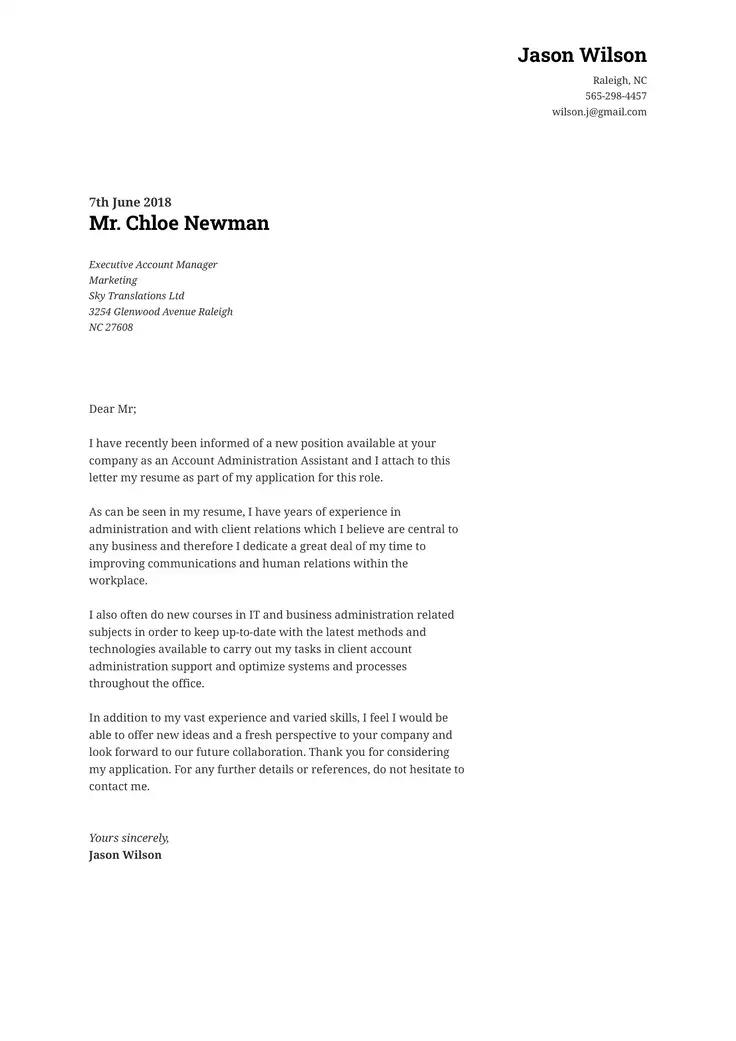
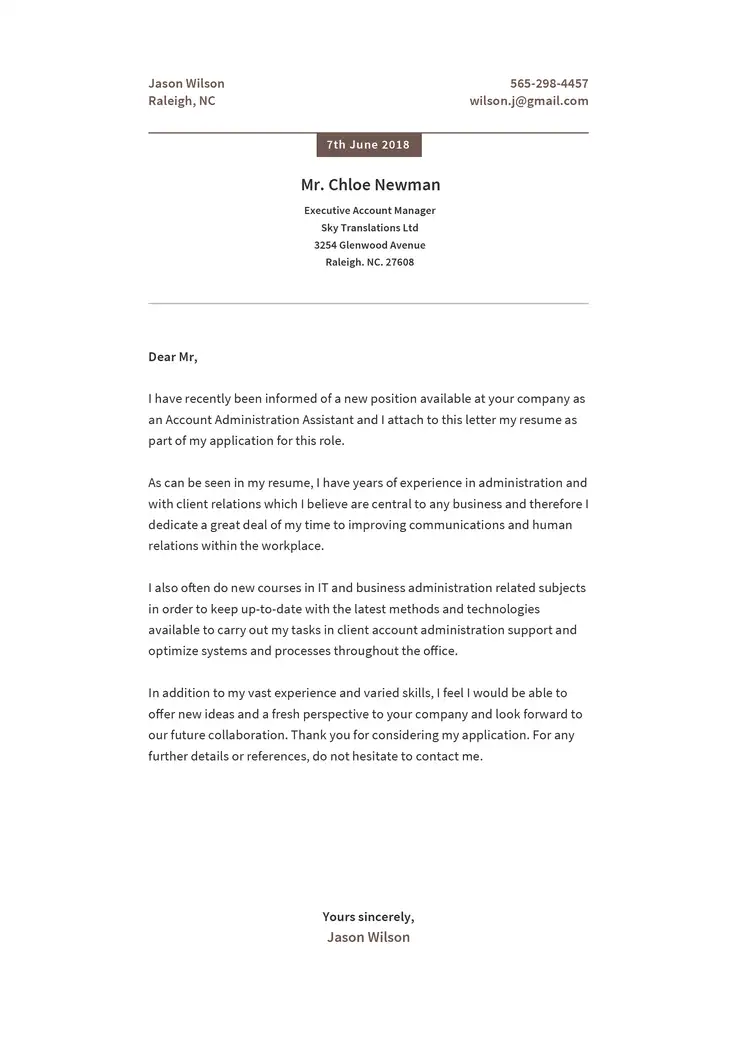
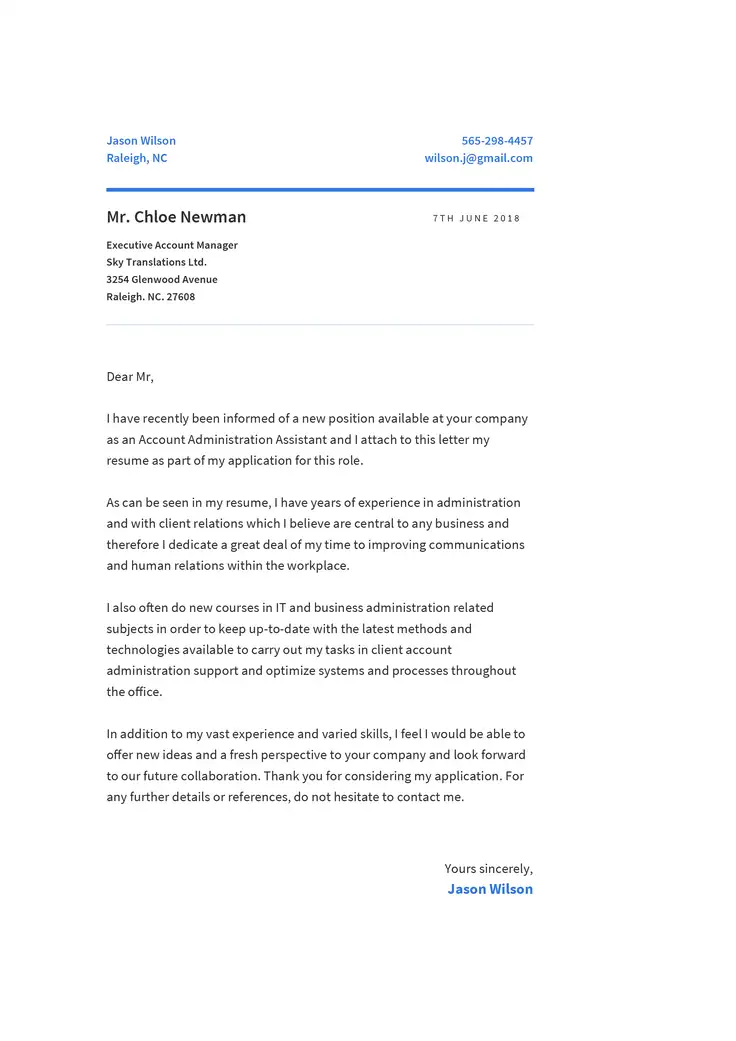
Like the resume, the cover letter is a spokesperson for you and your career; therefore, you must ensure to format it well and create a good structure, with no errors or spelling mistakes, truthful throughout, highlighting your strengths and adapt it to the role or company you’re applying to.
It is essential to send a cover letter accompanying a professional resume for each job vacancy. Without the cover letter, it is possible that your application will not even be considered in certain companies or for specific positions, it is of vital importance that you work just as hard on writing a winning cover letter as you do on your professional resume.
For more tips and advice on making a cover letter, take a look at our blog.
Professional Resume Templates
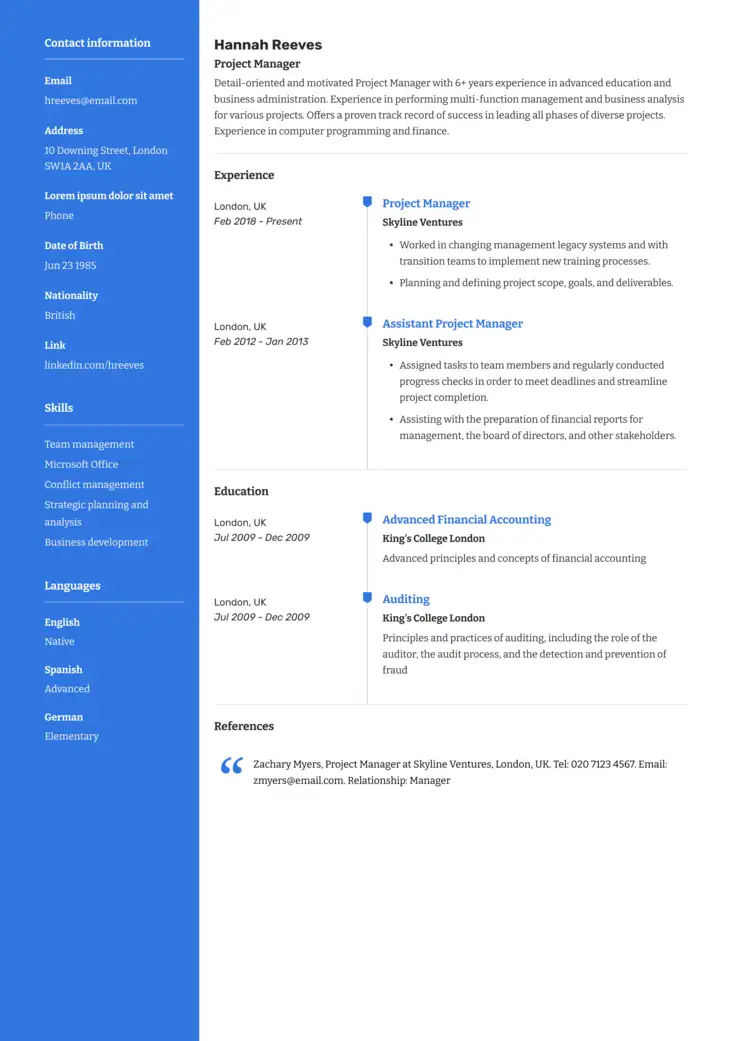
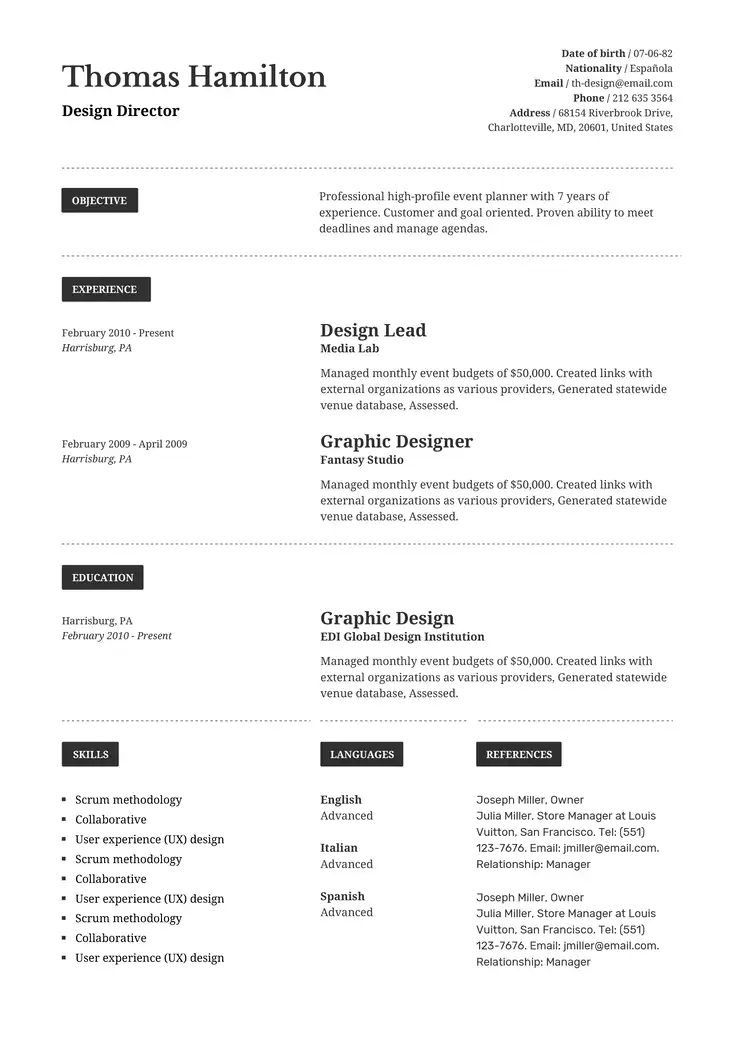
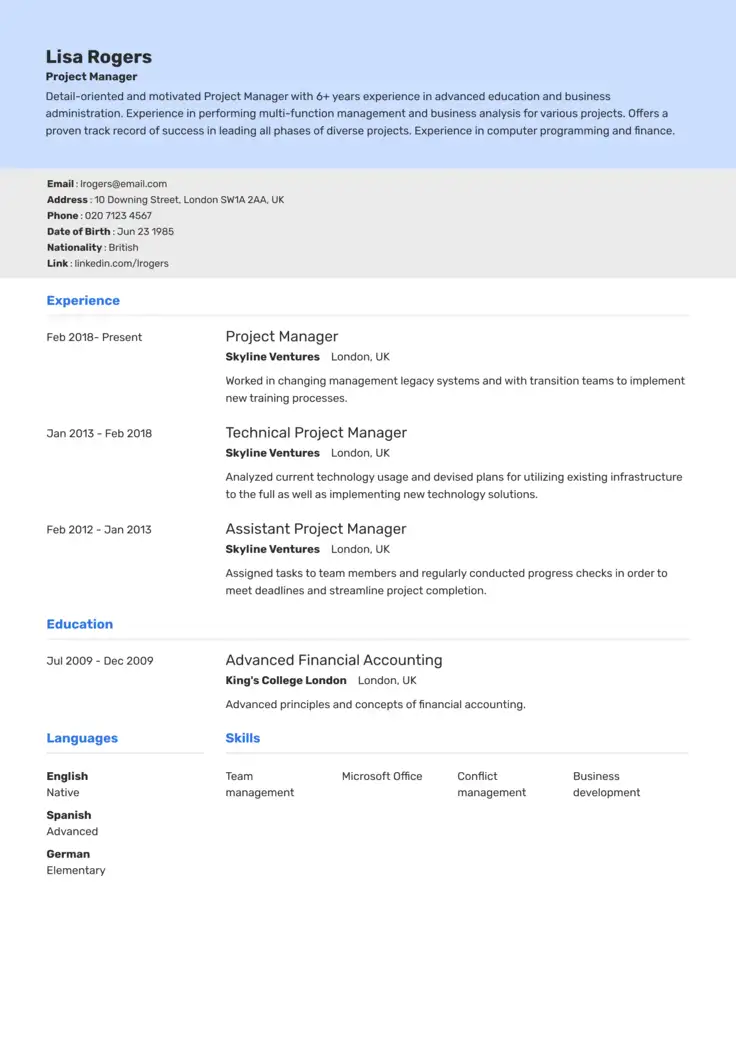
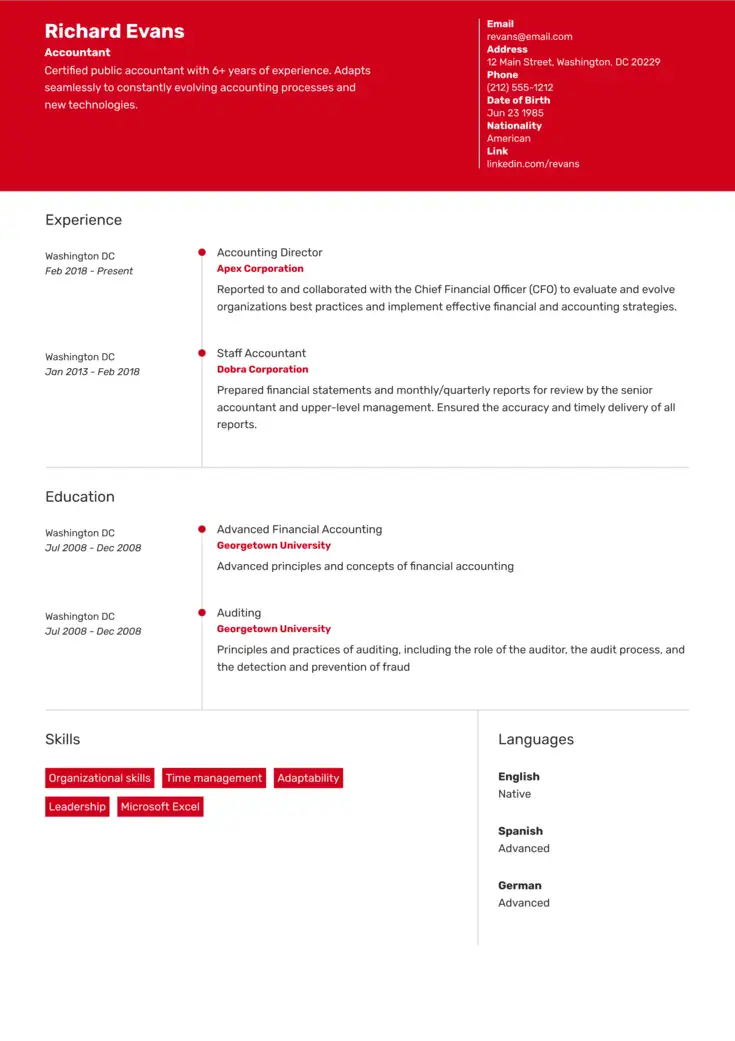
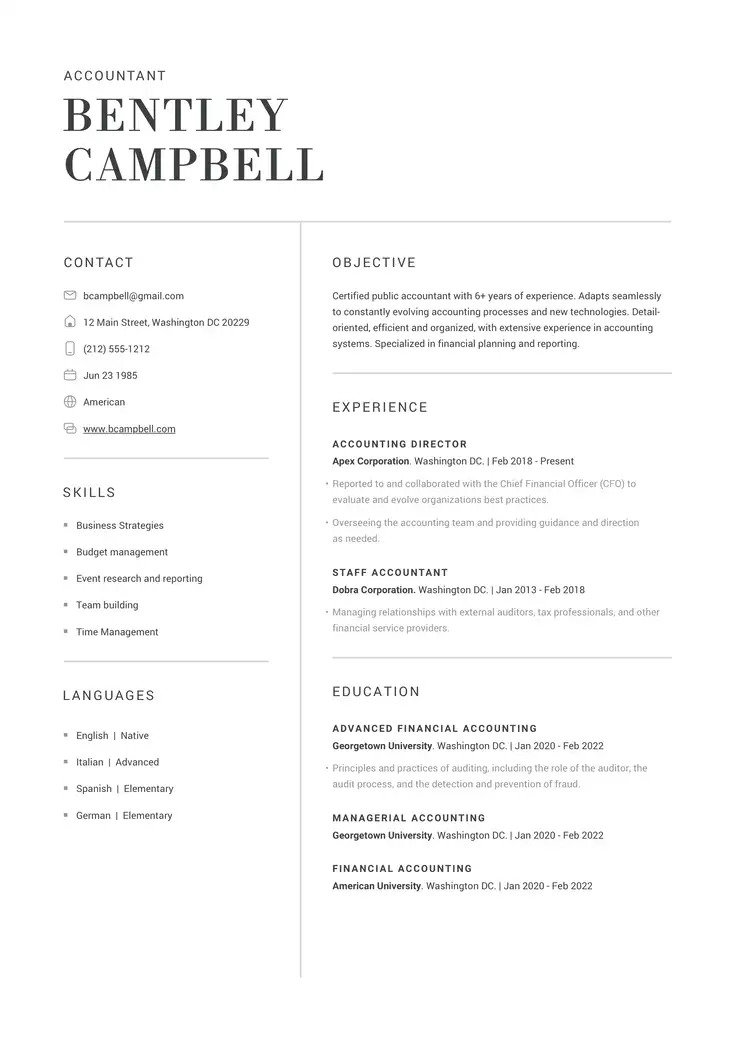
For a specially designed professional resume template, take a look at our library of resume samples to find one that suits your profile and experience.
It can be difficult to build your own professional resume from scratch without a clear idea of what you need to include in a resume or how to complete each section, which is why using a professional resume template saves time and energy, which you can then dedicate to getting prepared for your next job interview!
Resume examples help job seekers by not only saving time on creating a resume layout from nothing, but also by offering suggestions as to how to fill out each area on the resume with sample job responsibilities or extra activities that could be relevant to your profile.
Using a resume sample for your professional resume can offer insight into how to write a resume that catches the attention of potential employers through the sections it includes or inspire you to write a resume objective or summary statement based on the examples it gives.
For job seekers looking for a new professional resume template, we have an array of effective resume examples that have been designed and selected by HR specialists.
Candidates can also make their winning resume online by using ResumeCoach’s resume creator, where they can find online resume help and tips.
Struggling with Resume Writing?
Ease the process with our templates