
How to Write an Engineering Cover Letter (With Examples)
Learn how to write an engineering cover letter that highlights your technical skills, experience, and achievements to make a strong first impression on employers.

Our customers have been hired by:






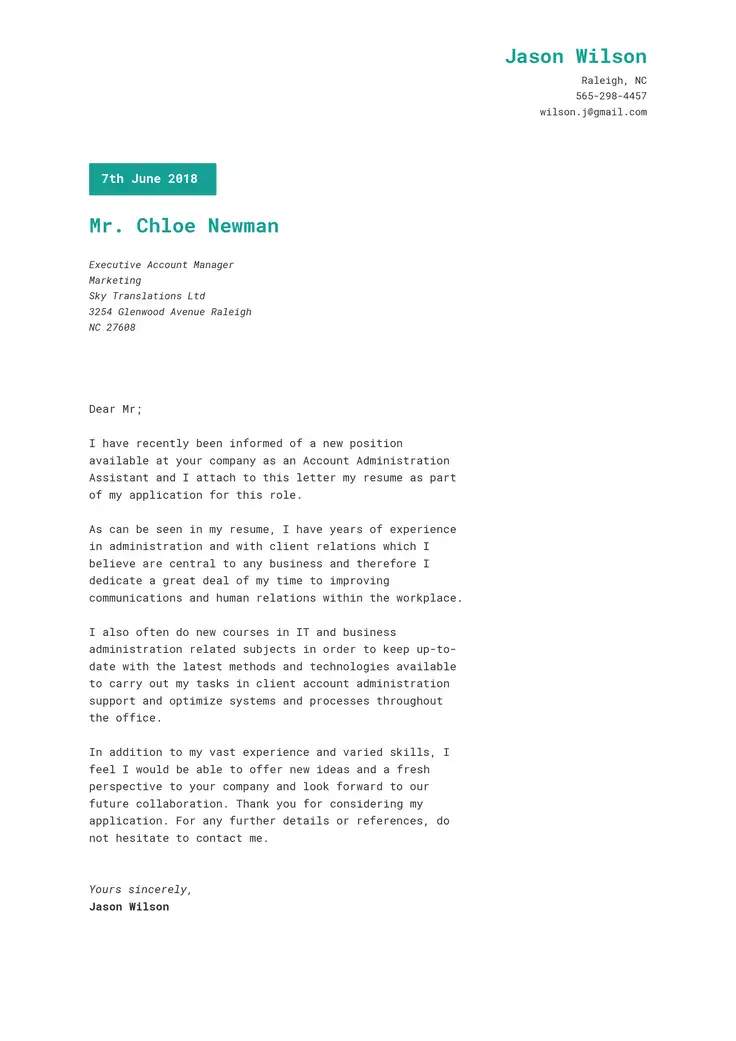
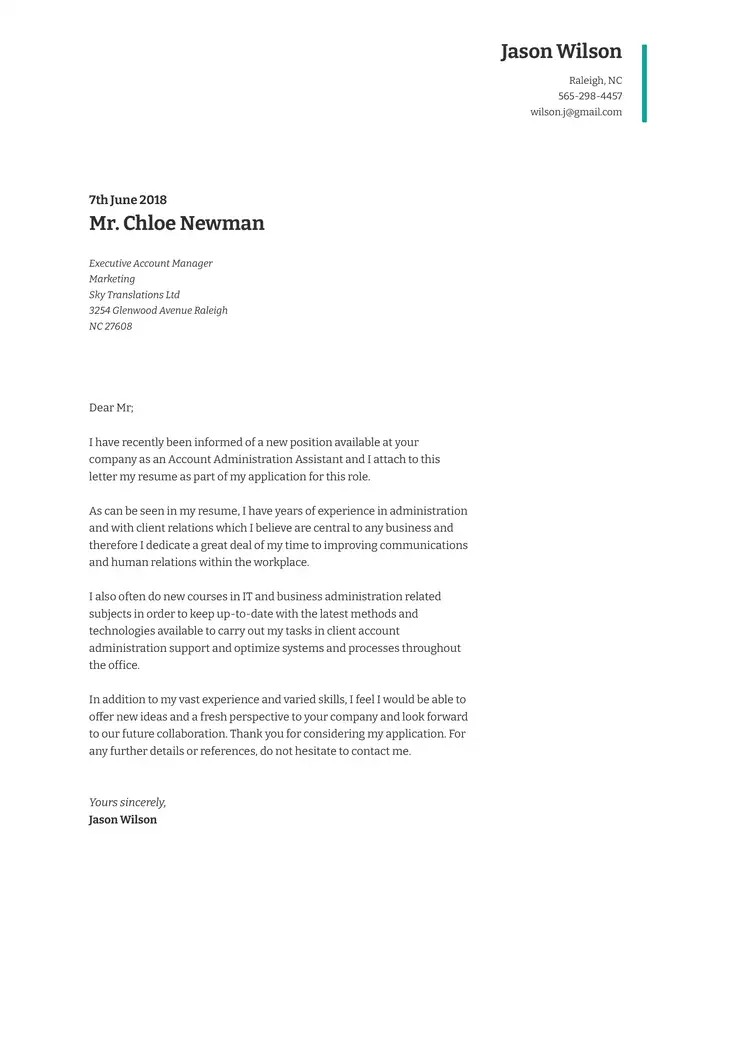
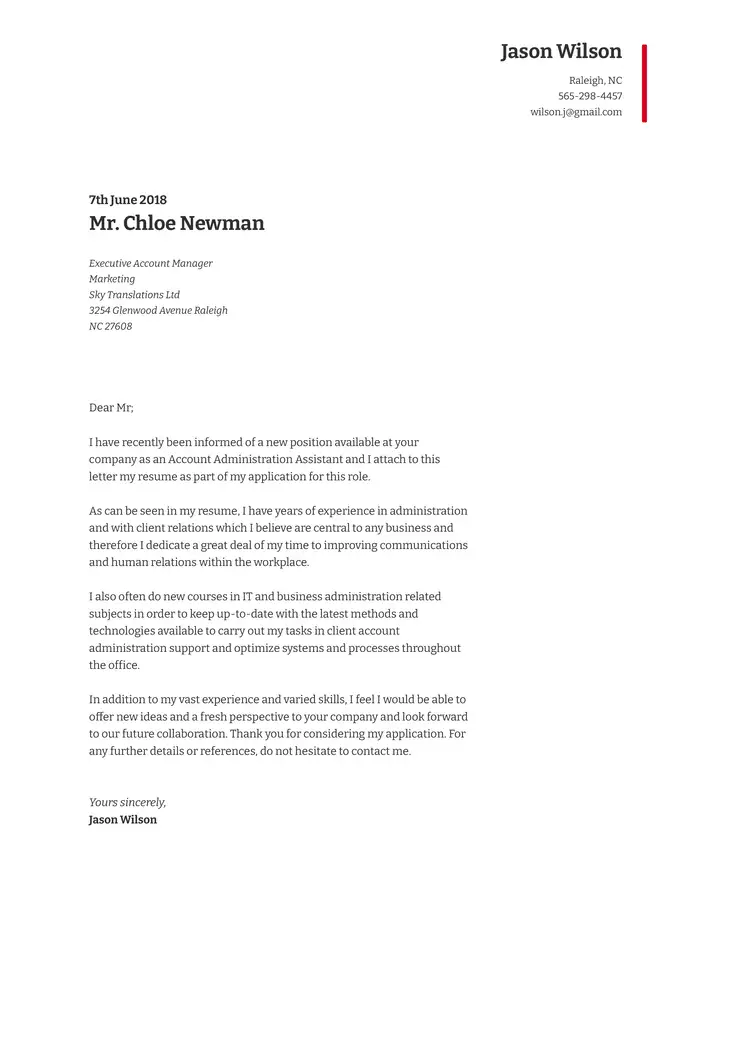
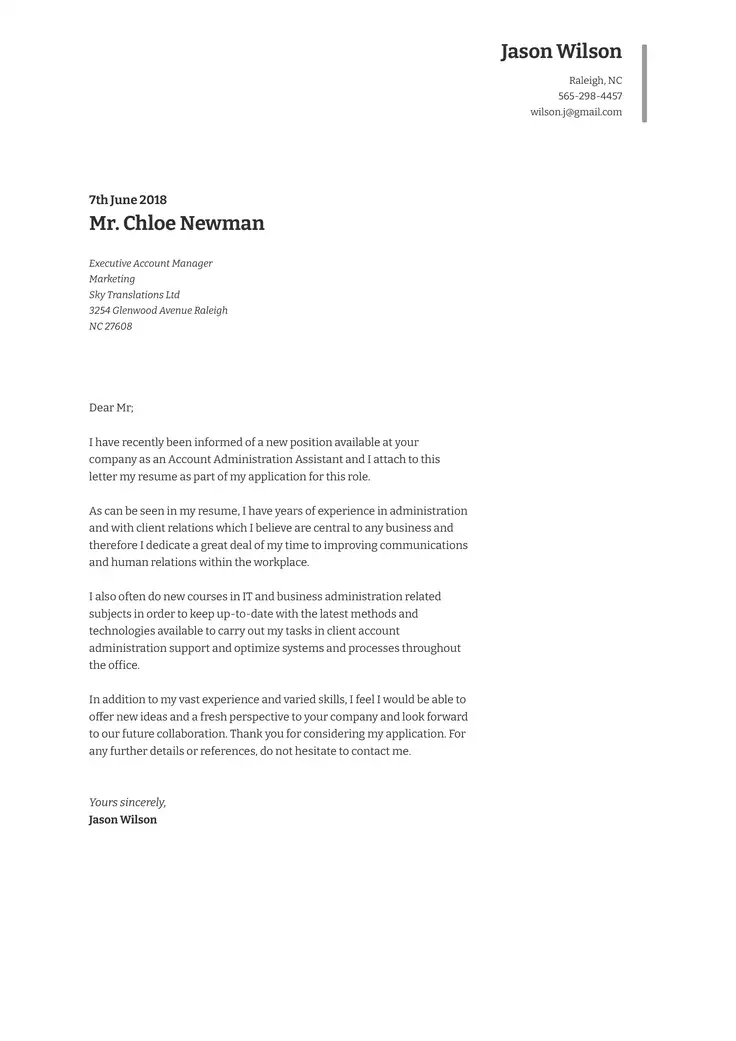
Engineering spans many specialties, from civil and mechanical to chemical, aerospace, and biomedical. That’s why your cover letter should reflect your specific field.
Below, you’ll find sample engineering cover letters and advice for various career stages. We’ll also provide our top tips on highlighting your technical achievements and guidance on adapting your application for different engineering fields.
Engineering Cover Letter Examples for Different Career Levels
Engineering candidates should adapt their cover letters to their discipline, experience level, and target position.
You can use the samples below as a template for your own letter, referencing the structure, formatting, and tone. You can also explore more cover letter examples specific to your field.
Entry-level engineering cover letter example
As an entry-level candidate, your cover letter should highlight the following:
- Relevant technical experience, including university coursework, internships, laboratory work, design projects, and experience with tools such as AutoCAD, MATLAB, or Python
- Problem-solving skills, providing concrete details about a challenge you faced, the actions you took, and the results.
- How you fit with the company, such as alignments in skills or values and interest in specific projects.
Pablo Suarez
Mountain View, VA | pablo.suarez@email.com | (502) 555-5678
March 2, 2027
Elena Marina, Hiring Manager
Bluegrass Manufacturing Solutions
Danville, KY
Dear Ms. Marina,
I am writing to apply for the Entry-Level Mechanical Engineer position at Bluegrass Manufacturing Solutions. As a recent mechanical engineering graduate from the University of Louisville, I bring hands-on experience with CAD modeling, product testing, and design optimization, along with a strong foundation in engineering principles. I am particularly interested in your work in improving manufacturing efficiency and product reliability.
During my senior design project, I collaborated with a team of four engineering students to redesign a small conveyor assembly for improved material handling. Using SolidWorks, we developed and evaluated multiple design iterations, ultimately reducing the prototype’s operating friction by 15%. I coordinated design reviews, documented test results, and incorporated feedback from faculty advisors to refine our final design.
I also completed a summer engineering internship with Riverbend Components in Jeffersonville, Indiana, where I assisted engineers with equipment inspections, CAD drawing updates, and production data analysis. By organizing inspection records and identifying recurring documentation errors, I helped the team improve the accuracy of its maintenance logs. My experience with SolidWorks, MATLAB, and Microsoft Excel, combined with my attention to detail and commitment to workplace safety, would contribute to your engineering team.
Thank you for considering my application. I would welcome the opportunity to discuss how I could further support Bluegrass Manufacturing Solutions’ engineering goals. I look forward to hearing from you.
Sincerely,
Pablo Suarez
Mid-level engineer cover letter example
Mid-career, your cover letter shows how you’ve moved beyond academic potential and made professional contributions. You may choose to highlight the following:
- Technical impact, including projects where your decisions improved performance, reduced waste, or lowered costs.
- Increased responsibility, including owning projects, mentoring, managing, or coordinating with other departments.
- Meeting the employer’s needs through your use of or experience with relevant tools, methodologies, processes, or fields.
Noah Reagan
Indianapolis, IN | n.reagan@email.com | (317) 555-0194
June 5, 2027
Regina Ming, Hiring Manager
Meridian Industrial Systems
Indianapolis, IN
Dear Ms. Ming,
I am interested in the Manufacturing Engineer position at Meridian Industrial Systems. Over the past five years, I’ve developed a strong track record of translating technical analysis into operational improvements and process optimization. I am particularly interested in Meridian’s focus on reliability and continuous improvement.
In my current role at Hoosier Precision Components, I lead a 12-person team focused on workflow improvement. By analyzing cycle-time data, mapping the production process, and collaborating with product operators, I helped reduce average cycle time by 18 percent. These changes increased throughput without requiring additional equipment purchases.
Beyond process improvement, I am experienced in engineering changes from initial assessment through implementation. I am proficient in AutoCAD, SolidWorks, and Excel, and I have closely collaborated with design, quality, and production teams. My experience with Lean and Six Sigma will allow me to contribute to your production goals with consistent quality and safety.
Thank you for considering my application. I would welcome the opportunity to further discuss my background and the possibility of contributing to your engineering team.
Sincerely,
Noah Reagan
Senior engineer or engineering manager cover letter example
A senior-level candidate should be able to display the intersection of various technical, leadership, and interpersonal skills by:
- Showcasing high-impact projects or decisions with quantifiable results.
- Demonstrating mentorship, guiding junior engineers or cross-functional teams.
- Connecting strategy to business outcomes such as budget, timelines, quality, or safety.
Susana Kim
Wichita, KS | susana.kim@email.com | (316) 555-8701
November 2, 2027
Ronald Glass, Hiring Manager
Prairie Aerospace Technologies
Wichita, KS
Dear Mr. Glass,
I am excited to apply for the Senior Engineer position at Prairie Aerospace Technologies. With 12 years of experience in aerospace manufacturing and six years in leadership, I have a track record of assembling and mentoring strong teams that improve production performance and deliver on complex projects. In fact, by introducing a structured mentorship program and quarterly reviews, I helped prepare three junior engineers for expanded responsibilities.
At Falcon Ridge AeroWorks, I lead a team of nine engineers responsible for process development, equipment validation, and production support. I directed a plant-wide initiative that reduced production cycle times by 18 percent and reduced operating costs by $248K over two years.
My experience includes root cause analysis, lean manufacturing, and developing scalable processes for safety-critical components. I would welcome the opportunity to bring my commitment and experience to Prairie Aerospace Technologies. I look forward to discussing this with you.
Sincerely,
Susana Kim
Create a Professional Cover Letter for an Engineer With ResumeCoach
ResumeCoach offers professional templates and AI-powered guidance while writing to help you customize your cover letter for different engineering applications.
What Should Go in an Engineer’s Cover Letter?
Your cover letter should be structured like your average business letter, with contact information, the date, a greeting, the letter body, and a salutation. You should always tailor your letter to each application rather than submitting the same generic letter.
According to Coursera, your cover letter should be less than one page in length. Aim for half a page: three to four paragraphs and somewhere between 250 and 400 words.
You can lay out your letter with the following sections:
- A header containing your contact information, the date, and the name and contact information of the individual you’re writing to.
- An introduction listing the position title you’re applying for, your reasons for interest in the role, and a brief mention of your relevant background.
- The letter body, in which you quantify your experience with specific examples and express your technical skills, projects, and achievements.
- A closing in which you express thanks, reiterate your interest, provide a call to action, and sign off.
How To Write an Engineering Cover Letter That Highlights Your Technical Expertise
Your cover letter should not simply repeat information from your resume. Instead, it should provide context for the document that follows.
Explain important projects or cite technical decisions and their results. These things show the value you can bring to the company.
Follow these steps to write a document that showcases your expertise:
Research the engineering role and company before writing
To write your cover letter for engineering, you must first read the job description, looking for required technologies, abilities, and levels of experience.
But you can also do more. Research the company’s projects, mission, and values. Look into industry expectations, especially if you are pivoting from one industry to another.
By digging into this research, you can present a consistent message across your resume and cover letter. Your cover letter can flesh out the bare facts of your resume by providing context about your projects, achievements, and motivations for the specific role.
Adapt your engineering cover letter by industry
Your responsibilities as an engineer vary significantly by industry. Your cover letter should highlight the duties and expertise that matter most to your target role.
Your employer may prioritize things like design software, technical modeling, regulatory compliance, or project management. The following skills, tools, certifications, and experiences are sought-after in their given industries in the U.S. job market1:
- Civil engineering: AutoCAD, Civil 3D, infrastructure design, site planning, building code compliance, safety, project coordination, Professional Engineer (PE) license
- Mechanical engineering: SolidWorks, product design, testing, automation, performance or efficiency metrics
- Electrical engineering: circuit design, electrical systems, testing, troubleshooting, MATLAB, ETAP
- Manufacturing/industrial engineering: Lean, Six Sigma, process optimization, quality control, automation, reductions in waste, cost, or cycle time
- Aerospace engineering: CAD, simulation tools, systems testing, reliability, safety, demanding technical requirements
- Software engineering: programming languages, development processes, systems, technical projects
- Chemical engineering: process optimization, production efficiency, safety procedures
Including these industry-specific terms can also help your resume and cover letter to pass the Applicant Tracking System (ATS).
Highlight engineering projects and technical achievements
Projects and achievements that received only a passing mention in your resume can be expanded on in your cover letter. Focus on identifying the challenge you faced, your contribution, the technical approach you used, and the final result.
Consider the following examples showing how you can turn generic engineering responsibilities into achievement-focused statements.
| ❌ Wrong | ✅ Right |
|---|---|
| Supervised a team of engineers. | Mentored five engineers and coordinated project assignments to meet delivery targets. |
| Ensured safety compliance. | Implemented design reviews and safety checks to strengthen compliance, resulting in a new record of 350+ accident-free workdays. |
| Used CAD software. | Created and refined SolidWorks models to support prototype development. |
| Managed projects. | Led cross-functional projects from design through implementation, delivering milestones on schedule. |
| Improved manufacturing processes. | Redesigned production workflows to reduce material waste by 18 percent. |
Match your technical skills with the job requirements
It’s important to include relevant technical skills in your cover letter. Remember, technical skills should support your achievements rather than comprising a stand-alone list. Express how various skills allowed you to achieve a desired result.
| Engineering field | Technical skill | Example sentence |
|---|---|---|
| Mechanical engineering | CAD software | “Used SolidWorks to design components that improved manufacturing efficiency.” |
| Software engineering | Programming languages | “Developed Python-based solutions to automate internal data processes.” |
| Chemical engineering | Process simulation software | “Used Aspen Plus to model chemical processes and identify opportunities to improve production efficiency.” |
| Civil engineering | Structural analysis software | “Used SAP2000 to analyze structural designs and improve building safety and stability.” |
| Electrical engineering | Circuit design and simulation | “Used MATLAB and Simulink to model electrical systems and evaluate circuit performance.” |
| Industrial engineering | Lean Six Sigma methodologies | “Applied Lean Six Sigma techniques to streamline production workflows and reduce material waste.” |
Show problem-solving and collaboration skills
Not only do engineering roles require specific technical skills; communication, teamwork, and other “soft skills” are essential as well.
Show these abilities in action with specific results, like the sentences below:
| Skill | Example sentence |
|---|---|
| Problem-solving | Reduced production issues by 10% by identifying root causes and implementing technical improvements. |
| Team collaboration | Worked with cross-functional teams to deliver engineering solutions and meet project milestones on schedule. |
| Project management | Coordinated engineering projects, tracked milestones, and allocated resources to meet deadlines and budget targets. |
| Technical analysis | Analyzed performance data to identify design weaknesses and recommend evidence-based improvements. |
| Quality control | Implemented quality assurance checks that reduced defects by 14 percent, resulting in a 30 percent decrease in return shipping costs. |
Common Mistakes to Avoid in an Engineer Cover Letter
Small mistakes can take your project outside its tolerances. The same is true of your cover letter. Use this checklist to avoid six common mistakes.
- Repeating your resume. Use your cover letter to add context instead.
- Listing skills or duties alone. Explain how you applied them and what results you achieved, quantifying them wherever possible.
- Sending the same letter to every company. Tailor each one to the company and the role.
- Using a generic greeting. Address the hiring manager by name whenever possible instead of “To Whom It May Concern.”
- Writing more than one page. Focus on your strongest projects and cut anything that doesn’t support them.
- Skipping the proofreading. Small mistakes can call your abilities into question.
FAQ
Begin your cover letter with a header featuring your contact information. Then include the date and the hiring manager’s contact information, and greet them by name.
Engineers should always include a cover letter even if it is not required. Cover letters give you the opportunity to make a polished and professional first impression, add context to your experiences, and include additional resume keywords.
Gaps are not the red flags they once were. If your resume contains a sizable gap, you can briefly explain it in your cover letter. Look for positive growth or skills you gained during that time.
You don’t need to go into excessive detail about the reasons; acknowledge it and move on.
If the break lasted only a few months, you may be able to “erase” it by listing years without months on your resume. In that case, there is no reason to address it in your cover letter.
Yes, relevant certifications are often seen as proof of job-ready skills. When you mention the certification, try to do so alongside an achievement it helped you obtain.
Related Cover Letters
- https://www.randstadusa.com/job-seeker/skills/top-skills-engineering-2026/ ↩︎