
Construction Resume Examples, Templates & Guide
Building your resume is a lot like constructing a building: you need to start with a firm foundation. We’ll show you how, whether you’re entering construction or are an experienced foreman.

Resume Templates that will get you hired in 2026!
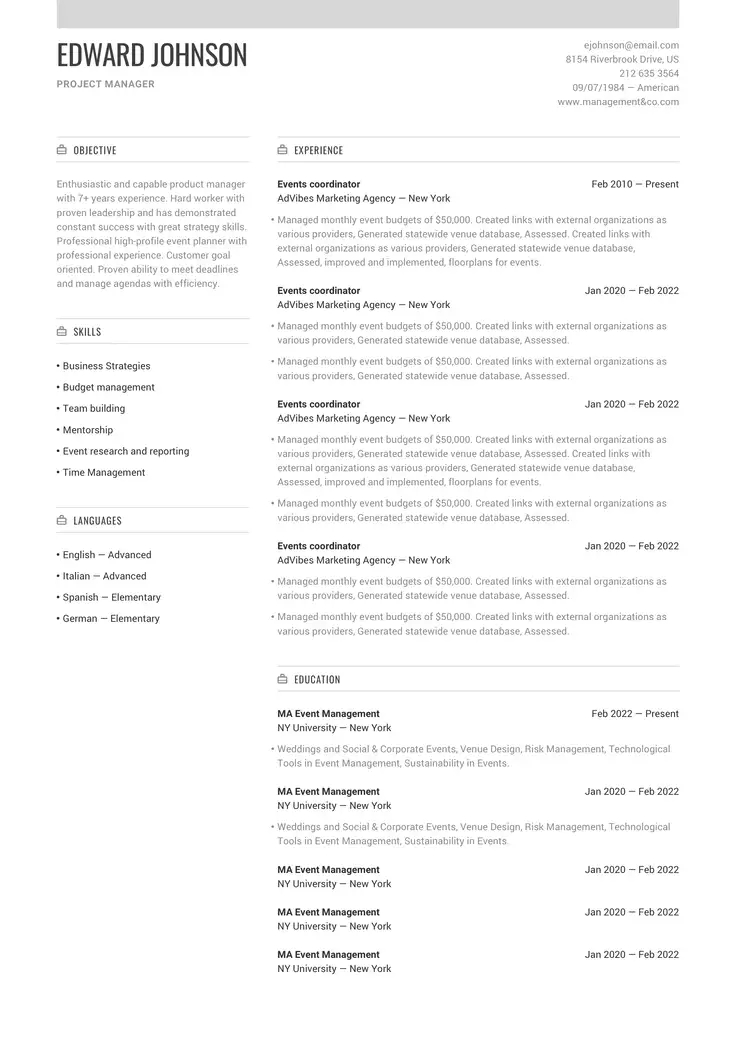
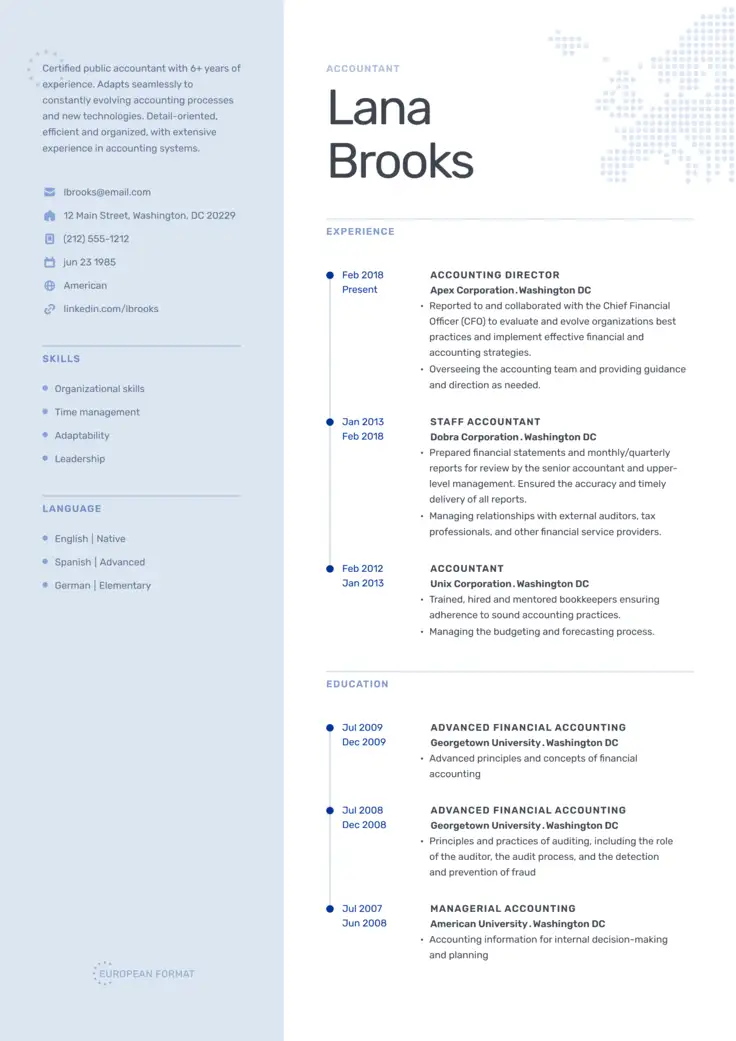
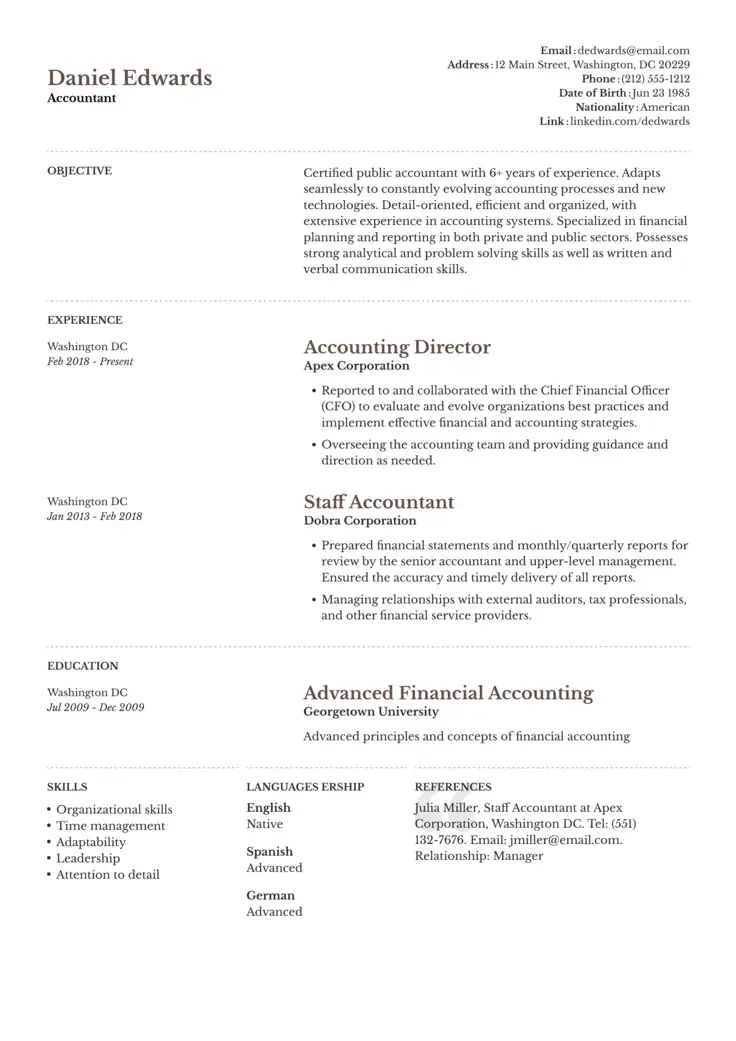
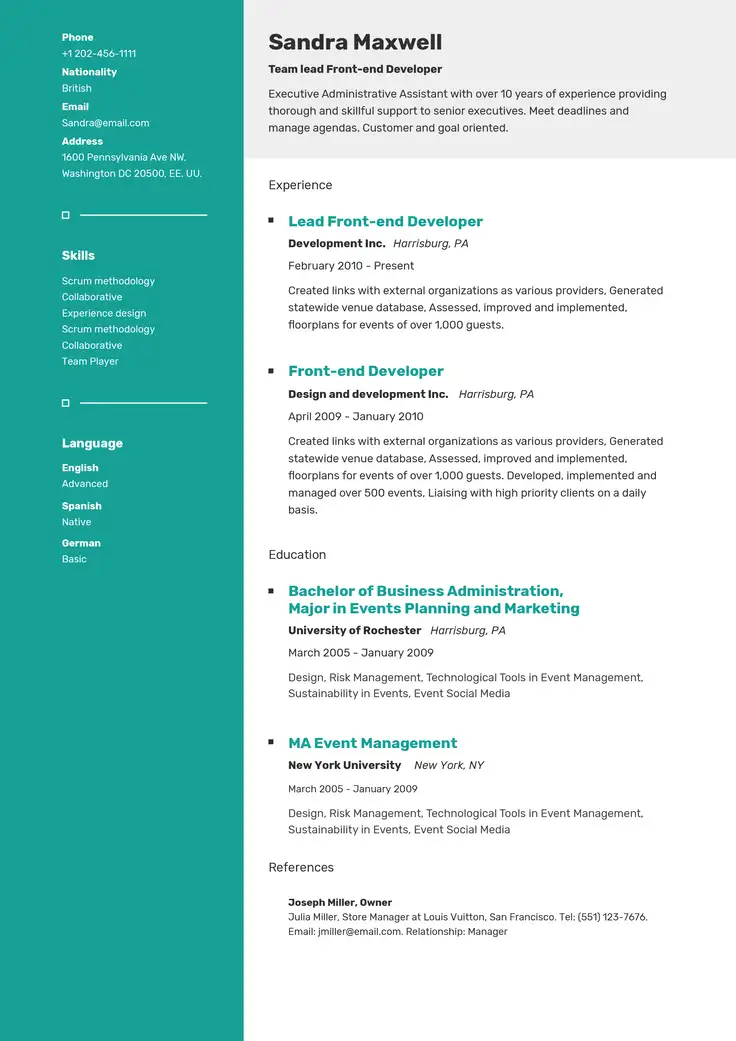
If you’re looking for a job in construction, consider this your blueprint for building a strong resume. Below, we’ll consider all the raw materials you need to create a resume, even considering the varied jobs available within the construction field. Expert tips are like the fasteners that hold it all together.
We also know how important it is to use the right tools. You’ll learn how to utilize our AI resume builder to work quickly and smarter, not harder.
In this guide, you’ll get to see construction resume examples for different experience levels, what to include in each section, how to write stronger bullet points, and how to tailor your resume to the specific construction job you want.
What Construction Hiring Managers Look for First
Construction companies, general contractors, and site supervisors often need to determine quickly whether you can perform the work safely and effectively.
The first things they look for are the following:
- Your current or most recent job titles
- Years of experience
- Types of construction projects you have worked on
- Relevant skills
- Equipment and power tools you can operate
- Safety training
- OSHA card, if applicable
- Experience with specific trades
- Safety record
- Leadership experience
- Education, trade school, apprenticeship, and certifications
If you are at a manager level, hiring managers will be looking for project types, budget size, crew size, scheduling, subcontractor coordination, and safety compliance. Make sure to highlight these qualifications.
Construction Resume Examples for Popular Roles
You can consider the following examples as construction resume templates. Whether you’re an entry-level construction laborer, a project manager, or somewhere in between, you can choose the example that best fits your circumstances and customize it with your own information.
Entry-level construction worker resume
Every construction worker was the new guy at some point. If that’s where you find yourself, don’t worry; you can still create a convincing entry-level resume.
- Even if you don’t have on-the-job experience yet, you can highlight transferable skills like stamina, teamwork, knowledge of tools, or safety compliance.
- Speaking of safety, emphasize awareness early. Mention any safety training or adherence to guidelines.
- Show that you understand the physical demands of the job, including outdoor conditions, labor, and hours.
-
💡 Our expert says

Experience from trade school, vocational schools, apprenticeships, volunteer work, family construction projects, or previous manual labor jobs is also relevant.
Ethan Carter
Construction Worker
📍Knoxville, TN | 📞 (615) 555-0148 | 📧 ethan.carter@email.com | 🔗 linkedin.com/in/ethancarterbuilds
Summary
Motivated and dependable construction worker with hands-on experience in residential framing, drywall installation, material handling, site preparation, and cleanup across 12+ home-building projects. Familar with hand and power tools, measuring, basic blueprint interpretation, and safe working practices. OSHA 10-hour Construction Outreach cardholder with First Aid/CPR training.
Skills
Site cleanup and preparation | Basic carpentry | Taking measurements | Material handling | Blueprint reading (beginner) | OSHA safety compliance awareness | Power and hand tool operation | Collaboration | Communication | Physical stamina and endurance
Professional Experience
Construction Apprentice
Riverside Home Builders | Knoxville, TN | June 2025 – Present
- Assisted carpenters and site supervisors with framing, drywall installation, material staging, and general construction across 12+ residential projects.
- Organized materials daily, improving job site efficiency and reducing delays by 20%.
- Supported skilled carpenters with measuring, cutting, and assembling materials.
- Maintained safe work areas, contributing to a 40% reduction in minor site hazards.
- Followed blueprint instructions under supervision with accuracy.
Safety Certifications
- OSHA 10-Hour Construction Safety Certification | 2025
- First Aid & CPR Certified | American Red Cross, 2024
Education
High School Diploma
Knoxville Technical High School | May 2024
Relevant coursework: Construction Trades, Shop, Basic Carpentry
-
💡 Our expert’s advice
An entry-level resume can still be strong. It’s important to show the hiring manager that you understand the environment, can work safely, have useful skills, and will not need someone to explain what a job site is on your first day of the job.
Construction project manager resume example
Project managers have to handle more responsibility than many other roles. At this level, the hiring manager needs proof that you understand manual labor, but also that you can manage people, money, schedules, risk, subcontractors, and safety regulations.
Make sure to do the following:
- Quantify project scope, including budget size, square footage, or numbers of buildings, teams, or subcontractors, rather than just listing responsibilities.
- Show that you can finish projects on time and under budget.
- Demonstrate coordination and communication between stakeholders such as architects, engineers, inspectors, subcontractors, and clients.
Jordan Mitchell
Construction Project Manager
🏠 Denver, CO | 📞 (615) 555-0192 | 📧 jordan.mitchell@email.com
Summary
Construction project manager with 8+ years’ experience leading residential, commercial, and mixed-use development projects from pre-construction through final delivery. Proven track record overseeing $65M+ in project value, coordinating large subcontractor teams, and delivering complex builds on schedule and within cost targets. Strong expertise in scheduling systems, contract negotiation, and cross-disciplinary stakeholder coordination.
Core Skills
Project planning & scheduling (MS Project, Procore) | Budget management | Cost control | Subcontractor coordination | Vendor negotiation | Blueprint & construction document interpretation | Permitting & regulatory compliance | Risk management & safety oversight | Stakeholder communication & reporting | Change order management
Professional Experience
Senior Construction Project Manager
Summit Ridge Development Group | Denver, CO | 2020—Present
- Managed $45M+ in commercial and mixed-use construction projects, consistently delivering within 2–4% of approved budgets.
- Coordinated 20–30 subcontractors per project, reducing scheduling conflicts by 25% through improved sequencing systems
- Implemented Procore-based workflow tracking, cutting average project delays by 19%.
- Negotiated agreements that reduced overall material costs 13% annually.
- Led coordination meetings with architects, engineers, and city inspectors.
Construction Project Manager
Frontier Build & Engineering | Aurora, CO | 2016 to 2020
- Managed residential and light commercial construction projects valued up to $20M each.
- Oversaw full project lifecycle for 28+ developments, including budgeting, scheduling, procurement, and closeout.
- Reduced material waste 16% through forecasting and supplier coordination.
- Supervised field teams of up to 65 workers, maintaining OSHA compliance.
- Improved subcontractor onboarding workflow, reducing mobilization time by 21% per project.
Certifications and Credentials
Project Management Professional (PMP) | Project Management Institute, 2019
OSHA 30-Hour Construction Safety Certification
Certified Construction Manager (CCM) | CMAA, 2021
Procore Certified Project Manager
Education
Bachelor of Science in Construction Engineering Management
University of Colorado Boulder | Boulder, CO | 2015
General construction laborer resume example
General labor is one of the most common roles in construction. Once you have several years of experience, the phrase “hard worker” is no longer helpful. You need to show what you’ve actually done.
This may include demolition, site preparation, material handling, concrete support, framing equipment operation, commercial projects, or more.
- General labor roles are physically demanding due to outdoor conditions and repetitive tasks like lifting. Use phrases like “handled materials up to 80 pounds.”
- Highlight your versatility through a range of tasks like site cleanup, digging, loading, unloading, assisting skilled tradespeople, and using basic tools.
- Don’t forget to quantify your results, such as how you sped up material flow, reduced downtime, or supported crews in keeping ahead of schedule.
Marcus Reed
Charlotte, NC | (704) 555-0183 | marcus.reed@email.com | linkedin.com/in/marcusreed
Personal Statement
General Construction Laborer with 5+ years’experience supporting residential and light commercial construction projects. Skilled in demolition, material handling, site preparation, framing support, and job site cleanup. Collaborative team leader adept at working alongside carpenters, electricians, equipment operators, and site supervisors while maintaining strong safety compliance and productivity.
Skills
Site cleanup and preparation | Heavy lifting and material handling (up to 90 lbs) | Basic construction tool operation | Loading and unloading | Fences and outdoor structures | Teamwork | Communication | Time management | OSHA safety
Professional Experience
General Construction Laborer
Piedmont Ridge Construction Co. | Charlotte, NC | 2022—Present
- Assisted in residential framing, roofing prep, and demolition work across 40+ construction projects.
- Transported and organized building materials daily, improving crew efficiency.
- Performed site cleanup and debris removal, maintaining compliance with safety standards.
- Improved workflow speed 20% by preparing tools and materials for carpenters and electricians.
- Consistently handled physical workloads of up to 90 lbs, maintaining perfect attendance over 18 months.
Seasonal Property Maintenance Laborer
Hawthorne Residential Services | Gastonia, NC | 2020—2021
- Assisted with landscaping, fencing, and exterior repairs across 60+ residential properties.
- Loaded and unloaded construction and landscaping materials averaging 3,000+ lbs per shift.
- Completed basic repair support tasks, helping reduce contractor call-backs by 15%.
- Improved job site turnaround time 22% by maintaining clean and organized work areas.
- Operated hand tools and light power tools under supervision with 100% safety compliance record.
Safety and Equipment Training
OSHA 10-Hour Construction Safety Certification
Forklift Operator Certification | North Carolina Safety Institute, 2023
Education
High School Diploma
West Mecklenburg High School, Charlotte, NC | 2019
Key Sections of a Construction Resume
A strong construction resume should use clear sections and enough white space that a hiring manager can find important information quickly. Consider the following your material takeoff (MTO).
| Section | Key elements |
|---|---|
| Header | Your name, location, and contact information, such as phone number, email address, and LinkedIn profile |
| Summary statement | A brief description of your career so far, including your years of experience, key skills, and accomplishments |
| Skills | A list of your most important construction skills; try to match these to the skills listed in the job posting |
| Work experience | Your previous jobs from the last 10 years, starting with the most recent and working back; include bullet points for each role |
| Certifications and licenses | Safety and task-specific training related to construction; license numbers, dates, and awarding bodies, where necessary |
How To Write a Resume for a Construction Worker
Just as you might discuss the order of work in your morning safety huddle, we’ve outlined the steps for completing your resume below.
1. Choose the right resume format
Generally, the reverse-chronological format is the best resume format for construction workers. It smoothly shows your career progression, with your most recent skills and accomplishments on display first.
Entry-level candidates might choose a skills-based format instead, especially if you’ve acquired some construction experience through personal or volunteer projects. This type of resume highlights what you can do rather than just your employment.
The right resume format should make your qualifications easier to understand, not hide your history.
2. Add contact information and credentials
Your contact information, including your full name, general location (city and state), email address, and phone number, should take center stage on your resume. You can also include a link to your LinkedIn profile, especially if you keep it updated with your construction projects.
Use a professional email address (create one if you need to) and include your LinkedIn profile if you maintain one.
No need to clutter the header with unnecessary personal information. If you hold a relevant license or credential required by the job, you may also mention it near the top.
3. Write a strong resume summary
Imagine that your summary is your one chance to prove you’ve got what it takes. Include your years of experience, the types of projects you’ve worked on, your safety knowledge, machinery skills, and reliability. Keep the summary short, limiting it to 3 to 4 sentences.
Avoid generic phrases and keywords, and use this as an opportunity to showcase the characteristics and abilities that make you unique.
Example
Construction worker with 4+ years’ of hands-on experience supporting residential and commercial projects, including demolition, framing support, material handling, and site preparation. OSHA 10-hour cardholder with a strong safety record and experience collaborating and supporting carpenters, electricians, and equipment operators.
4. Describe your experience in construction
List the jobs you’ve had in the past 10 years, starting with the most recent. For each one, you’ll include your job title, the company name, location, and the dates you worked there.
You’ll also use bullet points to describe your daily site duties, tools used, physical tasks, and measurable achievements like productivity, project completion, or safety records.
Example
Construction Worker | Irongate Building Co.| Boise, ID | March 2022—Present
- Participated in end-of-day site securing and cleanup routines, contributing to improved OSHA inspection readiness across multiple projects.
- Assisted with excavation prep, concrete form setup, and general site staging on 18+ commercial foundation projects.
- Hauled and distributed lumber, rebar, and masonry materials across large job sites.
- Supported foremen in measuring and marking layout lines.
- Operated basic hand tools and assisted with light equipment tasks under supervision.
Showing leadership experience on a construction manager resume
Leadership is important in various construction roles, including managers, foremen, and crew leaders. You can frame leadership in measurable terms rather than listing vague duties.
For example, highlight the size of the crews you supervised, project budgets, on-time projects, and outcomes like reduced delays, improved safety records, or increased productivity.
Example
Construction Foreman
Hawthorne Commercial Builders
Portland, OR | January 2021 to Present
- Managed a 25-person construction crew across $8M+ commercial build projects.
- Coordinated daily labor assignments, materials, equipment, and subcontractor activities.
- Reduced project delays by 15% through improved scheduling coordination.
- Contributed to a 30% reduction in reportable safety incidents year-over-year.
- Improved overall crew productivity by 18% through coordination of materials, equipment, and labor flow.
- Led on-site problem-solving and decision-making under tight deadlines.
5. Showcase your most relevant skills
Hard or technical skills are important in construction—you need to know how to use your tools and complete tasks. But soft or interpersonal skills like communication and conflict resolution are also vital for working on a team and building and establishing connections across your industry.
Read the job description to choose the most relevant skills for your skills section.
Hard skills
- Blueprint and construction drawing interpretation
- Power and hand tool operation
- Site preparation and cleanup
- Material handling
- Concrete mixing and pouring
- Framing and basic carpentry
- Equipment and machinery operation
- OSHA safety procedures and compliance
- Measuring and layout techniques
- Demolition and debris removal
Soft skills
- Teamwork and collaboration
- Communication
- Reliability and dependability
- Time management
- Problem-solving
- Attention to detail
- Adaptability
- Work ethic
- Following instructions
- Physical endurance and resilience
You can use our AI skills generator for personalized suggestions about what skills to add to your resume.
6. Include safety training and industry certifications
Safety matters throughout the construction industry. Employers want evidence that you understand PPE, hazard awareness, fall protection, equipment safety, tool use, and general safety working practices.
Construction-related licenses and certifications can help communicate your job-ready skills. Depending on your field of work, these might include:
- OSHA 10-Hour/30-Hour Construction Safety Certification
- First Aid and CPR Certification
- Forklift Operator Certification
- Scissor Lift and Boom Lift Certification
- Fall Protection Training
- Scaffold Safety Training
- Heavy Equipment Operator Training
- NCCER Construction Craft Certifications
7. Add education and apprenticeships
As a construction laborer, you no longer need to list your high school diploma if you’ve been to trade school or have a certification. If you’ve just graduated and are new to the field, then you will want to list your high school diploma in your education section.
You can also highlight more specialized trade education, including shop classes, vocational schools, apprenticeships, or union programs. For highly specialized (such as engineering) or managerial roles, certain degrees may be preferred or required.
What To Include in a Construction Worker Resume With No Experience
If you lack experience as a construction laborer, you can still demonstrate value by highlighting transferable skills, training, and hands-on involvement in similar environments.
You can include any of the following on your resume:
- Relevant coursework or vocational training
- Certifications and safety training
- Apprenticeships or internships
- Volunteer or community project experience
- School projects or hands-on assignments
- Transferable skills from other jobs
- Technical or equipment skills
- Leadership roles or team activities
- Awards, achievements, or recognition
- Professional memberships or trade associations
- Military experience
- Maintenance or manufacturing
- Personal building or renovation projects
- Personal projects related to the field
- Strong indicators of availability, work ethic, or reliability
How To Tailor Your Construction Resume To Different Roles
Every construction role is different, and you should tailor your qualifications to make your resume stand out.
| Role | What to highlight |
|---|---|
| Apprentice construction worker | Hands-on training, tool familiarity, safety awareness, reliability, willingness to learn |
| General construction worker | Versatility, physical stamina, site preparation, material handling, teamwork |
| Construction laborer | Manual labor skills, cleanup, loading/unloading materials, reliability, job site safety |
| Heavy equipment operator | Equipment operation, safety compliance, maintenance checks, CDL or machinery certifications |
| Construction foreman | Team supervision, scheduling, quality control, safety enforcement, problem-solving |
| Construction project manager | Team supervision, project portfolio scheduling, quality control, cost control, safety enforcement and problem-solving |
Using the above templates and tips, you can construct a resume that will win the bid for your next job. Of course, no construction project is complete until the finishes are in place. You can use our AI cover letter generator to add the finishing touches to your application.
Get Ready for Your Next Job
Improve your LinkedIn profile and practice interviews with tools designed to help you feel more prepared when applying for jobs.

FAQs
Yes! Every experience counts. Many construction workers get their start working with family members in the field. If they owned a business, list it like any other work experience. If you helped on informal/personal projects, you can use a section heading like Other Experience or Relevant Experience
Work with disaster relief organizations or Habitat for Humanity can be listed in a general Experience section, or you can create a dedicated Volunteer Experience section. Be sure to highlight what you did and accomplished (number of projects, homes, etc.).
Today, references are not generally included on resumes, nor do you need to write “References upon request”. However, it is good to have a reference list ready in case your employer asks for references.
Yes, temporary and seasonal construction work is still work experience Use qualifiers like “Seasonal” or “Temporary” in the job title so the short duration of the work won’t raise red flags.
Employers understand that construction work can ebb and flow with the availability of large projects. However, you can reduce these gaps by listing years only or filling the gaps with training or gig work.
Yes, you can mention your tools, but only if the context is right. The fact that you have gear indicates you are reliable and independent, especially if you are a subcontractor. List only specialty equipment like boom lifts or a trailer, not basics like tape measures or hammers.
State exactly who or what you managed using quantifiable metrics. Highlight results like mitigating risk or improvements in efficiency. Finally, use strong action verbs like “orchestrated,” “directed,” “evaluated,” or “enforced.”
Salaries in construction are as varied as the tasks involved. According to the U.S. Bureau of Labor Statistics, construction laborers can expect **$40,000 to $58,000 per year**. Tradesmen like carpenters or electricians may make more (median pay around $60,000).
Construction managers and highly specialized occupations like engineers or elevator installers can expect over $100,0000 per year.
Struggling with Resume Writing?
Ease the process with our templates
Related Professions