67% Fear Job Scams, Yet 71% Love the Experience Once They Try It
The youngest adults in the workforce are the least likely to trust one of the fastest-growing hiring tools, according to a survey by ResumeCoach.
Despite growing up online as digital natives, the youngest survey participants (18–24) were the most suspicious of AI interviews.
This comes at a time when Gen Z is struggling to enter the labor market, and more companies are adopting AI interviews.
If the youngest candidates don’t trust a format that companies increasingly rely on for entry-level roles, early-career recruitment could be heading for a major trust problem.
Key Findings
- 67% of 18–24-year-olds fear that an AI interview might mean the job is a scam, the highest of any age group.
- Almost half of the same age group (49%) would accept an AI interview, even though they would prefer a human interviewer.
- 24% of them would decline an AI interview and walk away from the hiring process.
- 30% of 18–24-year-olds have participated in an AI interview.
- Of those who have taken part in an Al interview, 71% said their experience was positive.
- 38% say lack of human empathy is their biggest concern.
Two in Three Entry-Level Candidates Think AI Interviews Could Be Scams
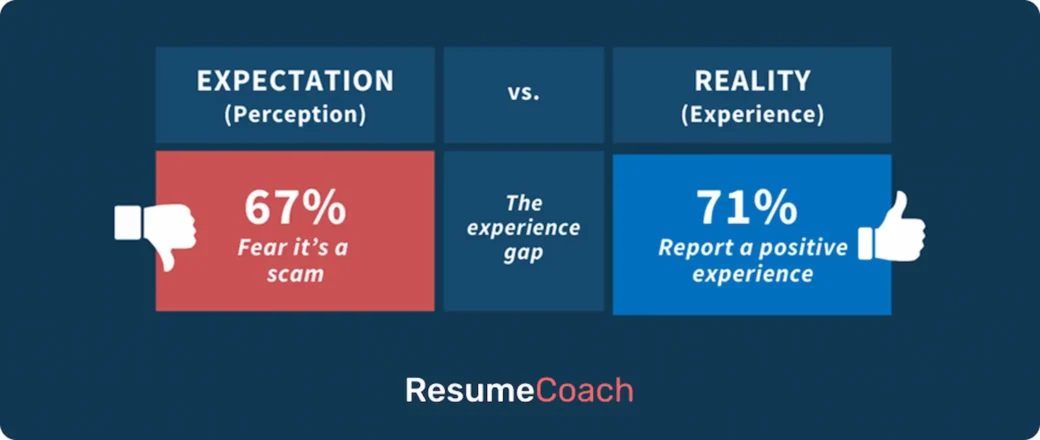
One of the major concerns for 18–24-year-olds entering the job market is the possibility that these AI interviews are a job scam, with 67% somewhat or strongly agreeing.
Compared with the over-55s, of whom just over half (52%) showed concerns about possible scams, the data suggests that those who grew up with technology are more cautious about online fraud.
Context: Recent research from Deloitte found that members of Gen Z were twice as likely to fall victim to online fraud compared to baby boomers. This higher exposure to digital risk helps explain why they approach AI interviews with caution.
The Consequence? 24% Would Walk Away From The Selection Process
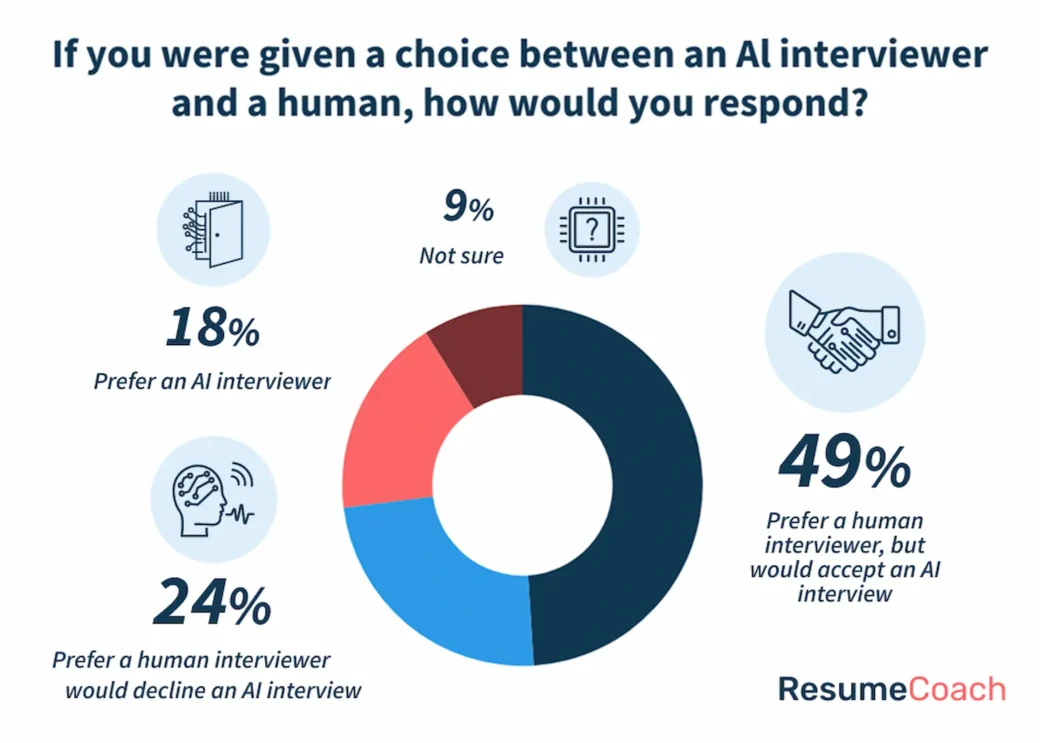
We asked participants how they would respond if an interview were to be conducted by AI. Two main groups emerged:
- 49% of 18–24-year-olds said they prefer a human interviewer but would still accept an AI interview.
- 24% of the same age group preferred a human interviewer and would decline an AI interview altogether.
The Reason: 38% of Young Talent Miss the Human Touch
Young candidates are wary of a hiring process void of humanity.
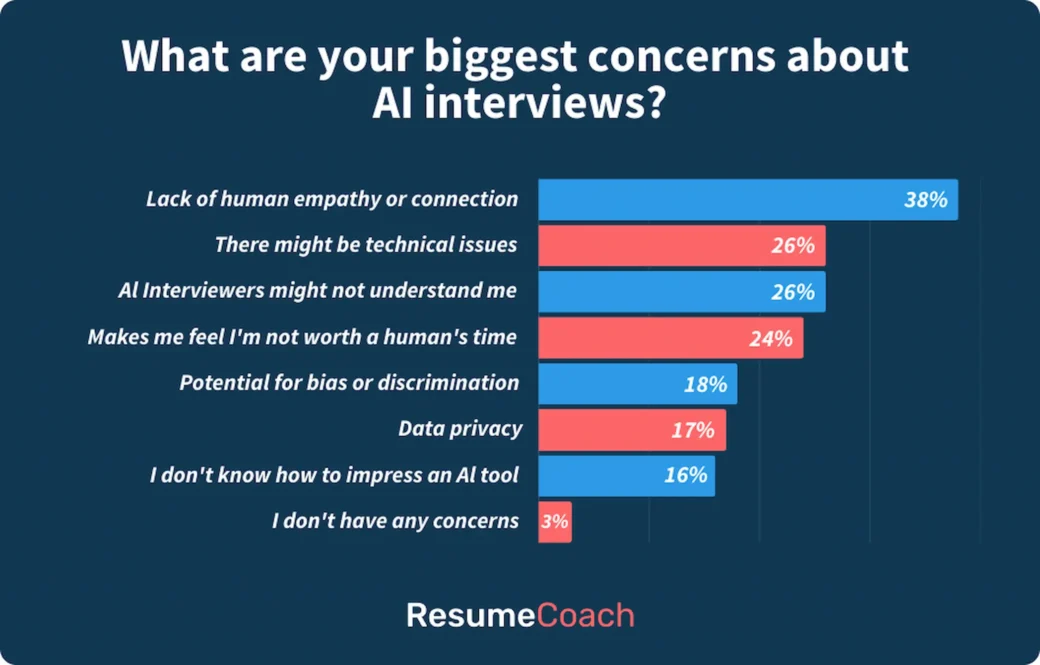
38% of 18–24-year-olds report that their biggest concern about AI interviews is the lack of human empathy or connection.
Many first-time job seekers feel that the interview is the one moment they can “win someone over,” which makes the loss of human connection especially worrying for them.
Chelsea Jay, Certified Professional Career Coach, says: “AI Interviews can be extremely difficult for this age range because entry-level employees often rely on their ‘people’ skills to win over interviewers, especially when they lack the required amount of experience. Taking the human element away doesn’t allow them to show their drive and potential, which is something they heavily rely on at this stage of their career.”
Chelsea went on to say, “For many young professionals, the interview process is their opportunity to establish a connection… AI Interviews accidentally communicate to applicants ‘we don’t have time to sit down with you’ which is a major turnoff to candidates today.”
The lack of human empathy was followed by concerns about:
- Technical issues (26%)
- AI not understanding them (26%)
- Not feeling like they’re worth a human’s time (24%)
- Potential discrimination or bias (18%)
- Data privacy concerns (16%)
In Reality, 7 in 10 Young Candidates Enjoy AI Interviews Once They Try Them
While younger candidates are the most suspicious of AI interviews, their fears do not match how they feel after actually doing one.
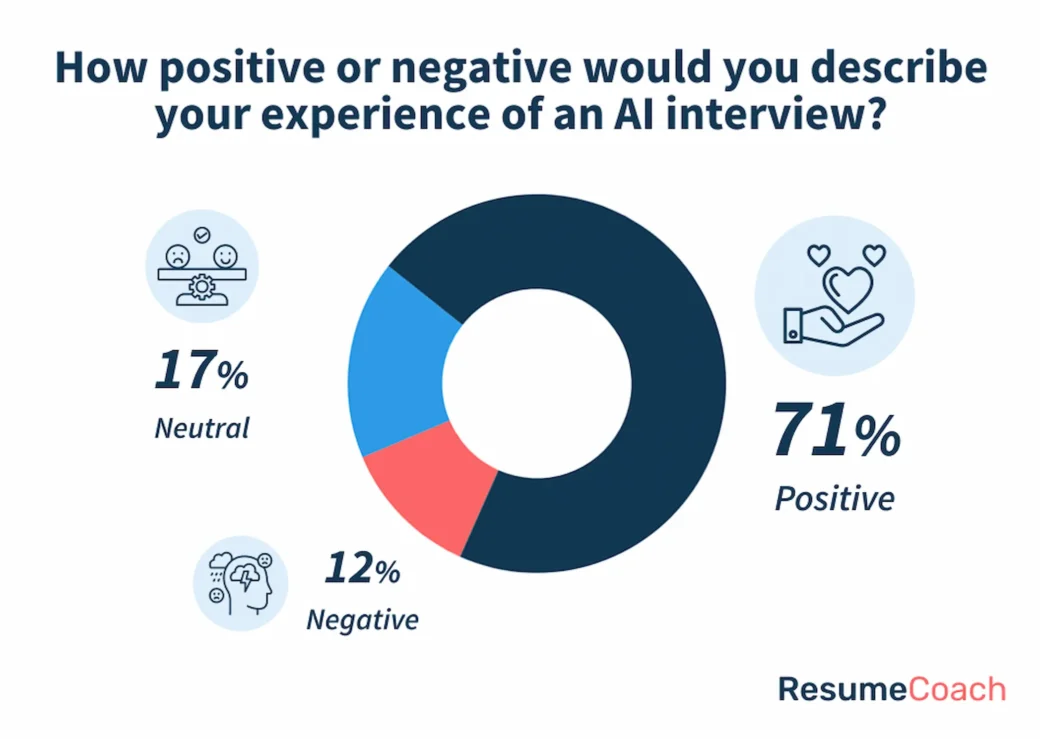
Although 67% of 18–24-year-olds feared an AI job interview could be a scam, among the 30% of this age group who have completed an AI interview, 71% said the experience was positive.
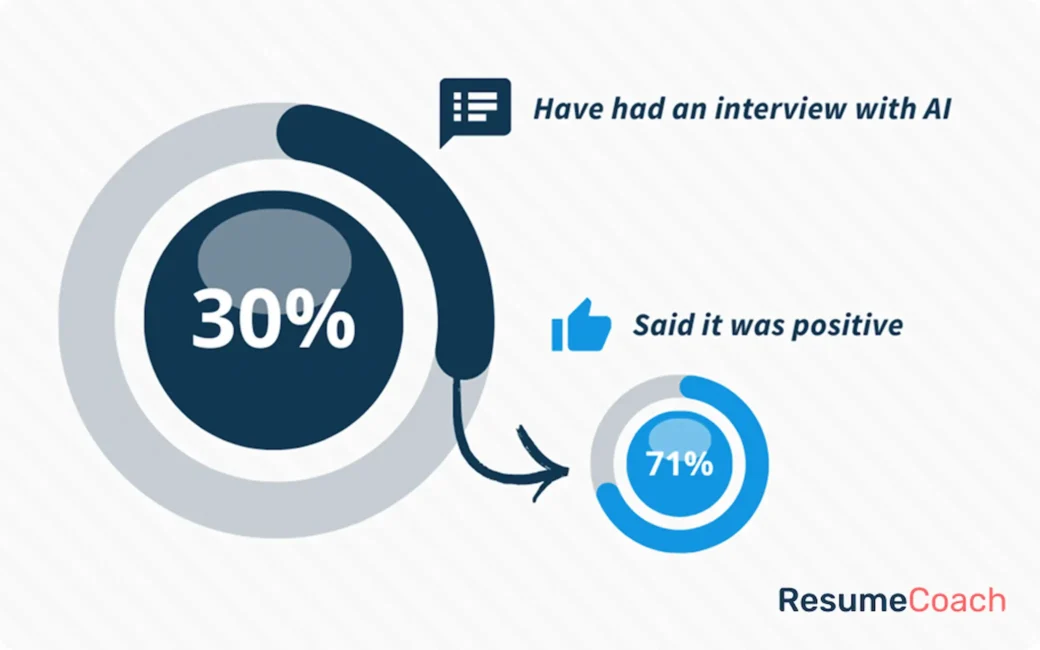
This signals a growing divide between how AI interviews are viewed and how they’re lived.
Only 12% of 18–24-year-olds who had participated in an AI interview said the experience was negative.
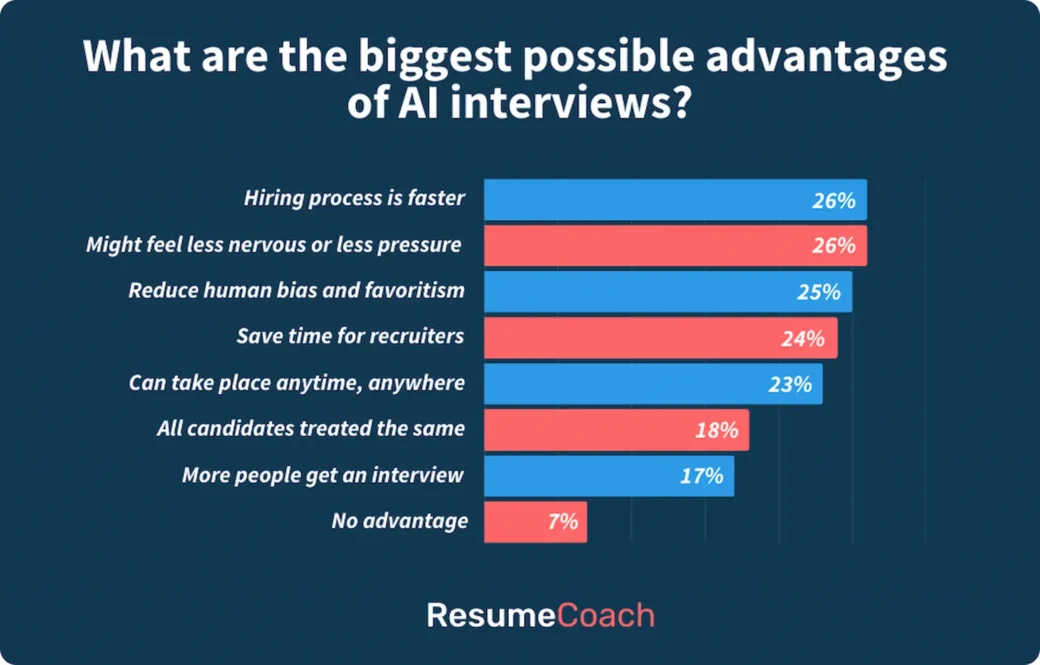
The advantages of AI interviews? Speed and less pressure
Young people often crave immediacy and suffer from job interview-induced anxiety.
This is reflected in the survey data:
- 26% said the top advantage is that the hiring process is faster.
- An equal number (26%) said that this job interview format could relieve pressure and make them feel less nervous.
Chelsea Jay notes: “It’s best to become comfortable with AI interviewing sooner rather than later. AI Interviewing is a great opportunity to practice your technical skills and presentation abilities without the fear of bias or judgment.”
How Employers Can Bridge the Trust Gap
AI interviews are here to stay, but younger candidates don’t yet fully trust them.
However, we found a growing divide between how AI interviews are viewed and how they’re lived. Once candidates try them, most actually like the format.
Employers who want to win over the many younger candidates who are still unsure about AI interviews can start by being more transparent about the process and the benefits.
Otherwise, if the perception gap widens, employers may struggle to attract younger applicants who might rely on their assumptions rather than real experiences.
The organizations that succeed in winning over this generation will be those that combine automation with clarity, empathy, and human oversight.
Methodology
For the purpose of this survey, by “AI interview” we mean a job interview in which a chatbot or recorded system asks questions.
This survey was commissioned by ResumeCoach.com and conducted online by the survey platform OnePoll. The online research was conducted between 5th and 7th November 2025.
1,000 U.S. residents were surveyed.
Note: While the overall survey was designed to be nationally representative, the findings regarding the 18–24 age group are based on a specific subsample of 117 respondents.
Given the limited sample size, these results should be viewed as indicative rather than definitive. A larger-scale study focused exclusively on this demographic would be needed to confirm these trends.
For media enquiries, please contact tmorris@resumecoach.com.
Struggling with Resume Writing?
Ease the process with our templates
Related Blog