

Job interview prep is no longer limited to practices in front of a mirror or with a friend. Today, you have powerful artificial intelligence (AI) technology at your fingertips.
Below, you’ll learn how to use AI for:
- A mock interview
- Understanding the position better
- Highlighting what you can bring to the table
- Acing behavioral interview questions
To do this, you’ll feed the job description and your resume into an AI tool. You can use ResumeCoach’s AI resume builder to create or improve your resume. This will help other AI tools create tailored interview questions for you.
What Is AI Interview Preparation?
AI interview preparation is the use of artificial intelligence tools to simulate interviews, generate tailored questions, and provide feedback on your answers.
Unlike traditional interview prep, which often relies on self-practice or another person’s help, AI can make the process faster, more personalized, and available on demand. This allows you to practice more efficiently and focus on the areas where you need the most improvement.
To better understand how AI interview preparation compares to more traditional methods, here’s a quick side-by-side overview:
| Aspect | AI Interview Prep | Traditional Interview Prep |
|---|---|---|
| Availability | Available anytime, often 24/7 | Depends on another person’s schedule |
| Personalization | Can generate tailored questions based on the job description and resume | Often depends on how well the other person understands the role |
| Speed | Fast setup and instant feedback | Usually takes more planning and coordination |
| Feedback | Can highlight patterns like filler words, structure, and clarity | Can offer more nuanced human reactions and emotional feedback |
| Realism | Good for repeated practice and structured mock interviews | Better for testing natural conversation and real-time interpersonal dynamics |
| Flexibility | Easy to repeat as many times as needed | Usually harder to repeat frequently |
| Human nuance | Limited in reading emotion, tone, and subtle social cues | Better at spotting confidence, awkwardness, and authenticity |
| Best use | Practicing regularly, building confidence, and preparing targeted answers | Refining delivery, body language, and real human interaction skills |
Benefits of Doing an AI Mock Interview
Practicing with AI can save you time and help you enter your interview with more confidence. Other benefits include:
- Realistic interview simulation that is tailored to the position and industry. It also allows you to answer questions in real time.
- Personalized “expert” feedback that may be more detailed and objective than a friend or family member. This can include optimization of your communication style, filler words, clarity, and storytelling.
- Anytime accessibility with tools that are available whenever and wherever you want to practice. Feedback is instant, without having to wait for a human coach to get back to you.
How To Prepare for a Job Interview With AI
When it comes to interview prep, AI can do a lot of the legwork for you, saving time and effort. Below, consider how it can help you analyze the job description and your resume, then generate AI interview questions.
1. Study the job description
To ace your interview, it’s important that you fully understand the requirements of the job as outlined in the job description. If there are unfamiliar words or qualifications that you’ve overlooked, AI can explain them in everyday language.
2. Ask AI to analyze your resume
After you’ve gotten to know the job description, compare it to your resume. You can feed both into an AI tool, and it can help you to identify matching skills, transferable skills, and knowledge or experience gaps.
3. Write a prompt for typical interview questions and answers
To write an effective AI prompt for a mock interview, first paste the job description. Then, indicate the length of the interview. According to Coursera, lengths of 15 minutes, 30 minutes, or one hour are typical. Finally, ask for tailored AI job interview questions.
The AI will “pretend” to be your interviewer, asking you real-world questions about your technical expertise, cultural fit, background, and more. Type or speak your answers. Once your mock interview is complete, carefully consider the feedback on your responses.
You can work through multiple mock interviews to practice different approaches and apply suggestions.
Limitations of AI Interview Preparation
AI is an amazing interview prep tool, but it does have limitations. For example, sample responses to interview questions may be generic and inauthentic, positioning you as an “average” candidate.
Too much AI prep can actually reduce your critical thinking skills. You should be ready to field any question an interview might throw at you; don’t limit your mastery to a handful of “most common” interview questions.
Remember, even the most sophisticated AI is not a person—it can’t “read the room”, catch nuances in your voice or body language, or employ emotional intelligence. While helpful, AI should complement your preparation, not entirely replace real conversation practice.
Examples of AI Interview Question Prompts
When using some AI tools, you can include prompts to generate interview questions based on your job description. Then, you can practice answering them. You can also use AI to research material that will help you ace your interview.
The best mock interview questions and preparatory research will be the result of good AI prompts. Consider the following examples. You can work through them in order, as later prompts build on earlier ones.
1. “Prepare a 30-minute practice job interview for [position name] at [company.] Here is the job description and the resume I sent in: [paste text of the job description and your resume].”
2. “Research [company name]’s market, top three competitors, achievements, and challenges.”
3. “Using my resume and above analysis of [company name], help me create a data-driven, impactful narrative for [scenario type, such as handling conflict or managing a team] relevant to [target position].”
4. “Help me develop a positive narrative to address [a specific challenge, such as termination or career gap. Then, input as much information as possible about the event].”
5. “Develop thoughtful questions I can ask my interviewer about [postion] at [company name]. Focus on company culture, teams, business growth, technology, and current or future projects.”
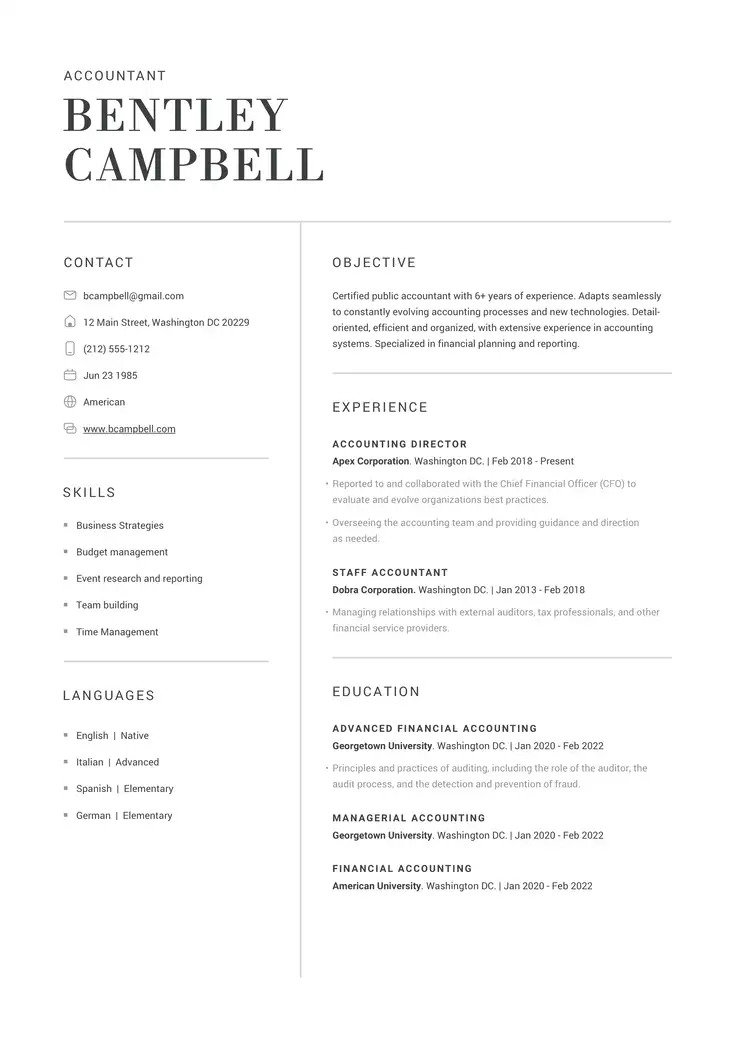
Struggling with Resume Writing?
Ease the process with our templates
FAQs
Yes, using AI to prepare for interviews can be effective for practicing answers, improving confidence, and getting fast feedback. However, it works best when combined with real human interaction.
However, you should bear in mind the technology’s limitations. It can’t display emotional intelligence to analyze your nonverbal cues or soft, transferable skills like a human could. Sole reliance on AI prep could also inhibit your critical thinking or verbal communication skills.
Try balancing AI prep with real-life practice.
AI interview preparation is usually faster and more convenient, but it is not always better than practicing with a person.
A human can still give more nuanced feedback on tone, body language, and interpersonal skills.
Yes, AI can help you prepare for behavioral interview questions by creating practice questions about common workplace situations. These can help you get comfortable explaining your experience with leadership, teamwork, problem-solving, and communication.
Yes, AI interview prep is especially helpful for entry-level first-time jobseekers because it helps them practice common questions and build confidence before a real interview.
Yes, you can use it to prepare for interviews, but a dedicated AI interview tool may provide a more structured and targeted experience.
Related Blogs