
How To Write a Qualifications Summary on a Resume (With Examples)
The achievements that make you stand out

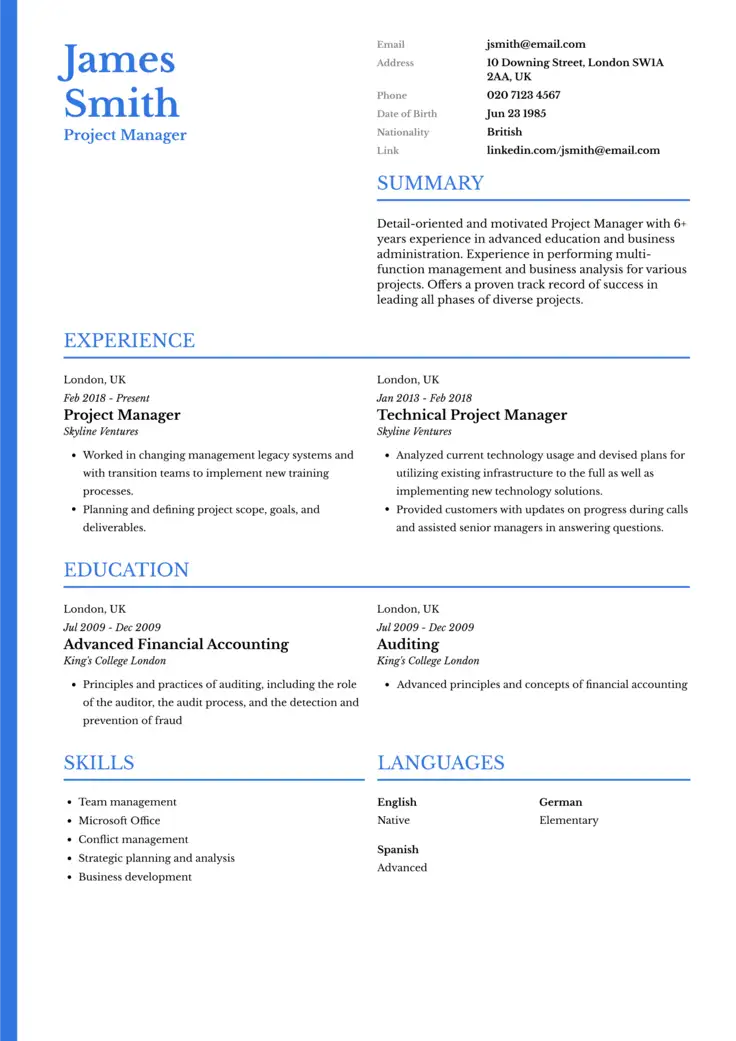
A qualifications summary is an introduction to your resume. It demonstrates your strengths in a short, clear section to quickly capture the attention of a potential employer.
This is especially useful for experienced professionals, career changers, and entry-level candidates who want to quickly highlight their strongest achievements.
To help you write the perfect qualifications summary, we’ll go over:
- What “qualifications” mean on a resume
- How to write a summary of qualifications, step-by-step
- How to match your qualifications to the job description
- Examples of qualifications summaries
Keep reading to get these helpful tips, and use our AI resume builder to suggest tailored qualifications based on the job description. It can also help you format the summary with clear bullet points.
What Is a Qualifications Summary on a Resume?
A qualifications summary is one of 3 options for a resume introduction that begins by showing off the most relevant and influential aspects of your experience, such as major achievements, skills, and qualifications.
Unlike the resume objective or summary statement, a qualification in resume is written in bullet point format, highlighting the most impressive elements of your professional profile and providing keywords relevant to the position being applied to.
The qualifications summary on a resume is a useful tool for resumes reviewed by Applicant Tracking Systems (ATS), as it makes sure keywords related to your industry, such as relevant skills, are seen right away.
In fact, around 99% of Fortune 500 companies use an ATS to hire their employees, and 65% of small businesses in the US use HR software, according to BusinessDasher.
Hiring managers also like qualifications summaries because it saves them time: they read the highlighted qualifications in the summary and get a basic understanding of what you can offer as opposed to reading the entire resume.
When To Use a Summary of Qualifications vs. a Resume Summary
A summary of qualifications on a resume works best for experienced candidates with strong measurable achievements, especially if they’re vying for competitive roles.
Interestingly, it is also helpful for career-changers, allowing them to highlight top transferable qualifications.
This section help you to:
- Quickly highlight your top achievements: By placing your key accomplishments and skills at the top of your resume, recruiters can immediately see your key contributions.
- Stress transferable skills: It allows you to show off relevant skills and abilities that can be applied to the role, making it useful for career changers.
- Improve visibility: By adding keywords from the job description, this section helps optimize your resume for the ATS.
- Provide a brief overview: A concise summary tailored to the job highlights how your skills and achievements align with the role’s requirements.
Despite these benefits, qualifications summaries don’t work for everyone. Resume objectives may be better for entry-level candidates with little experience, since they emphasize goals and what you hope to contribute.
How to Write a Summary of Qualifications (Step-by-Step)
Even if you’ve never written a summary of qualifications before, the following steps can help you do so quickly and easily.
Additionally, with our AI builder and resume templates, you can easily create bulleted points that highlight your achievements and expertise with data in an organized format.
Choose the right qualifications resume format
This introduction can easily be integrated into a standard chronological resume format. You could even include it as part of a combination or functional resume.
And, of course, it should be located near the top of your resume, just after your contact information. It consists of four to six bullet points.
Pick the best qualifications to highlight
Depending on the requirements of the job you’re applying for, consider using a selection of the following qualifications:
- Expertise: years of experience, in special courses, projects, or training
- Education and certifications: degrees, certificates, and licenses
- Efficiency:examples of increased productivity or revenue, using resources well, saving time or energy, updating, renewing or improving practices; be specific and include numbers or percents
- Management: positions of leadership, including the number of people under your supervision
- Interpersonal skills: communication, relationships with coworkers, junior or senior staff, customers, clients or suppliers
Remember to show measurable results wherever possible. If you need extra guidance, you can also use our online AI resume summary generator. It will help you add relevant keywords with tailored suggestions for your qualifications summary to construct an effective resume for your ideal job.
Summary of qualifications example (experienced candidate)
If you have experience, you want to give employers a quick snapshot of your strongest achievements and skills. Focus on highlighting measurable results, technical expertise, and leadership.
Example (Experienced Professional):
- 7+ years of B2B sales experience, consistently exceeding quarterly quotas by 20–35%.
- Managed a $1.5M annual territory and maintained a 93% client retention rate.
- Skilled in Salesforce, HubSpot, contract negotiation, and solution-based selling.
- Strong communicator with proven ability to lead cross-functional teams and train new reps.
Summary of qualifications example (entry-level candidate)
If you’re an entry-level candidate, don’t fret over a lack of on-the-job experience.
Instead, focus on your education, internships, volunteer work, class projects, and transferable skills that show your potential for success. ResumeCoach’s AI skills generator can help you identify key skills.
Example (Entry-Level Professional):
- Bachelor’s degree in Communications with coursework in persuasion, marketing, and consumer behavior.
- Completed a sales-focused internship, assisting with lead research and boosting outreach response rates by 18%.
- Increased event turnout by 25% through student organization volunteer work and promotional projects.
- Strong communication, active listening, and teamwork skills; proficient in POS systems and beginner CRM tools.
How to Match Your Qualifications to the Job Using Your Resume
Each job you apply for should receive a tailored resume. That means locating the right keywords, documenting them, and making them stand out. Making a physical or digital list can be helpful in this process.
With our AI builder and resume templates, you can easily create bulleted points that highlight your achievements and expertise with data in an organized format.
Carefully read the job description for clues
To discern exactly what the recruiter wants, check out the job description. Look for key skills, desirable traits, levels of experience, and education. Highlight them or make a list as you go; these are the key qualifications to include on your resume.
You can discern some skills from the listed responsibilities. For example, a customer-facing position will require good communication, customer service, and perhaps conflict resolution skills.
Make a list of your skills and qualifications
Next, make a list of all the skills and qualifications you possess, as well as any outstanding achievements. Don’t be shy—take some time to think about your abilities and don’t leave anything out.
Compare the two lists—the one you make of your own qualifications and the one drawn from the job posting. Highlight or circle the ones that match up; these are what you will showcase in your resume.
Where to show your qualifications on a resume (summary, skills, experience, education)
Now it’s time to make them stand out on your resume.
Writing a qualifications summary is only one part of the puzzle. It should work hand-in-hand with your Skills, Work Experience, and Education sections. These sections should back up what you say in your summary.
For example, if you found that specific licensing or certification is necessary, make sure you include it in your Education section. In your Skills section, craft a list that lines up as perfectly as possible with what the employer is looking for.
Your work experience bullets may be most important aspect of weaving your qualifications into your resume. Use bullet points to show your qualifications in action, providing measurable results whenever possible.
These steps may seem daunting, but remember – you’ve got a powerful ally. ResumeCoach’s AI resume builder can parse a job description, suggest tailored skills and qualification bullet points, and help you optimize your resume for ATS.
Key Tips for a Strong Qualification Section
A qualifications summary can clearly and concisely communicate to a hiring manager your top skills and achievements. Remember:
- Tailor it to the job description by using relevant keywords and matching the employer’s required skills.
- Start with your strongest selling points, such as years of experience, expertise, or standout accomplishments.
- Use measurable results and specific achievements to demonstrate impact (for example, “Increased sales by 20% in 6 months”).
- Keep it clear and concise, limiting the section to 4-6 focused bullet points.
- Use action-oriented language and avoid buzzwords or “filler” for a polished, professional tone.
Before you hit “submit,” you can use our resume checker to make sure your qualifications summary is well-aligned with the job description.
FAQs
Qualifications on your resume include things like your education, experience, skills, certifications, and achievements. They are what a recruiter is looking for to see if you’re a good fit for the job.
If you’re wondering how to write qualifications in your resume, follow these simple steps:
- Choose a format. You can use a bulleted qualifications summary and/or weave them into the rest of your resume.
- Pick key achievements. Make a list of the qualifications you possess.
- Tailor them to the job description. Highlight qualifications that match those in the job description. Leave out those that don’t.
The entire section should be 50 to 100 words in length. Your summary of qualifications should be focused and easy to scan. As a rule of thumb, include four to 6 bullet points.
Typically, qualifications summaries are presented in the form of a bulleted list. This is located at the top of the resume, just below your contact information.
Within the bullets, list your most important achievements first. This format helps recruiters quickly scan for your qualifications. It also helps ATS recognize skill matches.
Struggling with Resume Writing?
Ease the process with our templates